The story and science behind the dish · recipe above ↑
High-Protein Giant Brownie Pudding: The Self-Saucing Bake, Explained
How does a self-saucing pudding form its own fudge layer?
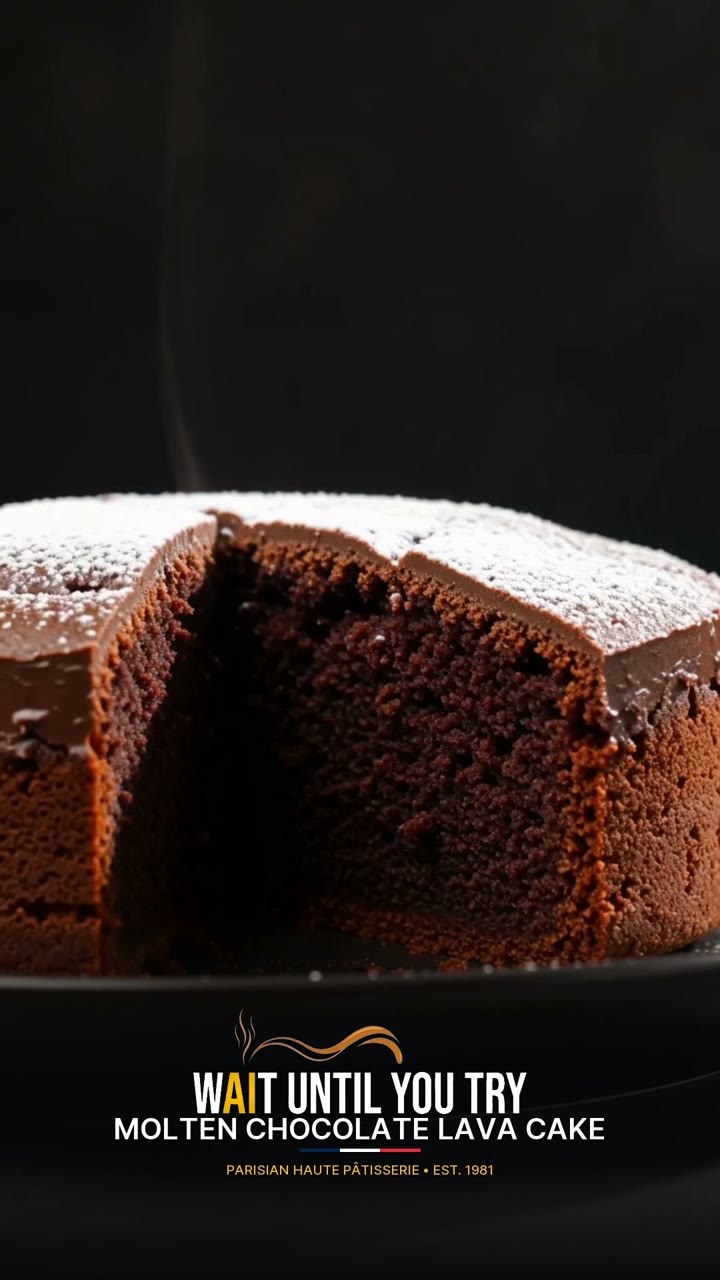
A self-saucing pudding separates into a tender cake top and a rich fudge sauce underneath entirely through differences in specific gravity, thermal convection, and starch gelatinization. When hot water is poured over a dry cocoa-and-sweetener blanket resting on top of wet cake batter, it dissolves the sugars and cocoa powder into a dense, heavy liquid suspension that remains on the surface before baking.
During baking in an oven heated to 175°C (350°F), heat penetrates the ceramic dish from the exterior inward. The baking powder in the cake batter activates, producing carbon dioxide gas bubbles that aerate the flour and protein matrix. Because the aerated batter has a lower physical density than the concentrated cocoa syrup resting above it, the cake matrix expands and rises toward the top of the dish. Simultaneously, the denser sugar-and-cocoa liquid sinks through the expanding crumb, settling at the base of the dish where it thickens into a glossy, velvety chocolate fudge sauce.
Where did the self-saucing pudding tradition originate?
The self-saucing pudding, often referred to in North American culinary history as fudge pudding cake or brownie pudding, traces its roots to 20th-century British and Australasian home kitchens. Early domestic home baking guides documented in broader histories of pudding celebrated the technique as an economical way to create both a warm sponge cake and an accompanying dessert sauce in a single vessel without requiring double-boilers or separate saucepans.
During the mid-20th century, similar principles appeared in French-Canadian home cooking through pouding chômeur ("poor man's pudding"), created during the Great Depression. In modern high-protein baking, food creators such as Christopher Kai Yu and recipe developers at Hayl's Kitchen adapted this classic thermodynamic mechanism, replacing conventional refined sugars and heavy butterfat with concentrated dairy proteins, unsweetened cocoa, and nonfat Greek yogurt.
What makes Dutch-process cocoa essential for the deep chocolate base?
Dutch-process cocoa powder is cocoa solids treated with an alkalizing agent, potassium carbonate, to neutralize the natural acidity of raw cocoa beans from a pH around 5.3 up to a neutral or mild pH between 6.8 and 8.1. As explained in food science reference texts on Dutch-process cocoa, this Dutching process darkens the cocoa powder from a reddish-tan hue to deep ebony-mahogany while softening sharp astringency and bitter tannins into an earthy, rounded chocolate profile.
In a self-saucing brownie pudding, cocoa powder serves two distinct functional roles across two separate phases:
| Component Phase | Cocoa Function | Chemical Interaction | Finished Texture |
|---|---|---|---|
| Batter Layer | Structural framework and chocolate base | Disperses through dairy liquids and coats protein chains | Tender, cake-like crumb |
| Topping Blanket | Free-flowing dry soluble layer | Dissolves in hot water to create a high-density liquid phase | Glossy, molten fudge sauce |
| Oven Crust | Surface caramelization | Contributes to crust fissures via the Maillard reaction | Delicate crackly shell |
Because Dutch-process cocoa has neutral acidity, it does not react prematurely with leaveners, allowing baking powder to control the gentle upward rise of the cake without producing sour flavor notes.
How does balancing whey and casein protein protect dessert texture?
Baking directly with pure whey protein isolate often leads to rubbery, dry, or leathery textures because whey proteins denature rapidly when exposed to temperatures exceeding 70°C (158°F), expelling moisture from the structural crumb. In contrast, pairing whey protein with casein in an approximate 50:50 or 60:40 ratio creates a heat-stable emulsion that holds water tightly throughout baking.
Micellar casein absorbs up to twice its weight in liquid, creating a thick, cushion-like suspension that mimics the mouthfeel of traditional cream and butter. Whey protein provides clean structural firmness, while casein retains bound water molecules even as oven heat rises. Adding nonfat Greek yogurt introduces natural lactic acid and dairy solids, lowering the batter pH just enough to tenderize the wheat flour crumb and yield a moist, fudgy center.
Why pour hot water over the back of a spoon?
The back of a large metal tablespoon serves as a fluid dynamic baffle when staging the self-saucing liquid layer. If hot water is poured directly from a spout or jug into the baking dish, the kinetic force of the stream will bore a hole straight through the aerated chocolate batter, mixing the cocoa topping prematurely into the cake foundation and preventing clear phase separation.
Holding the curved back of a spoon horizontally right above the cocoa dusting breaks the downward momentum of the hot water. The stream scatters gently outward in all directions, gliding across the surface of the dry powder in a smooth, shallow sheet. This preserves the two distinct layers: an intact raw cake batter below, and an even liquid cocoa-sugar solution above.
How to bake High-Protein Giant Brownie Pudding at home
Follow this measured home baking method to ensure proper phase separation and molten texture:
- Preheat your oven to 175°C (350°F) and lightly grease a round 1-litre ceramic baking dish with oil or butter.
- Sift 90 grams of chocolate whey-casein protein powder, 40 grams of unsweetened Dutch-process cocoa powder, 45 grams of pastry flour, and 4 grams of baking powder together into a mixing bowl.
- Pour in 240 ml of unsweetened almond milk, 60 grams of thick Greek yogurt, 125 grams of fresh egg whites, and 5 ml of pure vanilla extract, then whisk into a glossy, thick batter.
- Pour the chocolate batter into the prepared ceramic dish and gently level the surface with a spatula.
- Whisk 32 grams of granulated sweetener with 7 grams of extra cocoa powder, then dust evenly across the batter in a velvety blanket.
- Hold a large metal spoon inverted low over the dish and gently pour 90 ml of steaming hot water over the back of the spoon, coating the cocoa layer without disrupting the batter.
- Bake uncovered at 175°C (350°F) for 20 to 22 minutes until a crackly crust domes over the surface and the center retains a soft, delicate wobble.
- Rest for 3 minutes before plunging a broad dessert spoon through the crust to reveal the warm, glossy molten fudge sauce underneath.
Frequently asked questions
Can I make this pudding using only 100% whey isolate protein powder?
Using 100% pure whey isolate is not recommended because whey releases moisture during baking, producing a rubbery or spongy cake layer. A blended whey-casein protein powder or pure micellar casein provides the essential water-binding capacity needed for a soft, fudgy crumb.
Why is the center of the brownie pudding still jiggly when removed from the oven?
A slight wobble in the center is intentional and indicates success. Residual thermal heat continues cooking the cake crumb during the three-minute resting period, while the liquid sauce layer beneath remains molten and glossy rather than drying out.
Can this recipe be prepared in individual single-serving ramekins?
Yes, the recipe can be divided among four individual 250 ml ceramic ramekins. When baking smaller individual portions at 175°C (350°F), reduce the baking time to approximately 11 to 13 minutes, checking for set edges and a soft molten center.
How should leftovers be stored and reheated?
Store leftover pudding covered in the refrigerator for up to 3 days. To reheat, microwave individual portions for 25 to 35 seconds to warm the cake crumb and liquify the settled chocolate fudge sauce at the bottom of the dish.
Watch it, cook it, tell us what's next
The film at the top of this page shows every step of this recipe in under 40 seconds, set to an original soulful soundtrack. Watch it on YouTube, Instagram or TikTok, and tell us which classic dessert or comfort food we should reimagine next.
About this page: the film and its song are AI-generated; the written recipe and this article were researched and written with AI assistance from the sources linked above.