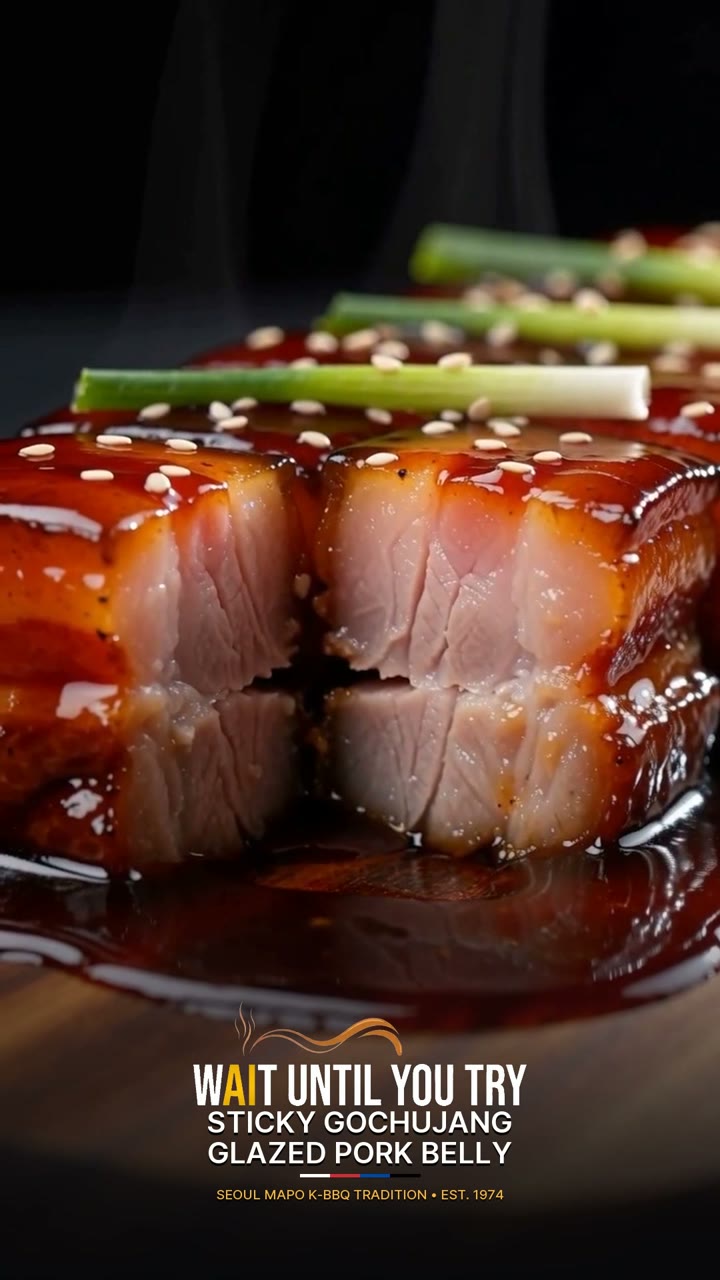
The story and science behind the dish · recipe above ↑
Korean Honey Butter Fried Chicken: The Science of Glass-Like Crunch and Sweet-Savory Emulsion, Explained
What is Korean Honey Butter Fried Chicken?
Korean Honey Butter Fried Chicken (Heoni-beoteo-chikin) is a modern culinary phenomenon consisting of ultra-crispy, double-fried chicken tossed in a rich, glossy sweet-savory glaze of melted dairy butter, raw wild honey, crushed garlic, and a hint of brewed soy sauce. Originating in Seoul's competitive fried chicken districts, it represents the sweet-savory (dan-jjan) flavor revolution that swept South Korea during the 2010s.
Unlike heavily breaded American fried chicken, Korean fried chicken is celebrated for its paper-thin, glass-like crackling crust. When tossed in warm emulsified butter and honey, the chicken retains its signature crunch for hours, delivering a mouthwatering balance of dairy richness, floral sweetness, and savory umami.
Why is potato starch and double-frying required?
The feather-light, shattering crust of Korean fried chicken is achieved through two precise biochemical mechanisms:
- Potato Starch Batter: Wheat flour contains glutenin and gliadin proteins that form tough gluten networks when hydrated. By using pure potato starch or cornstarch instead of flour, the coating contains zero gluten-forming proteins. Potato starch absorbs less frying oil and expands into an ultra-thin, delicate shell.
- Double-Frying Technique: The chicken is fried twice. The first fry at 160°C (320°F) gently cooks the meat through and drives internal water to the surface. After resting on a wire rack for 5 minutes to let steam dissipate, the chicken undergoes a second deep frying pass at 190°C (375°F). This second high-heat shock instantly flash-fries the surface starch, vaporizing residual moisture into an ultra-crisp, glass-like armor.
What is the dan-jjan flavor profile?
In contemporary Korean cuisine, dan-jjan translates to sweet-salty—a dynamic flavor pairing engineered to stimulate multiple taste receptor pathways simultaneously.
The sugar molecules in raw honey stimulate sweet taste buds, while soy sauce and garlic trigger savory umami receptors. Rich melted dairy butter acts as an aromatic flavor vehicle, dissolving fat-soluble aroma compounds and coating the tongue to round out sharp saltiness. This prevents taste fatigue, keeping each bite addictively satisfying.
How does the glaze maintain crust crispness?
Sugar-heavy glazes can easily soften crispy fried coatings into soggy dough. To prevent this, the honey butter sauce is cooked into an emulsified reduction before the chicken is introduced.
Simmering honey, butter, and minced garlic together gently evaporates excess water from the dairy butter and honey syrup. When the freshly double-fried piping-hot chicken is dropped into the wok, the thick, concentrated syrup coats the exterior in seconds without transferring liquid moisture into the potato starch crust, preserving crunch.
How does Honey Butter chicken compare to other Korean chicken styles?
South Korea's vibrant chimaek (chicken and beer) culture features diverse signature preparations:
| Chicken Variety | Primary Sauce / Seasoning | Crunch Mechanism | Flavor Dominance | Serving Style |
|---|---|---|---|---|
| Honey Butter Chicken | Melted dairy butter, honey, garlic glaze | Double potato starch fry | Sweet-savory, buttery, fragrant garlic | Finished with toasted sesame or parsley |
| Yangnyeom Chicken | Sticky gochujang, corn syrup, ketchup glaze | Double starch & flour fry | Sweet, spicy, tangy, pungent | Scattered with crushed roasted peanuts |
| Banban (Half-Half) | Split plate: plain crispy & spicy glazed | Dual-preparation standard | Contrasting pure crunch vs sticky glaze | Classic pub combo with pickled radish |
| Ganjang (Soy Garlic) | Brewed soy sauce, mirin, brown sugar reduction | Double starch flash fry | Savory, salty-sweet, allium umami | Popularized by Kyochon Chicken |
Where did the honey butter craze originate in Korea?
The honey butter flavor phenomenon erupted in South Korea in August 2014 when confectionery manufacturer Haitai, in partnership with Japan's Calbee, launched Honey Butter Chip. The snack combined French butter and acacia honey, sparking an unprecedented consumer craze across the country.
Convenience stores sold out within minutes, celebrities posted photos with rare bags, and black-market packs fetched ten times their retail price. Recognizing the universal appeal of the sweet-savory profile, innovative fried chicken masters across Seoul's Hongdae and Gangnam dining districts quickly adapted the flavor to hot poultry, tossing double-fried chicken wings in bubbling honey-butter woks and establishing a permanent new modern classic.
How to make Korean Honey Butter Fried Chicken
The authentic cooking method, in order:
- Season 750g bone-in chicken wings or boneless thigh chunks with one tablespoon grated ginger, two minced garlic cloves, 15ml cooking wine, half a teaspoon fine salt, and black pepper. Marinate for 30 minutes.
- In a wide bowl, toss the marinated chicken in 100g potato starch (or cornstarch), pressing firmly so every crevice has a light, even powdery coating. Shake off excess starch.
- First fry: Heat neutral frying oil in a Dutch oven to 160°C (320°F). Fry the chicken in batches for 7 to 8 minutes until light golden. Transfer to a wire rack and rest for 5 minutes.
- Second fry: Raise oil temperature to 190°C (375°F). Drop the chicken back into the hot oil for 2 to 3 minutes until dark golden, shatteringly crisp, and light in weight. Drain on a wire rack.
- Prepare the glaze: In a large wok over medium-low heat, melt 50g unsalted butter, add two minced garlic cloves, and sauté for 1 minute until fragrant. Stir in 60g raw honey and one tablespoon light soy sauce, simmering for 2 minutes until foamy and syrupy.
- Toss: Turn off the heat, immediately dump the hot crispy chicken into the bubbling glaze, and toss vigorously with a spatula for 30 seconds until every piece glistens with a sticky golden coating.
- Transfer to a serving platter and garnish immediately with toasted sesame seeds and fresh chopped parsley. Serve hot with chilled pickled Korean daikon radishes.
Frequently asked questions
Can all-purpose flour be substituted for potato starch?
You can use flour, but it will not achieve the glass-like crunch of authentic Korean fried chicken. Potato starch or cornstarch produces a much lighter, crispier shell.
Why do you rest the chicken between the first and second fry?
Resting allows internal moisture and steam to migrate out to the cooler exterior crust. When reintroduced into blazing 190°C oil, that moisture instantly vaporizes, leaving behind pure crispness.
Can the sauce be made ahead of time?
Yes. Whisk the glaze together and store in the refrigerator. Warm gently in a pan right before the second fry so it is hot and liquid when tossing the chicken.
Watch it, cook it, tell us what's next
The film at the top of this page shows every step of this recipe in under 60 seconds, set to an original soundtrack. Watch it on YouTube, Instagram or TikTok, and tell us which classic dish we should make next.
About this page: the film and its song are AI-generated; the written recipe and this article were researched and written with AI assistance from the sources linked above.