
The story and science behind the dish · recipe above ↑
Artisanal Sourdough Focaccia with Floral Herb Garden
Born in coastal bakeries along Liguria, olive-oil hearth bread turns simple fermented grain into a crisp, feather-light sponge beneath a shimmering golden crust. This botanical edition of Artisanal Sourdough Focaccia pairs an airy, high-hydration natural levain crumb with a composed garden of green chive stems, feathery parsley fronds, violet red-onion crescents, tender rosemary needles, and blistered ruby cherry tomatoes. Baking inside a heavy dark steel rectangular pan channels radiant bottom heat into the olive oil pool, frying the underside lacy crisp while allowing steam inside the dough to expand into translucent honeycomb pockets.
Whether you bake bread every weekend or maintain your first active jar of wild levain, focus on gentle handling after the final rise. Preserving gas bubbles formed during cold fermentation yields a light tear that crackles softly on the crust before giving way to a tender, aromatic center.
What Makes High-Hydration Sourdough Focaccia Work
Natural sourdough relies on symbiotic lactic acid bacteria and wild yeast rather than fast commercial leaveners. Long cold fermentation relaxes tight gluten strands and develops mild yogurt tang plus complex toasted-grain aromatics, so minimal kneading is needed. Instead of heavy bench shaping, simple coil folds every half hour gently stack the dough on itself while retaining internal moisture.
Traditional focaccia in Genoa uses a salt-water and olive-oil emulsion poured into the fingertip craters before entering the oven. That brine pools inside each dimple, steaming the exposed dough skin thin while emulsifying with fruit-forward extra-virgin olive oil so top blisters shatter delicately at first bite.
Ingredient Proportions & Baker's Percentages
| Ingredient | Weight / Measure | Baker's % | Culinary Role |
|---|---|---|---|
| High-protein bread flour | 500 g | 100% | Structural gluten framework for open crumb |
| Filtered water | 390 g | 78% | High hydration for gelatinized shiny alveoli |
| Active liquid starter (100% hydration) | 110 g | 22% | Wild fermentation lift and complex acidity |
| Fine sea salt | 11 g | 2.2% | Seasoning and gluten elasticity regulation |
| Ligurian extra-virgin olive oil (in pan) | 55 ml | 11% | Crisp fried base and golden dimple pools |
| Oil-salt brine emulsion | 25 ml | 5% | Thin crisp top skin and moist crumb |
| Ruby cherry tomatoes | 140 g | — | Blistered sweet-acidic floral blossoms |
| Small red onion & chives | 63 g total | — | Caramelized crescents and green garden stems |
| Parsley, rosemary & infused finishing oil | 16 g herbs / 20 ml oil | — | Post-bake glossy fragrance and warmth |
Picking Herbs and Toppings That Bake Cleanly
Delicate green herbs scorch easily inside a 230°C hearth unless coated lightly in fat. Tossing sliced chives and flat-leaf parsley needles briefly in olive oil shields fine leaf margins until the cheese-like toast blisters finish browning. Pairing resinous rosemary needles with juicy halved cherry tomatoes balances dry alpine fragrance against concentrated tomato sugars.
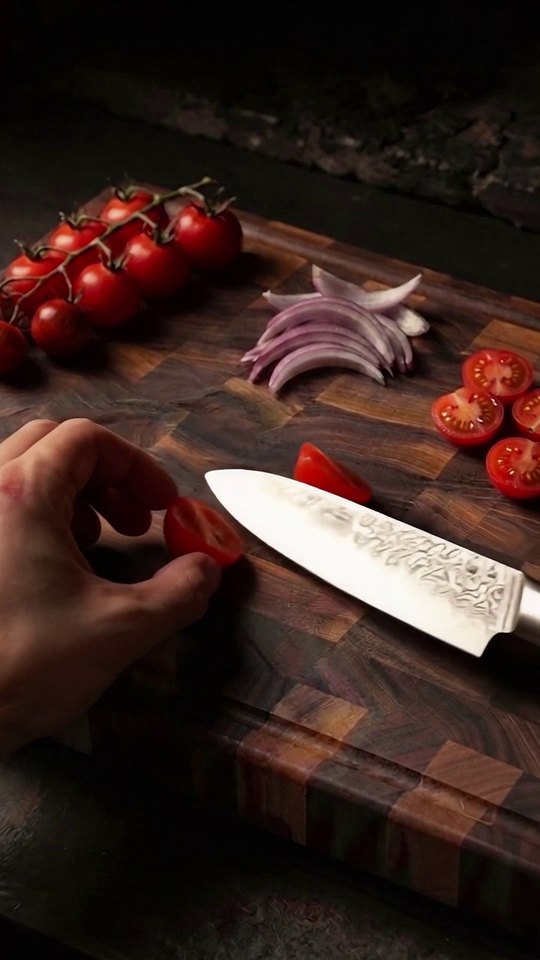
- Pick ripe red tomatoes beside the cluster before slicing so the main ripe scarlet tomato cluster rests cleanly off to the side while loose cherry tomatoes slice calmly without bruising.
- Slice purple red-onion wedges into translucent arcs less than 2 mm thick so concentric layers mimic crisp garden petals instead of thick bitter slabs.
- Brush infused olive oil over the raw garden BEFORE baking so gentle fat conducts hearth heat evenly, confiting delicate chives and parsley leaves into glossy olive-green aromatic crispness instead of black oven ash.
Step-by-Step Bake Method
- Mix levain and prepare ripe red toppings on wood. Whisk 390 g room-temperature filtered water with 110 g bubbly active sourdough starter, fold in 500 g bread flour and 11 g sea salt, execute four coil folds spaced 30 minutes apart, and cold-ferment 18 hours at 4°C. Before shaping, set the ripe red cherry tomato vine aside on the counter, pick loose sweet red cherry tomatoes onto an end-grain walnut board, halve them cleanly down the center beside the vine, and shave slim red-onion crescents alongside chives, parsley, and rosemary.
- Lay and spread aerated dough smoothly into the rectangular oiled pan. Coat a heavy 14x10 rectangular baking pan generously with Ligurian extra-virgin olive oil. Lift the airy, cold-fermented sourdough pillow gently, settle it cleanly into the golden oil pool, and smoothly spread and press it toward the rectangular pan walls with oiled palms so pillowy dough bubbles stay light without deflating.
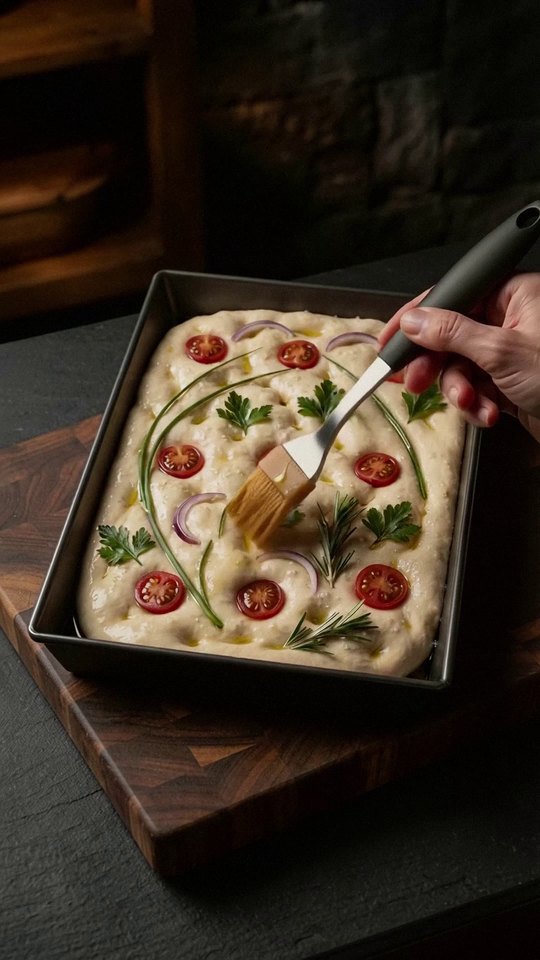
- Arrange the botanical garden with eight petite tomato blossoms. Press fresh green chive stems softly across the oiled ridges like meadow grass, tuck feathery flat-leaf parsley fronds and rosemary needles beside purple red-onion arcs, and press eight small halved ruby cherry tomatoes evenly across the rectangular surface in a balanced 3-2-3 grid.
- Brush raw leaves, chives, and dough with olive oil BEFORE baking. Dip an angled heat-resistant silicone basting brush into extra-virgin olive oil infused with roasted garlic and sweep smoothly from left to right across the entire unbaked loaf, filming every herb leaf, onion petal, and dimple crest so greens bake tender-crisp rather than scorching dry.
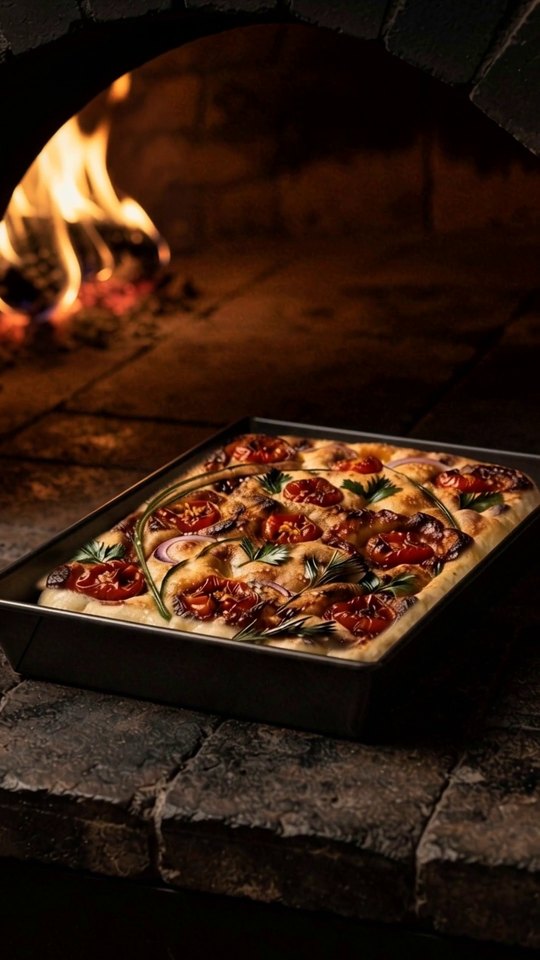
- Bake crisp at 230°C until jammy & blistered, then tear warm pieces to serve. Keep the pan resting undisturbed inside a preheated 230°C stone hearth for 24 to 26 minutes until the rectangular crown rises high with amber-mahogany blisters, wrinkled jammy roasted cherry tomatoes, and savory olive-bronze confit aromatics. Lift onto the walnut board, rest 15 minutes so open honeycomb crumb sets, and tear generous warm pieces by hand to expose the airy alveoli crumb.
Troubleshooting Common Crumb Issues
| Issue Observed | Root Cause | Fix for Next Bake |
|---|---|---|
| Dense, gummy lower layer | Under-proofed levain or cold oven deck | Extend final pan proof until jiggling airy and preheat oven steel 45 min |
| Herbs scorched black before crust browns | Dry un-oiled herbs baked bare | Coat all herbs thoroughly with olive oil via basting brush before oven entry |
| Pale matte top without blisters | Skipped salt-water brine or lean pan oil | Whisk olive oil with water briskly right before settling dough into pan |
For storage, leftover squares keep their crackle best wrapped loosely in unbleached parchment at room temperature for up to two days. Reheat squares for four minutes directly on an air-fryer rack or 200°C toaster oven grate to revive the crisp fried bottom without toughening the airy center. Explore more regional bakes across our [full recipe archive](/recipes), or share your favorite wild levain ratio through our [contact page](/contact).
Frequently asked questions
Can I substitute instant yeast if I do not keep sourdough starter?
Yes. Replace the 110 g active starter with 55 g flour, 55 g water, and 3 g instant dry yeast (baker's yeast). You can still cold-ferment the mixed dough overnight in the refrigerator to build flavor and crisp crust blistering before proofing in the rectangular pan.
Why brush herbs and dough with olive oil before baking instead of only after?
Delicate green herbs like chives and flat-leaf parsley lack moisture reserves to survive dry 230°C hearth air uncoated. Brushing the composed garden with olive oil immediately prior to oven entry shields fine leaf surfaces in a thin conductive oil jacket, frying the botanicals gently into glossy olive-green confit aromatics while bubbling the sourdough crust around them.
How can I tell when high-hydration sourdough is fully proofed?
Instead of relying strictly on wall clocks, tap the side of the rectangular pan gently: properly proofed 80%-hydration dough ripples cleanly like loose pudding, crowns softly into rounded edges, and holds deep dimples cleanly without springing completely shut within ten seconds.
AI-created visuals. Culinary inspiration, not a complete cooking guide.