The story and science behind the dish · recipe above ↑
Maple-Herb Butter Roasted Turkey Breast for Canadian Thanksgiving
What is maple-herb butter roasted turkey breast?
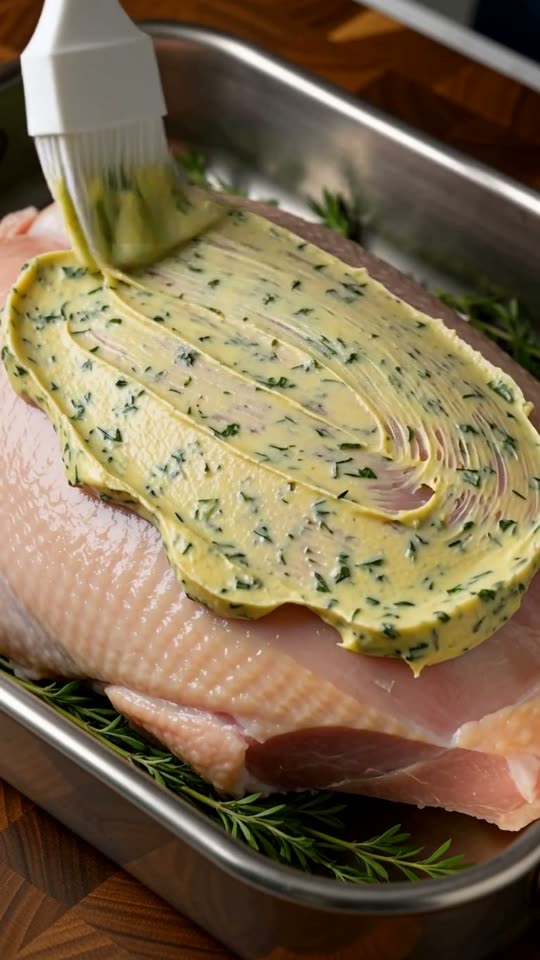
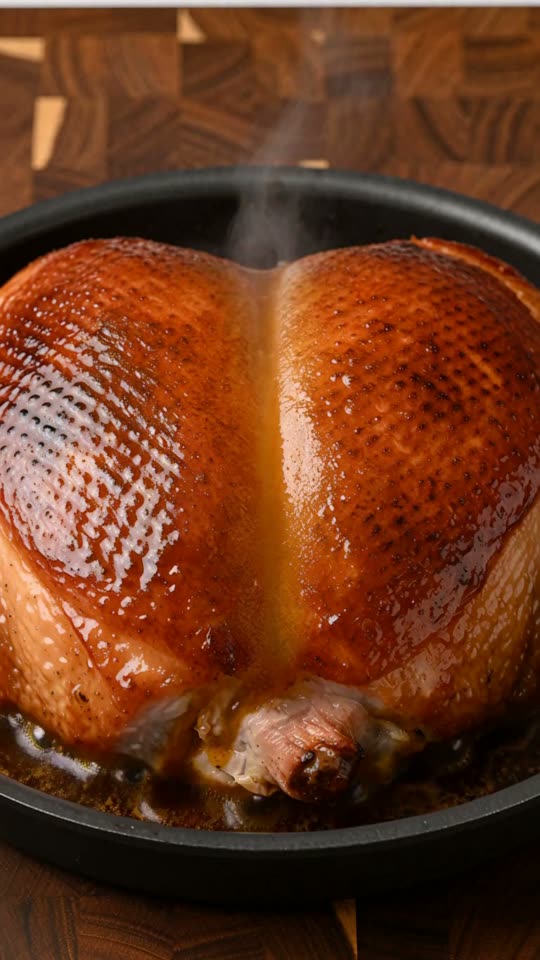
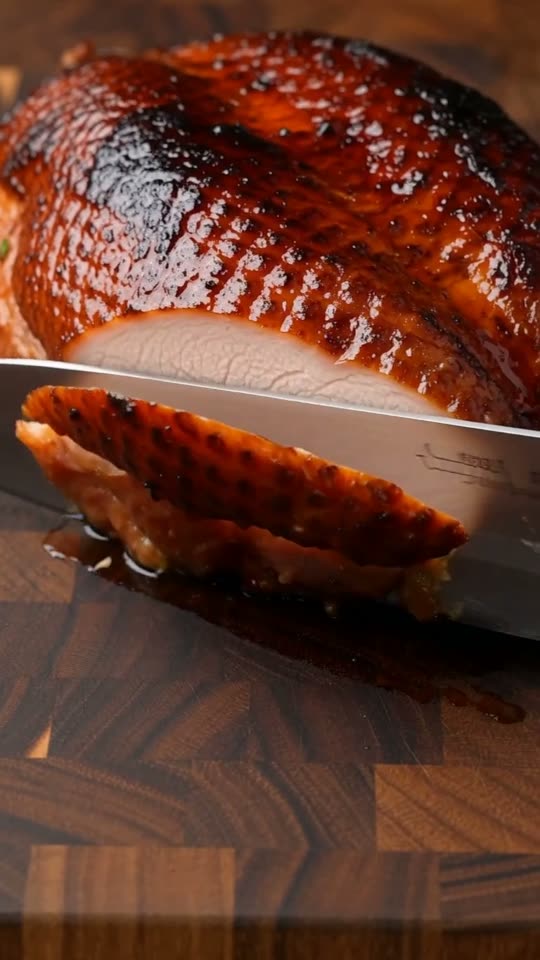
Maple-herb butter roasted turkey breast is a bone-in, skin-on turkey breast rubbed under and over the skin with butter whipped with rosemary, thyme, sage, garlic and maple syrup, then roasted until the skin turns glossy and deep mahogany. Our version serves eight and comes to the table with brown butter potato purée and a cranberry pan gravy.
A breast cooks faster than a whole bird and carves into neat, even slices, which makes it a practical centerpiece for a smaller Thanksgiving supper. The maple and herbs give it a flavour that reads as Canadian autumn without hiding the taste of the turkey.
When is Canadian Thanksgiving, and where does it come from?
Canadian Thanksgiving falls on the second Monday of October, a date Parliament fixed in 1957, according to the history of Thanksgiving in Canada). It has been an official annual holiday since November 6, 1879, and for decades the date moved around before settling in October.
The holiday is statutory in most of Canada but optional in Prince Edward Island, Newfoundland and Labrador, Nova Scotia and New Brunswick. Turkey sits on many tables, alongside roast beef, ham and stuffing.
Is the Frobisher "first Thanksgiving" story true?
The documented core is that explorer Martin Frobisher's fleet held a service of thanks for a safe landing during its voyages in search of the Northwest Passage. It was a thanksgiving for survival at sea, not a harvest feast.
The details are contested. Retellings disagree on the year and the place: the Thanksgiving in Canada) entry gives 1579 and a landing in Newfoundland, while other accounts set it a year earlier in the Arctic. The harvest-supper customs Canadians know today, including turkey, pumpkin and squash, arrived later, partly with Loyalists who brought American Thanksgiving traditions north.
How long does a 2.5 kg turkey breast take to roast?
A 2.5 kg (5.5 lb) bone-in turkey breast takes about 1 hour 45 minutes to 2 hours at 190°C (375°F), but the thermometer is what tells you it is done. The USDA turkey cooking guide sets a safe minimum internal temperature of 165°F (74°C), checked in the thickest part of the breast.
The same guide lists 1½ to 2¼ hours for an unstuffed 4 to 6 lb breast at a lower 325°F oven, so our hotter oven brings a 5.5 lb breast in a little under the top of that range. Breasts vary in shape, so start checking at about 1½ hours.
| Stage | Temperature | Why it matters |
|---|---|---|
| Oven | 190°C (375°F) | Browns the skin while the meat cooks through |
| Safe doneness, thickest part of breast | 74°C (165°F) | USDA safe minimum for turkey |
| Sucrose starts to caramelize | 170°C (338°F) | Deep amber notes on the skin |
| Standing time before carving | 20 minutes | Lets the juices set before slicing |
Why does maple syrup turn the skin so dark and glossy?
Maple syrup is mostly sugar, and sugar browns in the oven through caramelization, a heat-driven breakdown of sugar that differs from the Maillard reaction because it does not involve amino acids. Different sugars start caramelizing at different temperatures; sucrose, for example, begins at about 170°C.
That is why a maple-butter skin colours faster than plain buttered skin. If the glaze reaches deep mahogany before the breast reaches 74°C, lay a loose sheet of foil over the top and keep roasting.
Which maple syrup should you use?
Any pure maple syrup works; the grade only changes the flavour. Canada's grading uses four Grade A classes: golden colour with delicate taste, amber with rich taste, dark with robust taste, and very dark with strong taste, as the maple syrup entry explains.
We use Grade A dark syrup for its robust flavour, which stands up to garlic and sage. Canada produces more than 75 per cent of the world's maple syrup and Quebec alone about 72 per cent, and it takes between 20 and 50 volumes of sap to make one volume of syrup, part of why real maple syrup costs what it does.
How do you make the brown butter potato purée?
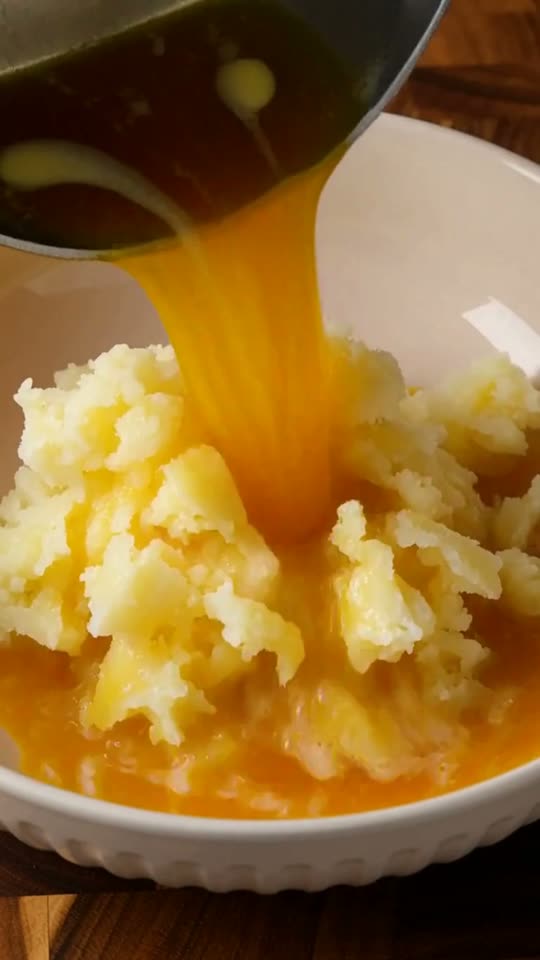
Rice hot boiled potatoes, then whip them with brown butter and warm cream. Brown butter, or beurre noisette, is butter cooked gently until its milk solids turn deep brown, giving a nutty scent that suits maple and turkey.
A ricer gives a smooth, lump-free result, according to the mashed potato entry, which also notes that some French recipes for pomme purée use up to one part butter for every two parts potato. Ours is lighter than that, so it stays spoonable under the gravy.
Why serve cranberry gravy with turkey?
Cranberry with turkey is a fixture of Thanksgiving in both Canada and the United States. Cranberry sauce history in Canada reaches back to 1606, when the Mi'kmaq introduced cranberries to French settlers at Port-Royal in present-day Nova Scotia.
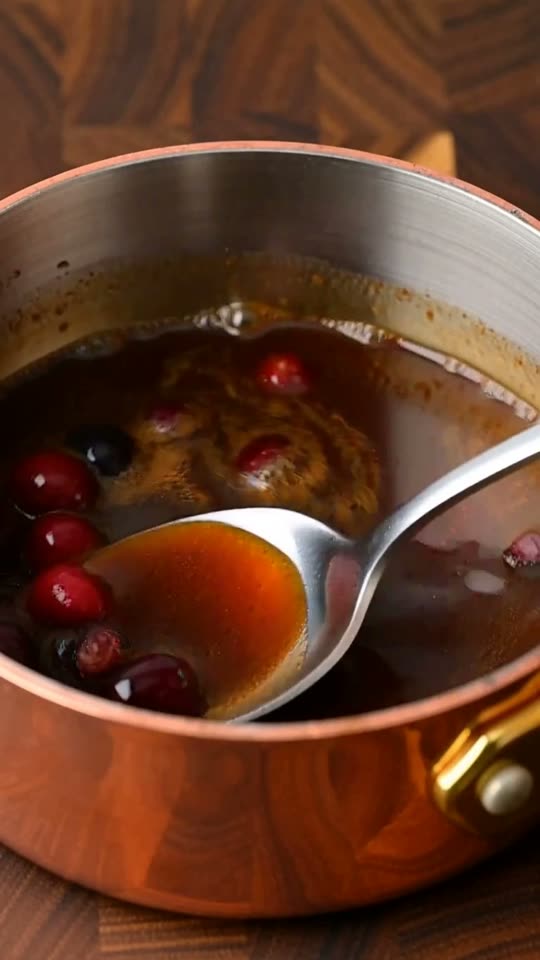
Our gravy takes a shortcut: the pan drippings are deglazed with turkey broth and simmered with fresh cranberries and a little maple syrup. The berries burst and thicken the sauce, and their tartness cuts through the butter.
Step-by-step cooking method
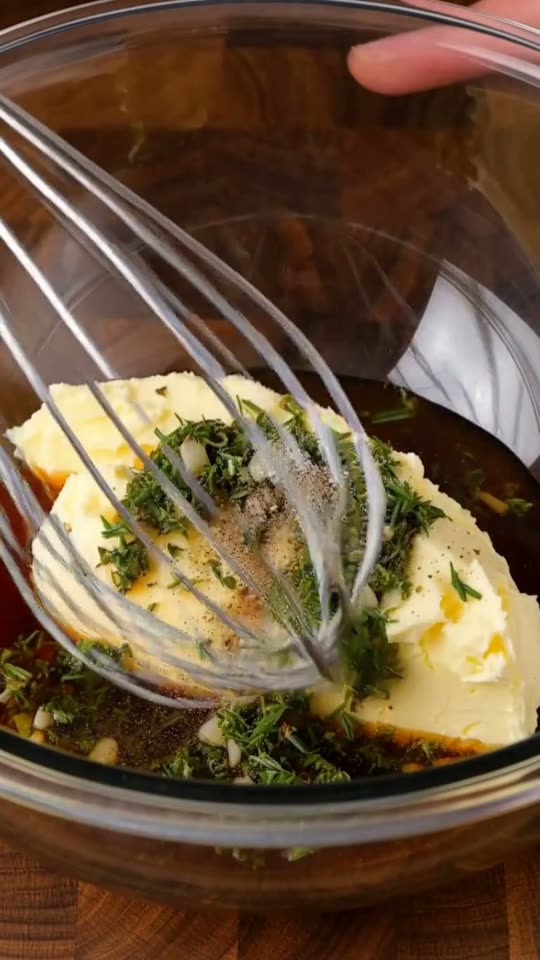
- Whip softened butter with chopped rosemary, thyme and sage, minced garlic, sea salt, cracked black pepper and maple syrup into a compound herb butter.
- Loosen the skin of the turkey breast, spread half of the butter on the meat under the skin, and rub the rest over the outside.
- Roast on a bed of fresh herb sprigs at 190°C (375°F) for about 1 hour 45 minutes to 2 hours, basting with the pan drippings every 30 minutes, until the thickest part reads 74°C (165°F); tent with foil if the glaze darkens too fast.
- Let the turkey breast stand on a carving board for 20 minutes before carving.
- Pass the hot potatoes through a ricer and whip them with brown butter and warm cream.
- Deglaze the roasting pan with turkey broth and simmer with cranberries and maple syrup into a glossy gravy.
- Carve thick slices, set them over the purée and finish with the cranberry gravy.
Frequently asked questions
What internal temperature is safe for turkey breast?
Cook turkey to at least 165°F (74°C), measured in the thickest part of the breast, as the USDA recommends. An instant-read thermometer is the reliable way to check.
Do I have to put the butter under the skin?
Butter under the skin seasons the meat directly, while butter on top mainly flavours and browns the skin. Doing both gives you seasoned slices and a lacquered surface.
Can I make the herb butter ahead?
Yes. Keep it covered in the fridge and let it soften before you spread it, so it goes under the skin without tearing it.
Is Thanksgiving Monday a holiday everywhere in Canada?
It is a statutory holiday in most of Canada and optional in Prince Edward Island, Newfoundland and Labrador, Nova Scotia and New Brunswick.
Watch it, cook it, tell us what's next
The film at the top of this page follows the whole recipe, from the herb butter to the carved slices, set to an original acoustic folk recipe song. Watch it on YouTube, Instagram or TikTok, and tell us which dish we should cook next.
About this page: the film and its song are AI-generated; the written recipe and this article were researched and written with AI assistance from the sources linked above.