 Brew the Aromatic Island Spice Tea (Té de Especias): In a small copper or stainless-steel saucepan, combine 120 ml (1/2 cup) water, 60 ml coconut milk, 4 whole Ceylon cinnamon sticks, 2 whole star anise pods, 5 whole cloves, and 1 split Madagascar vanilla bean. Bring to a gentle simmer over medium-low heat (92°C / 198°F) and steep for 10 to 12 minutes until deeply fragrant and amber-tinted. Strain out the whole spices and let the infusion cool completely to room temperature (20°C / 68°F) so it never curdles the dairy.
The story and science behind the dish · recipe above ↑
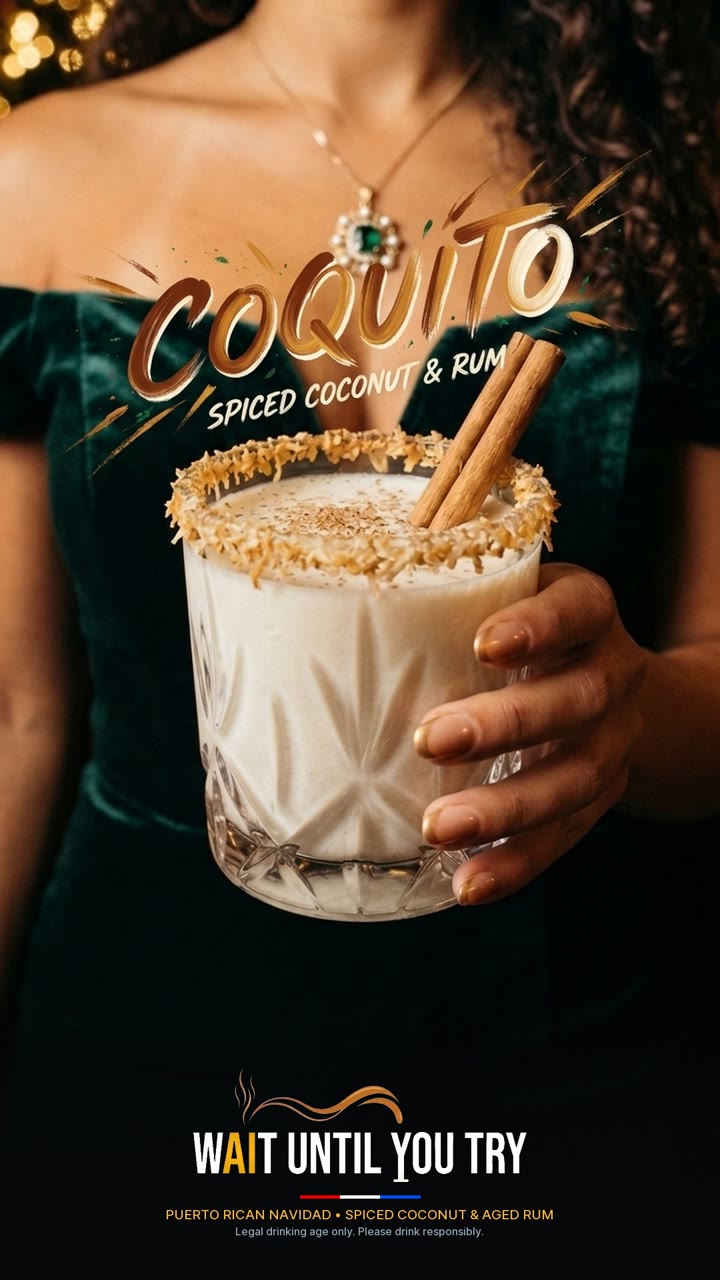
Traditional Puerto Rican Spiced Coconut Coquito: The Holiday Rum & Coconut Punch, Explained
What is Coquito?
Coquito (Spanish for "little coconut") is the traditional Christmas and New Year beverage of Puerto Rico: a rich, chilled holiday punch made from cream of coconut, coconut milk, evaporated milk, sweetened condensed milk, warming island spices (cinnamon, clove, nutmeg, and star anise), and Puerto Rican rum.
Served across Puerto Rico and the Caribbean diaspora from late November through Nochebuena (Christmas Eve) and Día de los Reyes (Three Kings' Day on January 6), Coquito is often compared to eggnog, yet authentic island family recipes rely entirely on tropical coconut fat and condensed milk rather than eggs for their velvety, custard-like body.
Why brew a spiced tea (té de especias) instead of just adding ground cinnamon?
In Puerto Rican home kitchens, the defining soul of a family's Coquito recipe is its té de especias—an aromatic decoction made by simmering whole cinnamon sticks, cloves, star anise, and vanilla bean in water before blending with the coconut and milk layers:
| Spice Extraction Method | Flavor Release in Cold Coconut Cream | Visual Color of Finished Coquito |
|---|---|---|
| Simmered Whole-Spice Tea (Té de Especias) | Water at 95°C extracts cinnamaldehyde and eugenol completely before chilling | Snow-ivory and glossy |
| Raw Ground Spices Whisked into Cold Milk | Essential oils remain trapped in dry bark particles; gritty sediment at bottom | Muddy grey-brown |
How do you stop coconut fat from separating in the refrigerator?
Cream of coconut (crema de coco) and full-fat coconut milk contain roughly 20–24% saturated medium-chain triglycerides (primarily lauric acid), which solidify below 24°C (75°F). If you mix cold coconut cream straight from the can with cold milk and high-proof rum, the coconut fat forms tiny white flecks that float to the top of the bottle.
Warming the unopened can of cream of coconut in a bowl of 40°C (105°F) water for 5 minutes liquefies all the lauric-acid crystals first; whisking it thoroughly with sweetened condensed milk (whose milk proteins act as natural emulsifiers) and chilling the finished Coquito gradually creates a smooth, stable emulsion.
How do you make Traditional Puerto Rican Coquito step by step at home?
- Simmer the té de especias: Simmer 120 ml (1/2 cup) water and 60 ml coconut milk with 4 whole Ceylon cinnamon sticks, 2 star anise pods, 5 whole cloves, and 1 split vanilla bean for 10 to 12 minutes. Strain and cool completely.
- Whisk the coconut and milk base: In a large pitcher, combine 425 g (15 oz) warmed liquid cream of coconut, 340 ml full-fat coconut milk, 354 ml (12 oz) evaporated milk, and 300 ml (10 oz) sweetened condensed milk.
- Add the rum and spice infusion: Stir in the cooled spice tea, 240 ml (1 cup) aged Puerto Rican gold rum, 120 ml (1/2 cup) white rum, and 1/2 teaspoon freshly grated nutmeg. Whisk for 60 seconds until silky, bottle, and chill for at least 2 hours.
- Rim the holiday glass: Rim a chilled footed crystal glass with cream of coconut and a blend of golden toasted coconut flakes and cinnamon sugar.
- Pour over clear ice and garnish: Pour the chilled Coquito over crystal-clear ice cubes and crown with freshly grated nutmeg, toasted coconut flakes, two whole Ceylon cinnamon sticks, and a star anise pod.
Frequently asked questions
What is the difference between cream of coconut and coconut cream?
Cream of coconut (crema de coco, such as Coco López) is coconut cream sweetened and stabilized with cane sugar—the essential base for Coquito and Piña Coladas. Unsweetened coconut cream has no added sugar; if you use unsweetened coconut cream, increase the sweetened condensed milk by 100 ml to keep the balance right.
Which rum is best for authentic Puerto Rican Coquito?
A 2:1 blend of aged Puerto Rican gold rum (añejo, which brings oak, vanilla, and caramel warmth) and crisp Puerto Rican white rum (which keeps the coconut profile bright and clean) at 40% ABV (80 proof) gives the most balanced holiday pour.
How long does homemade Coquito last in the refrigerator?
Because traditional egg-free Coquito is preserved by both sugar and 14–16% ABV rum in sealed glass bottles, it keeps in the refrigerator at 3°C (38°F) for up to 2 weeks—and its spice aroma actually deepens after 48 hours of resting. Shake the bottle well before pouring each glass.
Watch it, mix it, tell us what's next
The film at the top of this page shows every step in 33 seconds, set to an original recipe song. Watch it on YouTube, Instagram or TikTok, and tell us which recipe we should make next. Legal drinking age only. Please drink responsibly.
AI-created visuals. Culinary inspiration, not a complete cooking guide.