The story and science behind the dish · recipe above ↑
Vanilla Bean Crème Brûlée: The Classic French Custard, Explained
What is authentic French crème brûlée?
Authentic French crème brûlée is a chilled dessert consisting of a rich, velvety baked custard base topped with a brittle layer of hardened caramelized sugar that shatters under the tap of a spoon. The custard is prepared from heavy cream, egg yolks, sugar, and real vanilla bean, without gelatin, cornstarch, or artificial stabilizers. In French culinary classification documented on Wikipedia, it represents a classic baked custard whose hallmark contrast lies in temperature and texture: cold, delicate cream beneath a warm, bittersweet glass crust.
The name translates literally as 'burnt cream', describing the rapid caramelization of dry sugar across the chilled custard surface just moments before serving.
Why is a bain-marie essential for baking custard?
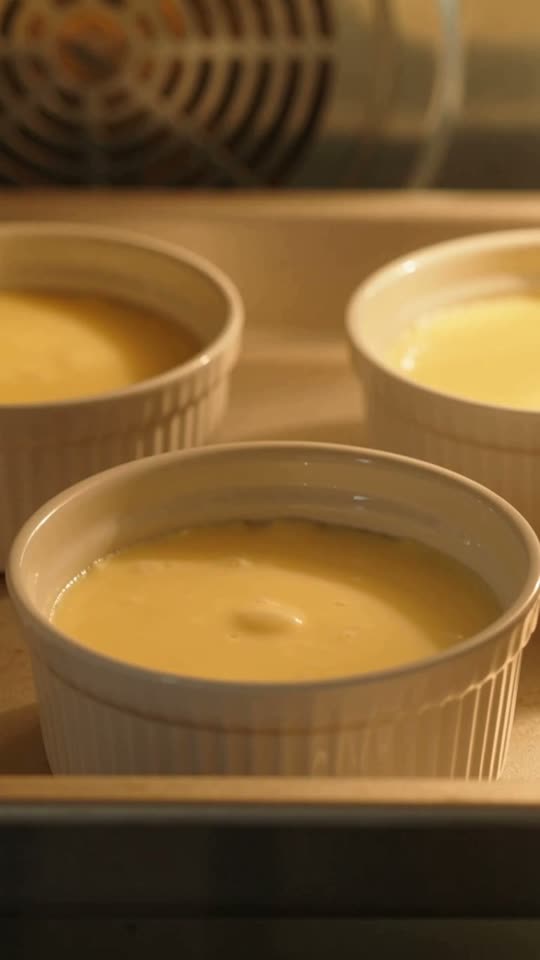
A bain-marie, or gentle hot-water bath, is essential because it shields delicate egg proteins from direct dry oven heat, preventing curdling and bubbling. By surrounding the ceramic ramekins with hot water up to their midpoints, the cooking environment caps the ramekin walls at 100°C (212°F). This buffer distributes thermal energy evenly from all sides, ensuring the egg yolks coagulate smoothly into a uniform gel rather than separating into grainy liquid and rubbery curds.
Baking custard at a moderate oven temperature of 150°C (300°F) inside a water bath allows the center to reach the target set point without scorching the perimeter.
How do egg yolk proteins set into a silky emulsion?
Egg yolk proteins set through thermal coagulation, unfolding and bonding together to trap liquid fat and dairy water into a tender, continuous microscopic network. In a heavy cream custard containing 36% milkfat, the high concentration of fat globules and dissolved sucrose elevates the coagulation temperature of yolk proteins from their standard 65°C (149°F) up to approximately 80°C to 85°C (176°F to 185°F). This thermal delay gives the cook a generous window to achieve a luscious, spoonable set.
Slowly tempering warm cream into the whisked yolks and sugar prevents thermal shock. Pouring the warm dairy in a thin, continuous stream brings the yolks up to temperature gradually before they enter the oven.
How does crème brûlée compare to other European custards?
Crème brûlée belongs to a distinguished family of European custards that evolved across France, Spain, and England over four centuries. While they share core staples—dairy, eggs, and sugar—their dairy ratios, cooking techniques, and caramel presentations vary significantly.
| Custard Style | Traditional Origin | Dairy Base | Thickener Mechanism | Caramel Style |
|---|---|---|---|---|
| Crème Brûlée | France | Heavy cream (high fat) | Pure egg yolk coagulation | Hardened dry sugar pane torched on top |
| Crema Catalana | Spain (Catalonia) | Milk and light cream | Egg yolks plus cornstarch | Caramelized sugar crust with citrus and cinnamon |
| Crème Caramel / Flan | France / Spain | Whole milk or milk blend | Whole eggs and egg yolks | Liquid inverted caramel pool poured into mold |
| Trinity Burnt Cream | England (Cambridge) | Heavy cream | Egg yolks | Thick broiled sugar crust |
As detailed in historical studies of crema catalana, the Spanish Catalan version is typically cooked on the stovetop and flavored with lemon peel and cinnamon, whereas French crème brûlée relies on gentle oven baking and floral vanilla.
Whole vanilla bean vs extract: what creates genuine depth?
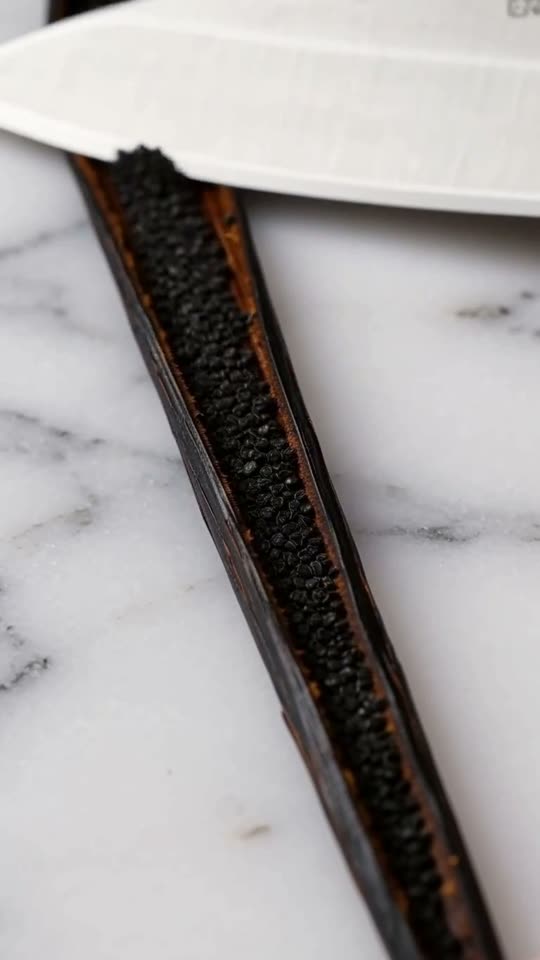
Whole vanilla beans yield superior aromatic complexity because real cured pods contain hundreds of volatile flavor compounds beyond synthetic vanillin. When a vanilla bean pod is split lengthwise and scraped, tens of thousands of microscopic seeds infuse directly into the warming dairy fat. Fat globules in heavy cream act as natural solvent carriers, absorbing lipid-soluble floral, woody, and balsamic notes that commercial alcohol-based extracts cannot replicate.
The tiny black specks resting at the base of the ramekin also provide visual authenticity, signaling that natural cured orchid pods rather than artificial flavorings were infused into the dessert.
How do you achieve a glass-like caramelized sugar crust?
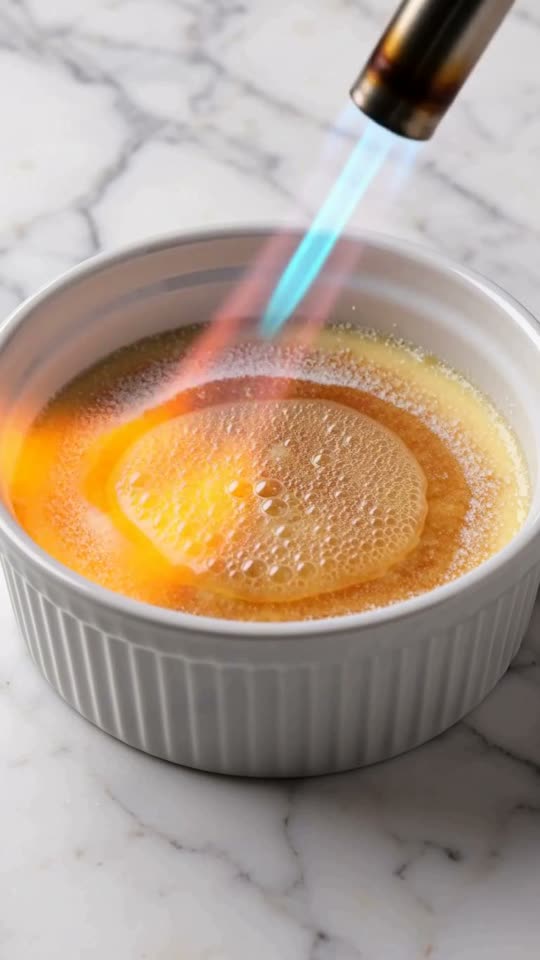
Achieving a glass-like crust requires applying a thin, uniform dusting of fine granulated sugar and heating it rapidly with a butane culinary torch. Through caramelization, pure sucrose undergoes thermal decomposition at approximately 160°C to 180°C (320°F to 356°F), melting into a clear syrup before darkening into an amber pane that hardens within sixty seconds upon cooling. An uneven pile of sugar will burn black in spots while leaving underlying grains raw.
The custard must be chilled thoroughly for at least four hours before torching. This stark thermal contrast keeps the custard cold while the intense flame liquefies the sugar surface.
The method, in order:
- Infuse the Vanilla Bean Cream: Preheat your oven to 150°C (300°F) and bring a kettle of water to a boil for the water bath. Split 1 plump Madagascar vanilla bean lengthwise, scrape out the seeds with the back of a paring knife, and place both the seeds and pod into a saucepan with 480ml heavy cream and a pinch of fine sea salt. Warm over medium-low heat until steaming around the edges (about 75°C / 165°F; do not boil), then cover, remove from heat, and steep for 15 minutes.
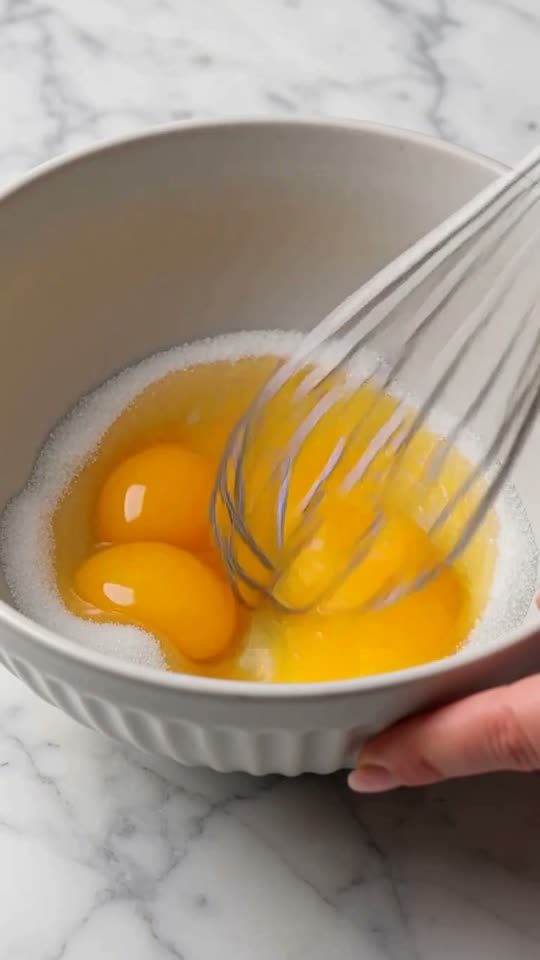
- Temper the Egg Yolks & Strain: In a mixing bowl, whisk 5 large egg yolks and 70g caster sugar gently for 60 seconds just until pale and dissolved (avoid whipping air bubbles into the yolks). Slowly drizzle the warm vanilla cream into the yolks in a thin stream while whisking gently to temper, then pour the custard through a fine-mesh sieve into a spouted pitcher to catch the vanilla pod and any chalazae.
- Bake in a Hot Water Bath (Bain-Marie): Arrange 4 shallow ceramic ramekins inside a deep roasting pan and divide the strained custard evenly among them (pop any surface air bubbles with a toothpick). Set the pan on the middle oven rack, pour hot water from the kettle into the roasting pan until it reaches halfway up the outside of the ramekins, and bake at 150°C (300°F) for 32 to 38 minutes until the edges are set and the center still jiggles like gelatin when nudged (internal temperature 77–79°C / 170–175°F).
- Cool on a Rack, Then Chill for 4 Hours: Carefully lift the ramekins out of the water bath onto a wire rack and cool completely to room temperature for 45 minutes. Cover lightly with plastic wrap (making sure it does not touch the custard) and refrigerate for at least 4 hours—or overnight—until thoroughly cold and firm.
- Blot Dry & Coat Evenly with Sugar: Uncover the cold ramekins and gently blot any condensation droplets off the custard surface with a paper towel. Sprinkle 1.5 teaspoons of fine caster or superfine sugar per ramekin and tilt each dish in a circle so a thin, uniform, edge-to-edge blanket of sugar covers the custard.
- Torch to Amber Glass & Rest 2 Minutes: Hold a kitchen butane torch 7 to 8 cm above the surface and sweep the flame in slow circles until the sugar melts into bubbling amber caramel. Let the ramekins sit for 2 minutes so the molten sugar hardens into a brittle glass crust before cracking with the back of a dessert spoon.
Where does crème brûlée come from?
The earliest documented printed recipe for crème brûlée appeared in France in 1691, authored by royal chef François Massialot in his landmark volume Le Cuisinier Roïal et Bourgeois. Massialot described a dessert of sweetened cream and egg yolks cooked with a caramelized sugar disc formed using a red-hot iron salamander blade held over the surface.
Both England and Spain lay historic claims to similar desserts. In Britain, Trinity College in Cambridge served 'Trinity Burnt Cream' during the 19th century, stamped with the college crest. In Catalonia, crema cremada has been documented on Saint Joseph's Day for centuries. In modern dining, chef Sirio Maccioni popularized the dessert at New York's Le Cirque during the 1980s, establishing the shallow ramekin format that defined standard restaurant service worldwide.
Frequently asked questions
Can you make crème brûlée ahead of time?
Yes, the baked custards can be baked, cooled, and stored in the refrigerator covered with plastic wrap for up to three days. The sugar topping, however, must be torched immediately before serving, as moisture from the chilled custard will soften the brittle caramel within thirty minutes.
Why did my custard turn out runny or watery?
Runny custard usually results from underbaking or insufficient chilling time. Custard should be removed from the oven when the edges are set but the center still jiggles gently like gelatin; it achieves its final firm structure during the mandatory four-hour refrigerator chill.
Can you use an oven broiler instead of a blowtorch?
An oven broiler can melt sugar, but its ambient radiant heat warms the delicate custard underneath, softening the dessert into liquid. A direct culinary torch delivers concentrated high-temperature heat directly to the sugar granules without cooking the underlying cream.
Are the egg yolks in crème brûlée fully cooked?
Baking custard in a water bath at 150°C (300°F) for 35 minutes brings the interior temperature above 80°C (176°F), well past the standard pasteurization threshold. For commercial environments or vulnerable diners, utilizing pasteurized eggs ensures complete food safety while maintaining optimal emulsion stability.
Watch it, cook it, tell us what's next
The film at the top of this page shows every step in under 30 seconds, set to an original recipe song. Watch it on YouTube, Instagram or TikTok, and tell us which dish we should cook next.
AI-created visuals. Culinary inspiration, not a complete cooking guide.