The story and science behind the dish · recipe above ↑
Truffle Mac and Cheese with Gruyère, White Cheddar and a Panko Crust
What makes this baked truffle mac and cheese work in a home kitchen?
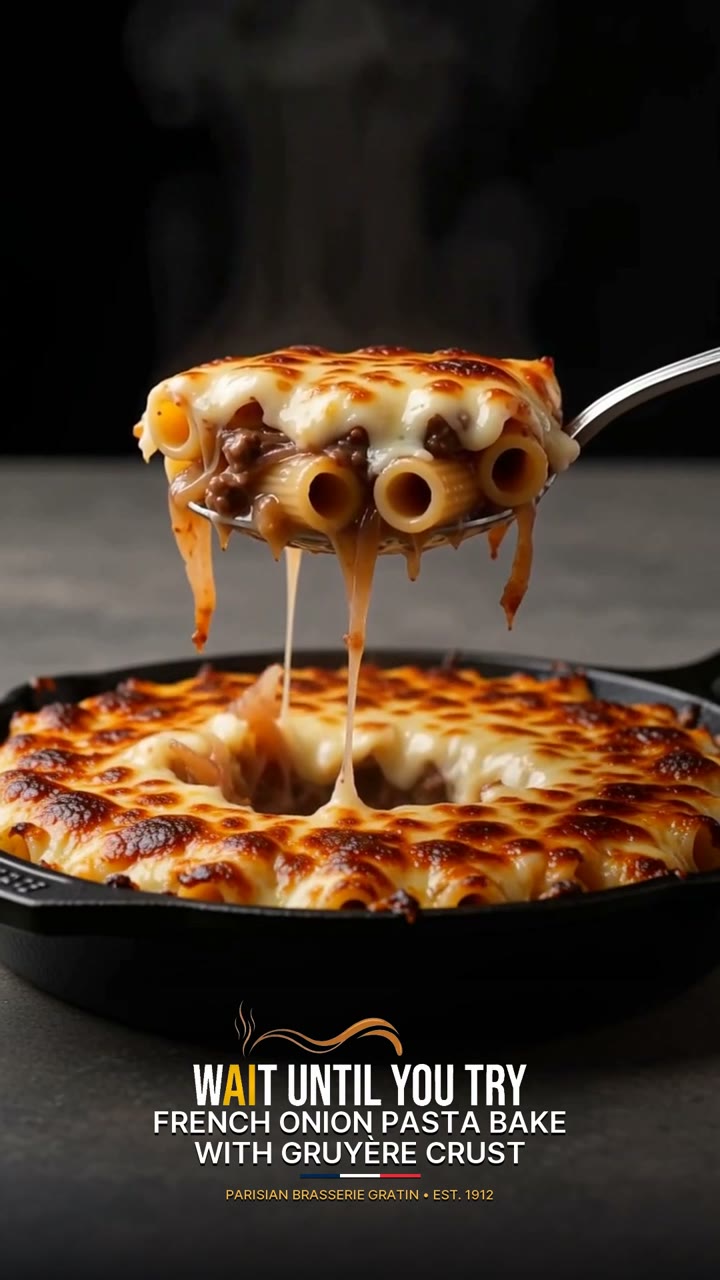
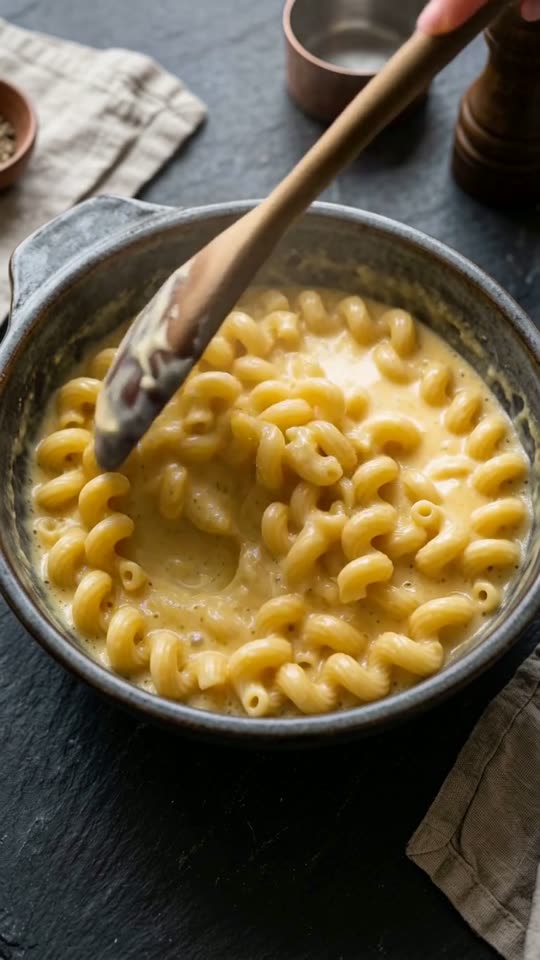
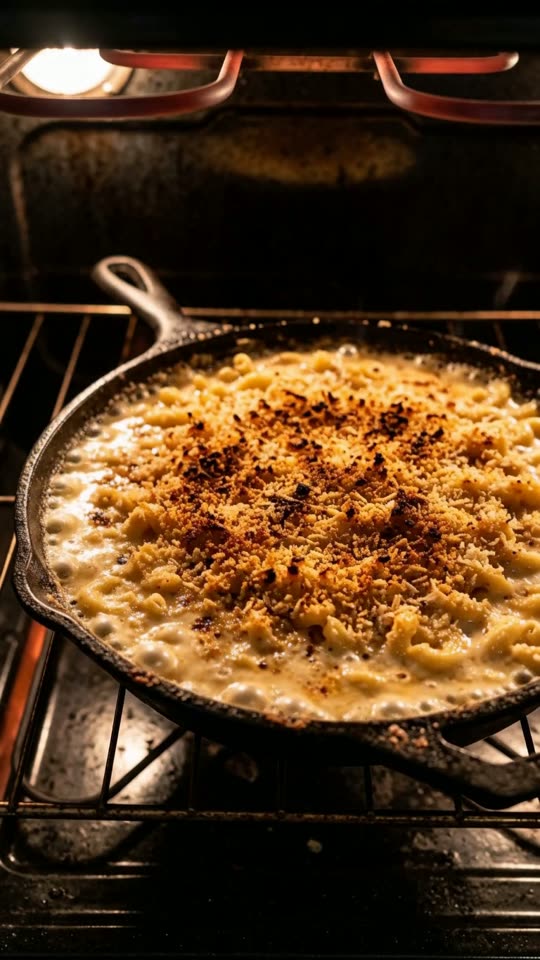
This baked truffle mac and cheese coats bronze-die cavatappi in a classic French Mornay sauce made from a blonde butter-and-flour roux, warmed milk and heavy cream, cave-aged Gruyère, and sharp white cheddar, then finishes the skillet under a crisp garlic-butter Parmigiano panko crust and fresh black truffle shavings. While a short recipe film only has time to show the molten cheese fold and the bubbling skillet finish, cooking a smooth baked mac and cheese at home depends on three off-camera steps: under-boiling the cavatappi by two minutes, building a starch-stabilized blonde roux, and melting the aged cheeses off the burner so the emulsion never splits.
Aged cheeses such as Gruyère and sharp white cheddar contain less moisture and more broken-down protein than young melting cheeses. If you boil heavy cream and drop aged cheese straight into a bubbling skillet, the casein proteins tighten above 80°C (175°F) and squeeze out liquid fat, leaving the sauce grainy and oily. Whisking a 90-second blonde roux and pulling the skillet off the heat before adding the grated cheese suspends the milkfat in a smooth, velvety blanket that survives a 200°C (400°F) oven bake.
Which pasta and cheeses does the recipe use?
The recipe uses 450g cavatappi, 200g cave-aged Gruyère, 200g aged sharp white cheddar, and 50g Parmigiano-Reggiano DOP. Cavatappi—literally "corkscrews"—combines helical ridges on the outside with a hollow tube inside, allowing the Mornay sauce to cling both inside and out. Weighing the pasta and cheeses in grams keeps the starch-to-dairy ratio balanced so the baked skillet stays creamy rather than drying out.
Gruyère and sharp white cheddar melt into the Mornay base (with a handful reserved for the gratin surface), while finely grated Parmigiano-Reggiano is tossed with the butter-toasted panko for a savory, nutty crust. The Le Gruyère AOP recipe collection highlights how cave-aged Swiss Gruyère melts with elastic, nutty depth in gratins, while the Parmigiano-Reggiano recipe collection documents how aged hard cow's-milk cheese browns and crisps on baked pasta surfaces.
| Ingredient | Quantity | Kitchen Role |
|---|---|---|
| Cavatappi pasta | 450 g | Boiled 2 minutes shy of al dente so the spirals finish cooking in the sauce without turning soft |
| Unsalted butter & all-purpose flour | 45 g butter + 35 g flour | Cooked 90 seconds into a blonde roux that stabilizes the dairy emulsion in the oven |
| Warm whole milk & heavy cream | 360 ml milk + 240 ml cream | Hydrates the roux into a rich, spoon-coating béchamel base |
| Cave-aged Gruyère & sharp white cheddar | 200 g each | Emulsified off the heat below 80°C (175°F) for a smooth, stretchy Mornay sauce |
| Coarse panko, butter, garlic & Parmigiano-Reggiano | 80 g panko + 30 g butter + 50 g cheese | Toasted in a skillet first so the topping is evenly golden before baking |
| Fresh black truffle shavings & truffle oil | 15 g truffle + 1 tsp oil | Folded into the warm pasta and scattered fresh at service so volatile aromas do not bake off |
Grate the Gruyère and cheddar from solid blocks on the coarse holes of a box grater before turning on the stove. Pre-shredded bagged cheeses are dusted with cellulose or potato starch anti-caking powders that prevent smooth melting and make cheese sauces gritty.
How do you keep a Gruyère and cheddar Mornay sauce from splitting?
Cheese sauce is an oil-in-water emulsion, and its stability depends on starch dispersion and temperature control. Serious Eats' guide to stovetop mac and cheese explains how starch molecules physically get between strands of melting casein protein so they cannot knot tightly together and expel fat. While stovetop-only formulas often rely on evaporated milk or sodium citrate, a high-heat baked gratin benefits from a classic flour-and-butter roux paired with whole milk and 36%-fat heavy cream.
Follow three temperature cues at the stove:
- Warm the dairy first: Whisking warm milk and cream into the hot roux prevents lumps and brings the béchamel to a gentle simmer in 3 to 4 minutes.
- Take the skillet off the burner before adding cheese: Let the bubbling subside so the liquid drops below 80°C (175°F). Add the grated Gruyère and white cheddar in three handfuls, whisking until each batch melts smoothly before adding the next.
- Keep the sauce slightly looser than you want it on the plate: Dry pasta continues to absorb liquid in a 200°C oven. Stirring 2 to 4 tablespoons of reserved starchy pasta water into the sauce before baking keeps the interior molten when you scoop into the skillet.
Step-by-step cooking method
- Boil the Cavatappi 2 Minutes Shy of Al Dente: Preheat the oven to 200°C (400°F). Boil 450g cavatappi in well-salted water for 2 minutes less than the package time. Reserve 120ml starchy pasta water, drain, and toss the pasta with 1 tsp butter so the spirals do not stick.
- Toast the Garlic-Butter Panko on the Stovetop: Melt 30g butter with 1 grated garlic clove in a medium skillet over medium heat for 30 seconds. Add 80g coarse panko and a pinch of salt, stirring constantly for 3 to 4 minutes until evenly golden-blonde and crisp. Cool 2 minutes in a bowl and toss with 50g grated Parmigiano-Reggiano.
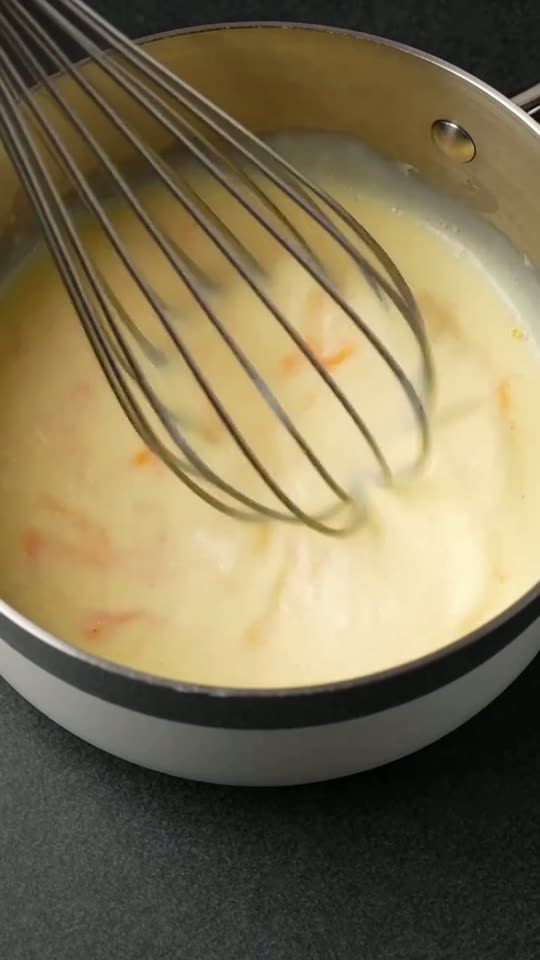
- Cook the Blonde Roux & Simmer the Béchamel Base: In a 26 cm ovenproof cast-iron skillet over medium heat, melt 45g butter, whisk in 35g flour, and cook for 90 seconds until pale golden and nutty. Slowly whisk in 360ml warm whole milk and 240ml warm heavy cream with 1 tsp Dijon mustard, 1/4 tsp freshly grated nutmeg, 1/2 tsp salt, and 1/2 tsp cracked black pepper; simmer gently for 3 to 4 minutes until smooth and thick enough to coat a spoon.
- Emulsify Gruyère & White Cheddar Off the Heat: Remove the skillet from the heat so the sauce cools below 80°C (175°F). Reserve 80g of the grated Gruyère and cheddar for the top, then whisk the remaining cheese into the hot béchamel in three additions until melted and glossy.
- Fold in the Cavatappi & Black Truffle: Fold the cooked cavatappi, two-thirds of the shaved black truffle, and 1 tsp truffle oil into the Mornay sauce, loosening with 2 to 4 tablespoons of reserved pasta water so every ridge is coated in a fluid, creamy sauce.
- Blanket with Reserved Cheese & Toasted Panko: Level the pasta in the skillet, scatter the reserved 80g of Gruyère and cheddar across the top, and spread the butter-toasted Parmigiano panko evenly from edge to edge.
- Bake & Blister Under the Broiler: Bake at 200°C (400°F) for 12 to 15 minutes until bubbling around the cast-iron edges, then broil for 60 seconds to blister the crust. Rest 5 minutes and finish with the remaining fresh black truffle shavings.
Why should you toast the panko in butter before baking?
Raw panko sprinkled straight onto a pasta bake only browns on the highest peaks during a 12-minute bake, leaving pale, dry crumbs underneath. Tossing the panko in melted garlic butter in a skillet for 3 to 4 minutes coats every airy breadcrumb shard in fat and browns it evenly from edge to edge before it ever enters the oven. Once mixed with grated Parmigiano-Reggiano and scattered over the reserved cheese layer, the oven heat fuses the bottom of the crumb layer to the melting cheese while the top crisps into a shattering golden lid.
Similarly, black truffle aroma compounds are highly volatile under prolonged high heat. Folding two-thirds of the shaved truffle into the warm sauce right before baking infuses the dairy fat, while saving the final third to scatter raw over the hot skillet after it comes out of the oven preserves the earthy, floral nose at the table.
Where does macaroni and cheese fit in culinary history?
Baked pasta layered with cheese and butter dates back to medieval Italian and English court cookbooks long before modern skillet gratins. In American culinary history, Monticello's archival research clarifies that while Thomas Jefferson brought a pasta-making machine blueprints and recipes back from Paris, enslaved chef James Hemings—who trained in French cuisine in Paris—prepared the baked macaroni pie served at Jefferson's table. The Monticello encyclopedia entry on macaroni documents how early American recipes boiled pasta and baked it with butter and cheese, and the Smithsonian National Museum of African American History and Culture details Hemings's foundational role in introducing French culinary technique to American kitchens.
Frequently asked questions
Why did my cheese sauce turn grainy in the oven?
The sauce either overheated above 80°C (175°F) when the cheese was added, or pre-shredded bagged cheese was used instead of block cheese grated by hand. Always build the flour-and-butter roux first, melt freshly grated cheese off the burner, and loosen the mixture with a splash of starchy pasta water before baking.
Can elbow macaroni or shells replace cavatappi?
Yes. Any ridged tubular or cupped pasta such as elbow macaroni, pipe rigate, or conchiglie works well at the same 450g weight. Boil whichever shape you choose for 2 minutes less than its package directions so it stays firm during the oven bake.
Why do you add Dijon mustard and nutmeg to a truffle cheese sauce?
A single teaspoon of Dijon mustard adds gentle acidity and natural lecithin that helps emulsify the melted butterfat, while a pinch of freshly grated nutmeg is the classical French béchamel seasoning that rounds out rich dairy without competing with the black truffle.
How do you reheat leftover baked mac and cheese without drying it out?
Warm portions covered in a 165°C (325°F) oven (or in a small skillet over low heat) with 2 tablespoons of whole milk or cream stirred into the pasta, then uncover for the final 3 minutes to re-crisp the panko crust.
Watch the film and choose the next dish
Watch the vertical recipe film alongside the measured ingredients and full method above. Browse our complete recipe archive, request a dish, and follow the series on YouTube, Instagram, and TikTok.
AI-created visuals. Culinary inspiration, not a complete cooking guide.