The story and science behind the dish · recipe above ↑
Banana Hazelnut-Cocoa Stuffed French Toast Roll-Ups: Brunch Technique, Bread Science, and Step-by-Step Home Method
Banana Hazelnut-Cocoa Stuffed French Toast Roll-Ups turn custard-dipped French toast into crisp handheld cylinders filled with roasted hazelnut-cocoa spread and warm banana rounds. Popularized across American home kitchens in the early 2010s—with foundational variations documented by Taste of Home, Pinch of Yum, and Damn Delicious—the technique replaces thick slices of soaked bread with flattened sheets of crustless brioche rolled around a fruit-and-cocoa core, seared in foaming butter, and tossed in cinnamon sugar.
Where did French toast roll-ups originate and why did they catch on?
Traditional French toast (pain perdu, or "lost bread") developed across European kitchens as a practical way to revive day-old loaves by soaking slices in milk and egg before frying in butter. While classic pain perdu delivers a custardy center, thick slices take longer to cook and require a knife and fork.
In the early 2010s, home bakers began trimming the crusts off soft sandwich loaves and rolling each slice flat with a wooden rolling pin before wrapping fruit and chocolate-hazelnut spread inside. As noted in brunch recipes from Damn Delicious and Taste of Home, two structural advantages made the rolled format a staple:
- Full-surface crust: Every cylinder exposes 360 degrees of butter-seared bread to the skillet while insulating the hazelnut-cocoa spread and banana inside.
- Fast stovetop sear: Because the flattened bread wall is only 3 mm (1/8 inch) thick, the egg custard cooks in 4 to 5 minutes over moderate heat while the banana warms gently.
What role does each ingredient play in the roll-ups?
Each component in the recipe serves a specific structural or thermal purpose during rolling, dipping, and searing.
| Build Stage | Ingredient | Quantity | Culinary Function & Texture Role |
|---|---|---|---|
| Bread wrapper | Soft day-old brioche or pullman bread, crusts trimmed | 6 slices (180 g) | Compresses into a pliable 3 mm sheet that rolls without cracking |
| Inner filling | Creamy roasted hazelnut-cocoa spread, room temperature | 90 g (6 tbsp) | Rich cocoa-nut core and adhesive seam seal along the far edge |
| Fruit core | Firm-ripe bananas, sliced crosswise into 6 mm rounds | 2 medium (200 g) | Sweet fruit center that softens gently during the skillet sear |
| Custard bath | Large farm eggs + whole milk + pure vanilla extract | 2 eggs + 60 ml milk + 5 ml vanilla | Coagulates on the bread surface for a golden, soufflé-like exterior |
| Cooking fat | Unsalted butter | 30 g (2 tbsp) | Conducts heat evenly and adds nutty milk-solid browning |
| Finishing coat | Granulated sugar mixed with 1 tsp ground cinnamon | 50 g (1/4 cup) | Adheres to hot buttered rolls for a sparkling outer crunch |
Why does flattening bread with a rolling pin prevent tearing and soggy centers?
When fresh brioche or white pullman bread comes out of the oven, its crumb consists of an open sponge of gelatinized starch and gluten walls surrounding gas pockets. If you try to roll an unflattened 15 mm slice around banana rounds, the outer curve stretches beyond its elastic limit and splits, while the open air cells absorb too much liquid custard.
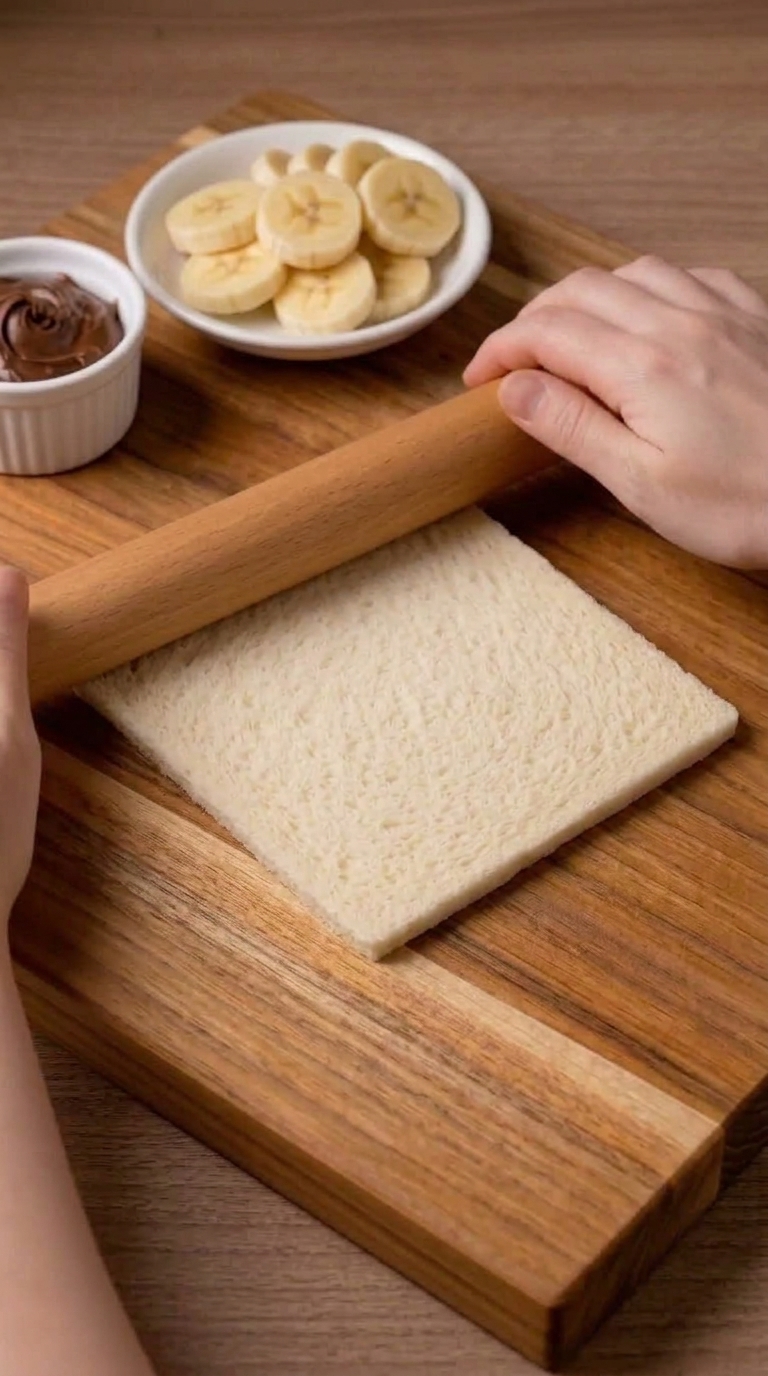
Running a rolling pin firmly across a crustless slice accomplishes three mechanical changes:
- Crumb densification: Compressing the slice from 15 mm down to 3 mm (1/8 inch) expels trapped air and aligns the gluten strands into a flexible sheet that wraps tightly around banana coins.
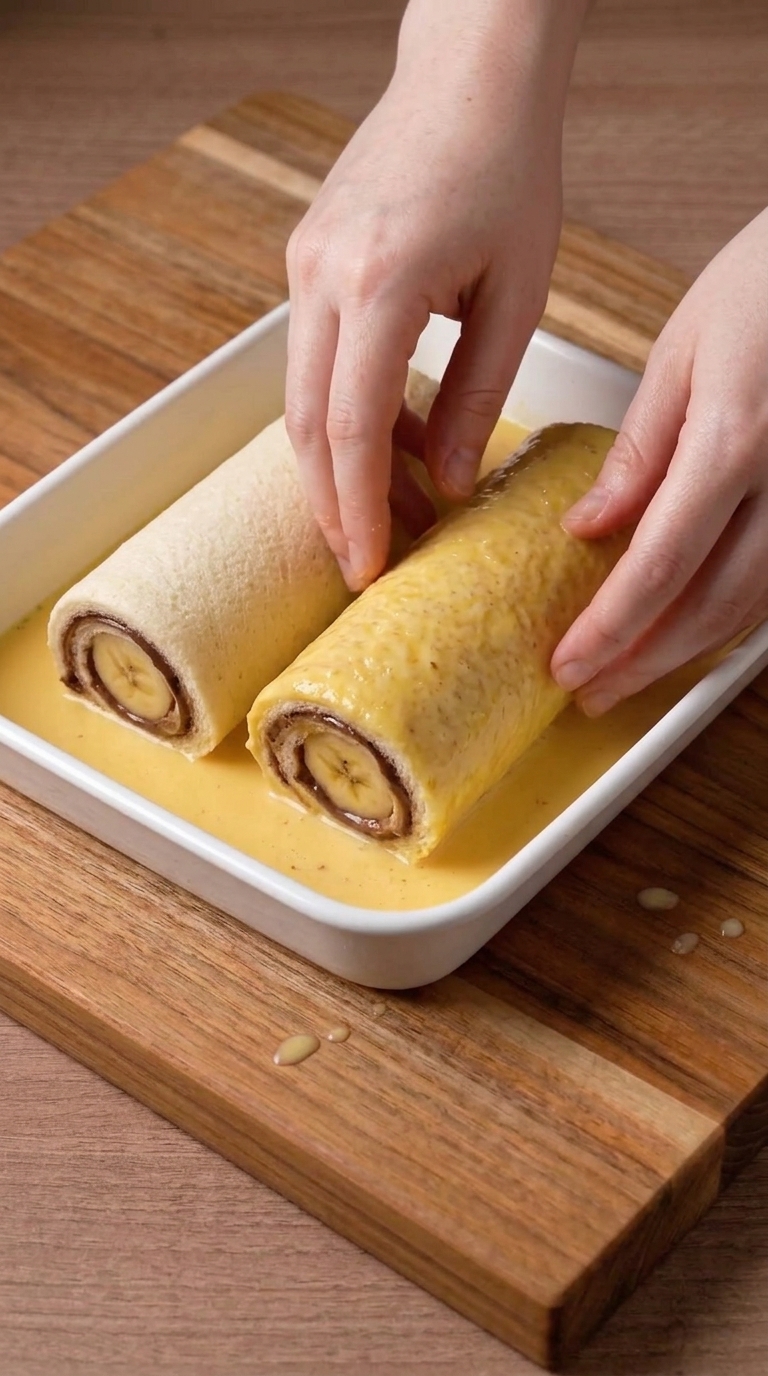
- Controlled custard pickup: A compressed bread sheet absorbs custard only along its outer surface during a brief 2-to-3-second dip, leaving an intact inner barrier between the egg bath and the hazelnut-cocoa spread.
- Even Maillard browning: Removing the stiff perimeter crusts ensures the entire cylinder makes uniform contact with the foaming butter in the skillet.
Why should you slice bananas into crosswise coins and sear seam-side down first?
Home cooks frequently run into two mechanical issues when making stuffed French toast rolls: rolls that spring open in the pan, and fillings that leak out the ends.
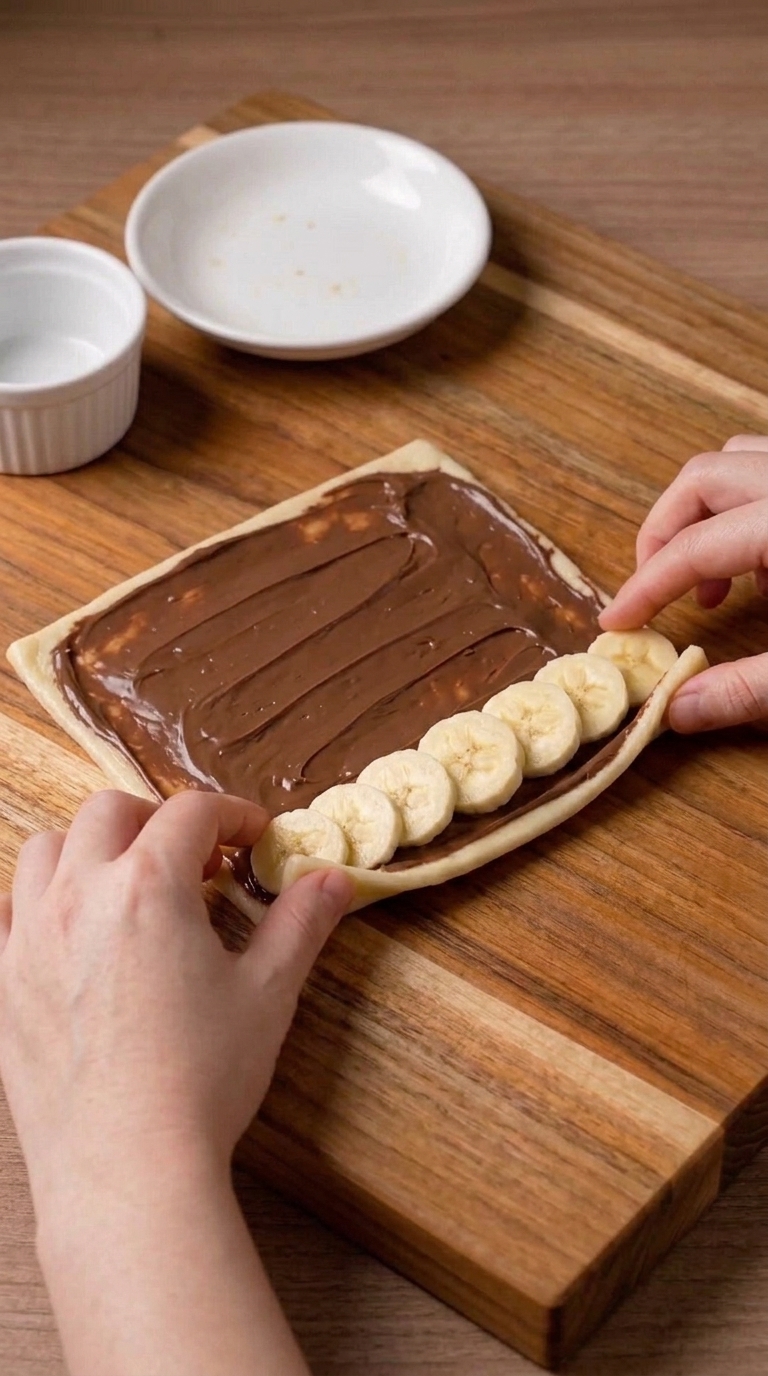
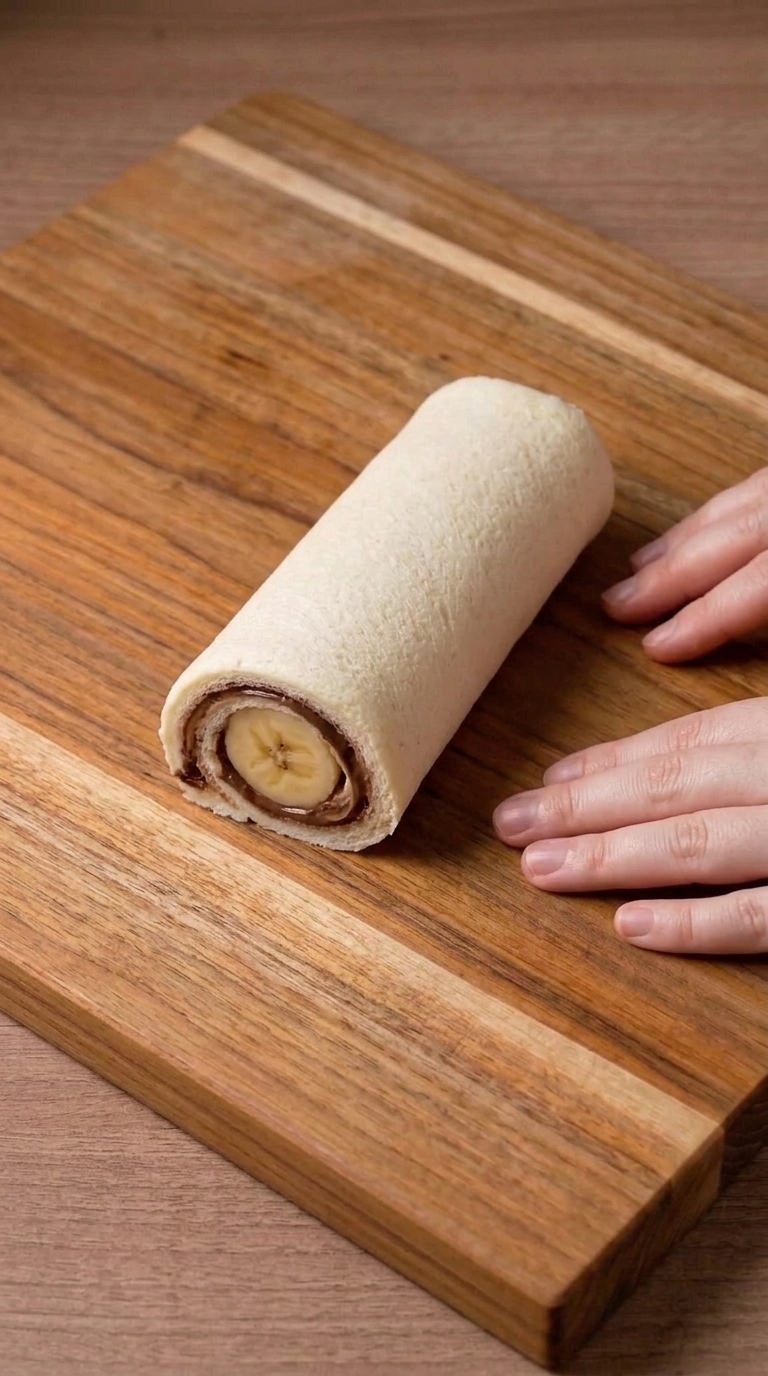
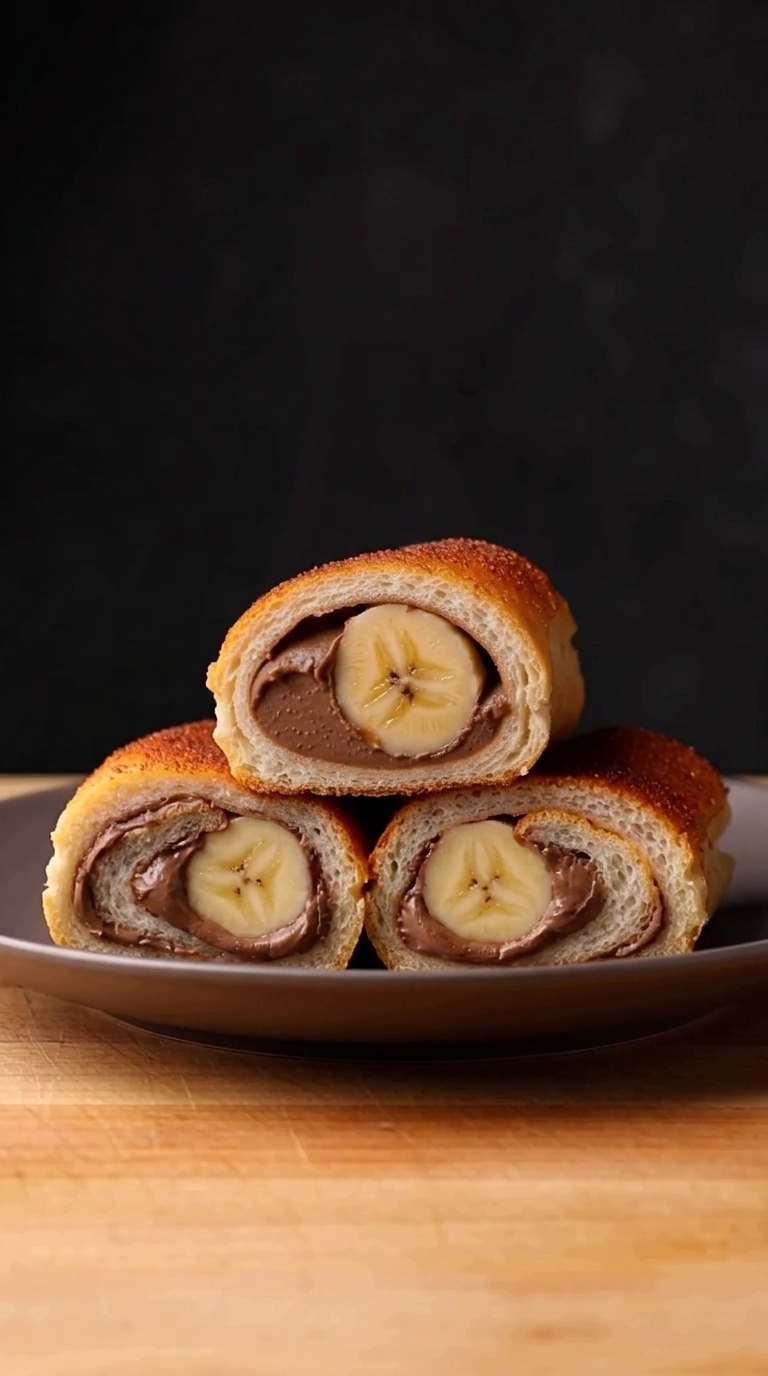
- Crosswise coin rounds: Slicing firm-ripe bananas crosswise into uniform 6 mm (1/4-inch) circular rounds allows you to lay a neat row along the near edge of the bread sheet. As you roll the sheet forward by hand, the flat coins tuck into a tight cylinder and reveal a clean spiral cross-section when sliced.
- Hazelnut-cocoa seam seal: Leaving a thin film of hazelnut-cocoa spread along the far edge of the bread glues the overlap shut as soon as you finish rolling.
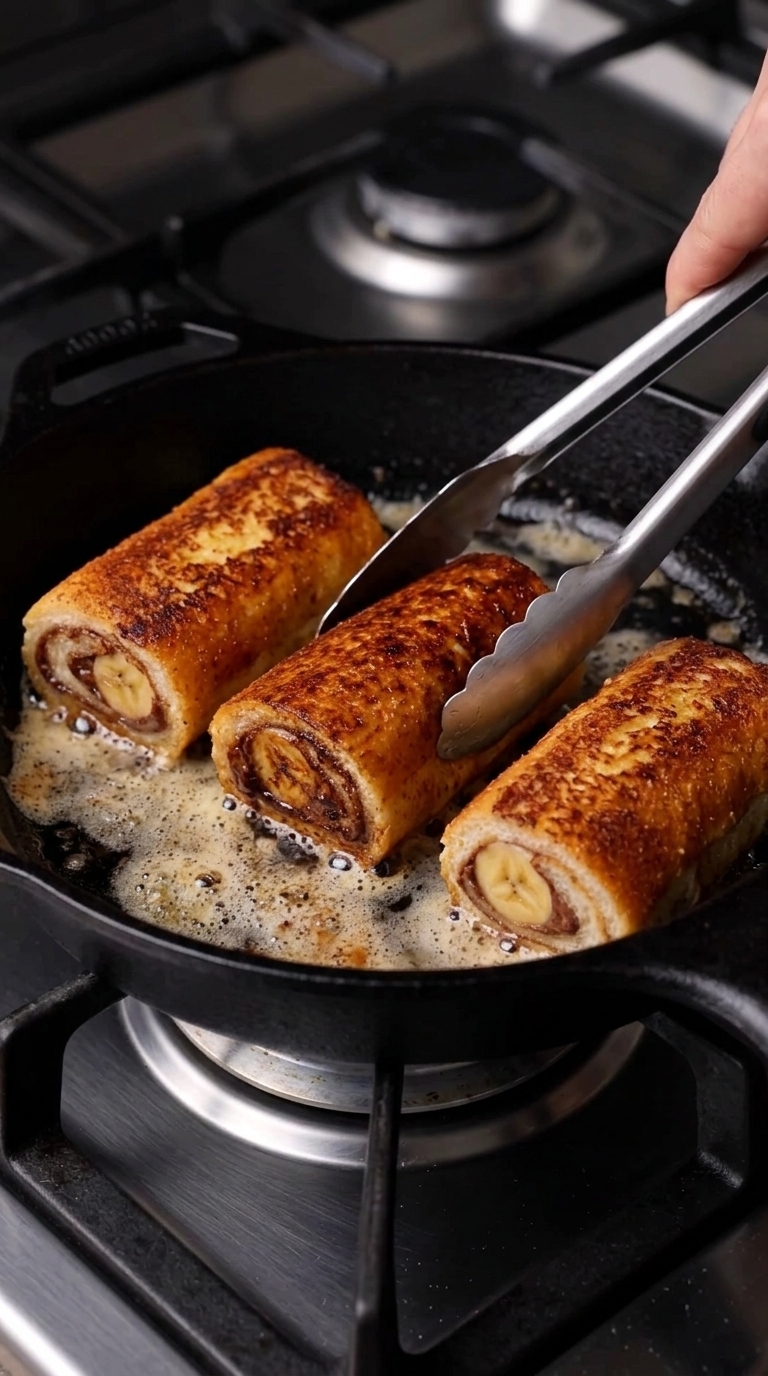
- Thermal seam locking at 165°C (330°F): Placing each custard-dipped roll into the buttered skillet seam-side down first for 90 seconds coagulates the egg proteins along the overlap, locking the cylinder before you turn it with tongs.
How do you make Banana Hazelnut-Cocoa Stuffed French Toast Roll-Ups step by step at home?
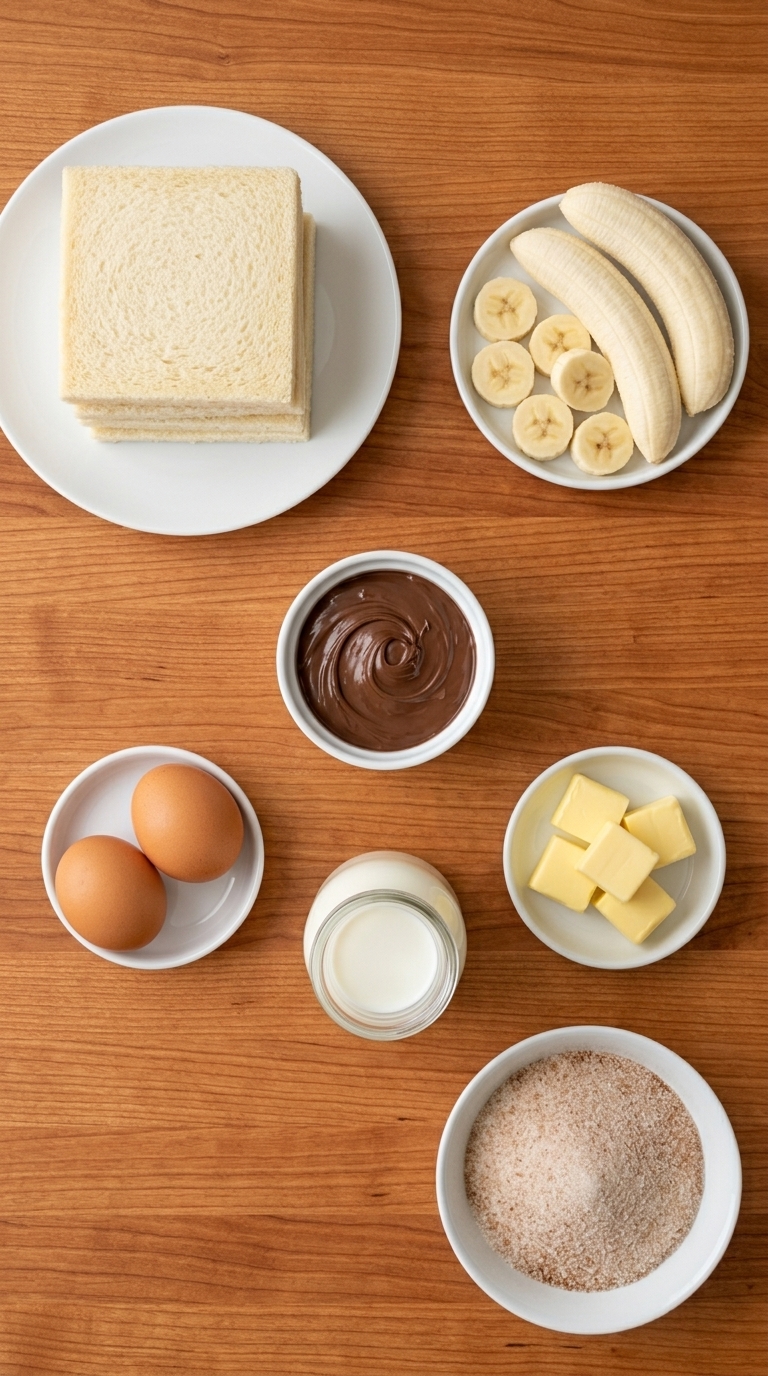
Ingredients (2 servings / 6 roll-ups)
- 6 slices (180 g) soft day-old brioche or pullman bread, crusts trimmed
- 90 g (6 tbsp) creamy roasted hazelnut-cocoa spread, room temperature
- 2 medium (200 g) firm-ripe bananas, sliced crosswise into 6 mm rounds
- 2 whole large farm eggs
- 60 ml (1/4 cup) whole milk
- 5 ml (1 tsp) pure vanilla extract
- 50 g (1/4 cup) granulated sugar mixed with 1 tsp ground cinnamon
- 30 g (2 tbsp) unsalted butter for pan searing
Method
- Trim and Flatten the Bread: Slice the outer crusts cleanly from all 4 sides of 6 soft brioche or pullman sandwich slices so each forms a neat 9 cm (3.5-inch) square. Roll a wooden rolling pin firmly across each slice until compressed into a thin, pliable 3 mm (1/8-inch) sheet that bends without cracking.
- Slice Bananas and Prep Coating: Peel 2 firm-ripe bananas and slice them crosswise into even 6 mm (1/4-inch) circular coin rounds. In a shallow wide bowl, whisk together 50 g granulated sugar and 1 tsp ground cinnamon; set aside next to the stove so it stays dry.
- Spread and Fill: Spread 15 g (1 tbsp) of room-temperature hazelnut-cocoa spread evenly over each flattened bread sheet, leaving a thin border along the far edge to act as a glue seal. Arrange a single row of banana coin rounds across the near edge of the bread.
- Roll Tightly by Hand: Lift the near edge with your fingertips and roll the bread tightly around the banana rounds and hazelnut-cocoa spread into a compact cylinder, pressing gently along the far edge so the spread seals the seam shut.
- Whisk the Custard Bath: In a second shallow dish, whisk 2 large eggs, 60 ml whole milk, and 5 ml pure vanilla extract for 30 seconds until smooth. Turn each roll-up briefly in the custard for 2 to 3 seconds per side—just enough to coat the exterior without soaking through the thin bread.
- Pan-Sear Seam-Side Down: Melt 30 g unsalted butter in a heavy cast-iron or nonstick skillet over medium-low heat (165°C / 330°F) until foaming. Place the roll-ups seam-side down first for 90 seconds to lock the seal, then turn with tongs every 60 to 75 seconds for 4 to 5 minutes total until crisp and golden brown on all sides.
- Coat in Cinnamon Sugar and Slice: Transfer the hot roll-ups straight from the skillet into the cinnamon-sugar dish and roll immediately while residual butter glistens on the crust so the crystals cling evenly. Rest 1 minute on a warm board, then slice crosswise with a sharp serrated knife and serve warm.
What common mistakes ruin French toast roll-ups and how do you avoid them?
- Using crusty artisan sourdough: Dense artisan loaves crack when rolled flat. Choose soft pullman sandwich bread or tender brioche with a fine crumb, as recommended by Pinch of Yum.
- Soaking too long in the egg mixture: Because the bread is flattened to 3 mm, a long soak saturates the sheet. Dip each cylinder for only 2 to 3 seconds per side.
- Searing over high heat: Skillet temperatures above 190°C (375°F) scorch the butter before the inner bread cooks through. Keep the pan at a steady 165°C (330°F).
Frequently asked questions
Can I assemble French toast roll-ups the night before brunch?
Yes. Trim, flatten, spread, and roll the bread cylinders up to 12 hours ahead, arrange them seam-side down in an airtight container, and refrigerate overnight. Whisk the custard and dip right before searing.
Why did my hazelnut-cocoa spread tear the flattened bread?
Cold hazelnut-cocoa spread drags against delicate flattened bread. Let the measured 90 g portion sit at warm room temperature (22°C / 72°F) or warm it for 8 seconds before spreading.
What bread works if I do not have brioche?
Standard soft white pullman sandwich bread, potato bread, or Japanese shokupan milk bread all flatten cleanly under a rolling pin and seal tightly around the filling.
How should I store and reheat leftover roll-ups?
Refrigerate cooled roll-ups in an airtight container for up to 2 days and reheat in a dry skillet over medium-low heat or in an air fryer at 175°C (350°F) for 3 minutes.
Watch the short film
Browse the complete recipe collection, send a recipe request, and follow our kitchen series on YouTube, Instagram, and TikTok.
AI-created visuals. Culinary inspiration, not a complete cooking guide.