The story and science behind the dish · recipe above ↑
Fried Ice Cream with Cinnamon Cornflake Crust: Thermal Insulation Physics, Double-Breading & The 12-Second Flash Fry
Dropping a scoop of frozen vanilla ice cream into a pot of 190°C (375°F) frying oil sounds like a recipe for an instant kitchen disaster—and if you follow shortcuts that only show a single roll in cereal and a quick dip in a skillet, it will melt into bubbling oil in seconds. In a real kitchen, making authentic fried ice cream with a shatteringly crisp cinnamon-cornflake shell and a rock-solid frozen center depends on two non-negotiable rules: two complete, pinhole-free layers of egg-white and crushed cornflake breading, and deep-freezing the coated spheres at -18°C (0°F) for at least three hours before they ever touch hot oil.
While our short film captures the sensory highlights of rolling, flash-frying, and cracking open the golden crust, this guide walks you through the complete home-kitchen timeline, the heat-transfer science that keeps the ice cream frozen inside boiling oil, and how to fry safely without a commercial deep fryer.
Where did cinnamon-cornflake fried ice cream come from?
The concept of enveloping frozen ice cream in a warm crust first appeared in late nineteenth-century American world's fair accounts—including the 1893 Chicago World's Columbian Exposition—and later developedalong two distinct culinary tracks in the mid-twentieth century:
- The Japanese Tempura Method: Popularized in Japanese steakhouses and sushi bars during the 1960s and 1970s, where a hard-frozen scoop of vanilla or green tea ice cream is wrapped in thin pound cake or sponge, dipped in cold tempura batter, and flash-fried.
- The Mexican-American Cornflake & Cinnamon Tradition: Perfected across Mexican-American restaurants in the American Southwest (and nationally popularized by chains such as Chi-Chi's in the late 1970s and 1980s), which replaced wet batter with crushed cornflakes tossed with ground Ceylon cinnamon and sugar, finished with warm wildflower honey or caramel.
For home cooks, the Mexican-American double-dredged cornflake method is far more reliable than wet tempura batter because toasted cornflakes are already crisp and dry; they need only 12 to 15 seconds in hot oil to toast golden-brown and set the egg-white binder.
How does thermal insulation keep ice cream from melting in 190°C oil?
When a double-coated ice cream sphere at -18°C (0°F) is submerged in oil at 190°C (375°F), a 208°C temperature differential exists across a 4-millimeter crust. Three physical mechanisms prevent heat from reaching the vanilla core during the 12-second fry:
- Low Thermal Conductivity of the Porous Crust: Crushed cornflakes packed in two overlapping layers trap thousands of microscopic air pockets. Air is a poor conductor of heat, turning the cereal shell into a rigid thermal blanket.
- The Leidenfrost Steam Barrier: The moment the frothy egg-white wash contacts 190°C oil, surface water flashes into steam. Escaping steam bubbles push outward against the hot oil, preventing grease from soaking inward while coagulating the egg-white albumen proteins into a watertight seal in under 5 seconds.
- High Butterfat Ice Cream Selection: Premium vanilla bean ice cream with 14–16% butterfat and low overrun (less whipped air) freezes denser and melts more slowly than light commercial ice milk or whipped frozen dairy desserts.
Why does every stage of freezing matter?
Skipping or rushing the intermediate freezer rests is the single most common reason homemade fried ice cream leaks in the pot:
| Preparation Stage | Freezer Time at -18°C (0°F) | Core & Surface State | Why This Step Cannot Be Skipped |
|---|---|---|---|
| Stage 1: Scooped & Plastic-Compressed Spheres | 60 minutes minimum | Solid 120 g sphere with zero surface cracks | Soft scoops deform when pressed into cereal and melt on warm hands |
| Stage 2: First Egg-White & Cornflake Coat | 20 minutes | Base coat frozen onto the outer 2 mm of dairy | Locks the first layer in place so the second dip doesn't rub it off |
| Stage 3: Second Egg-White & Cornflake Coat | 3 hours minimum (or overnight) | Rock-hard to the center with a 4 mm sealed shell | Any bare pinhole allows molten cream to erupt into the hot oil |
| Stage 4: Flash-Fry at 190°C (375°F) | 12–15 seconds in oil | Crisp 190°C crust; -12°C creamy frozen center | Longer than 20 seconds conducts heat past the crust into the core |
How do you make Fried Ice Cream with Cinnamon Cornflake Crust step by step?
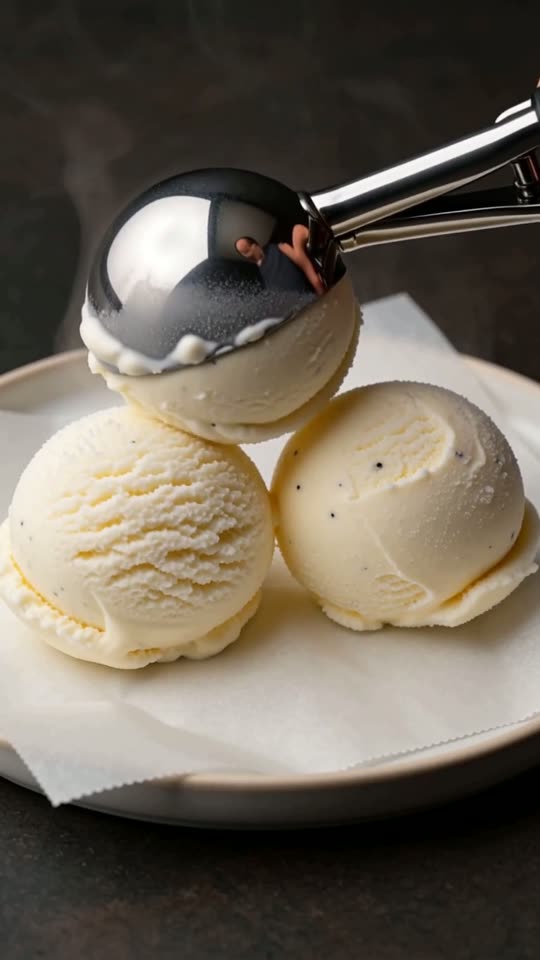
- Scoop & Compress the Ice Cream Spheres: Chill a baking sheet lined with parchment paper in the freezer for 15 minutes. Using a warm mechanical scoop, portion 4 generous 120g balls of dense, high-butterfat vanilla bean ice cream, wrap each tightly in a square of plastic wrap to compress it into a smooth, crack-free sphere, and freeze at -18°C (0°F) for at least 1 hour until rock-hard.
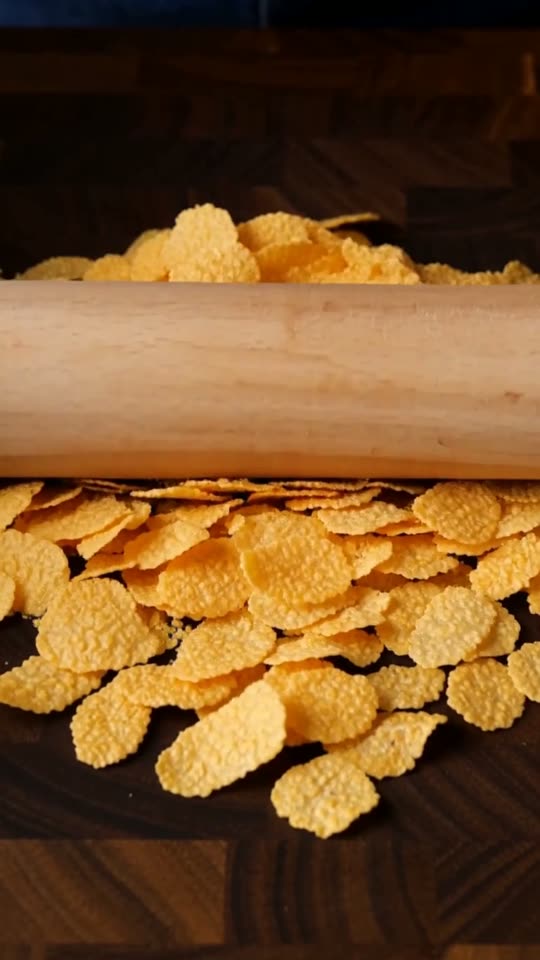
- Crush the Spiced Cornflake Coating: Place 180g plain cornflakes in a zip-top bag and roll with a rolling pin into coarse 2–3mm shards (avoid pulverizing into fine powder so the crust fries up jagged and crisp). Transfer to a shallow pie dish and toss with 25g granulated sugar, 1.5 tsp ground Ceylon cinnamon, and a pinch of fine sea salt.
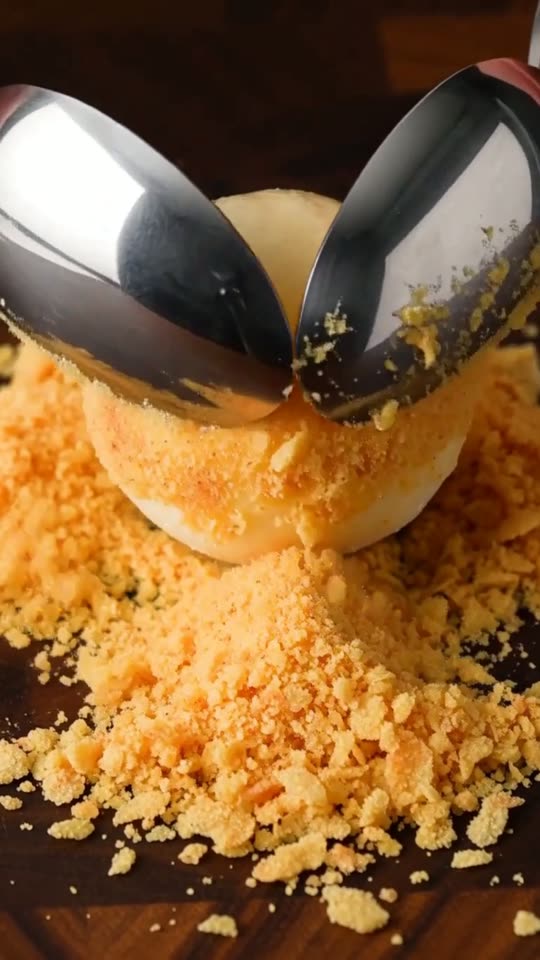
- First Dredge in Frothy Egg White & Cornflakes: In a second shallow bowl, whisk 2 cold egg whites with 1 tbsp whole milk until frothy. Unwrap one frozen ice cream ball at a time, roll it in the egg white, and press it firmly into the cinnamon cornflakes so an even base coat adheres. Return all 4 balls to the freezer for 20 minutes.
- Double-Coat & Deep-Freeze for 3 Hours: Dip each coated ice cream ball a second time through the egg white wash and pack on a second thick layer of cinnamon cornflakes with your palms, checking carefully that zero bare spots or pinholes remain (a complete double shell insulates the ice cream and prevents melted dairy from leaking into the hot oil). Freeze uncovered for at least 3 hours—or overnight—until solid to the core.
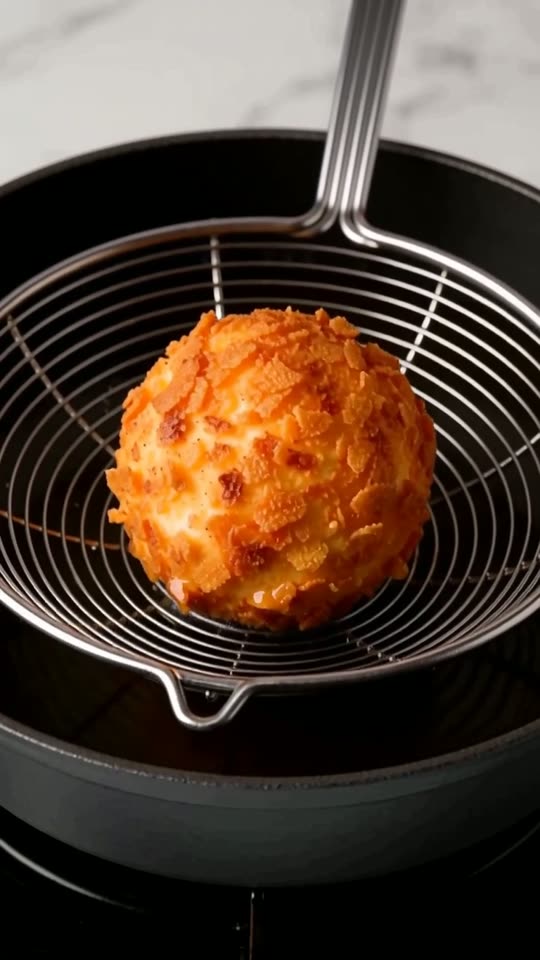
- Flash-Fry at 190°C (375°F) for 12–15 Seconds: Pour neutral peanut or canola oil into a deep heavy saucepan to a depth of at least 9 cm and heat to 190°C (375°F) on a clip-on thermometer. Working with one ball from the freezer at a time, cradle it in a wire spider strainer and submerge completely in the 190°C oil for 12 to 15 seconds until the cornflake crust turns deep golden and crisp while the vanilla center stays frozen.
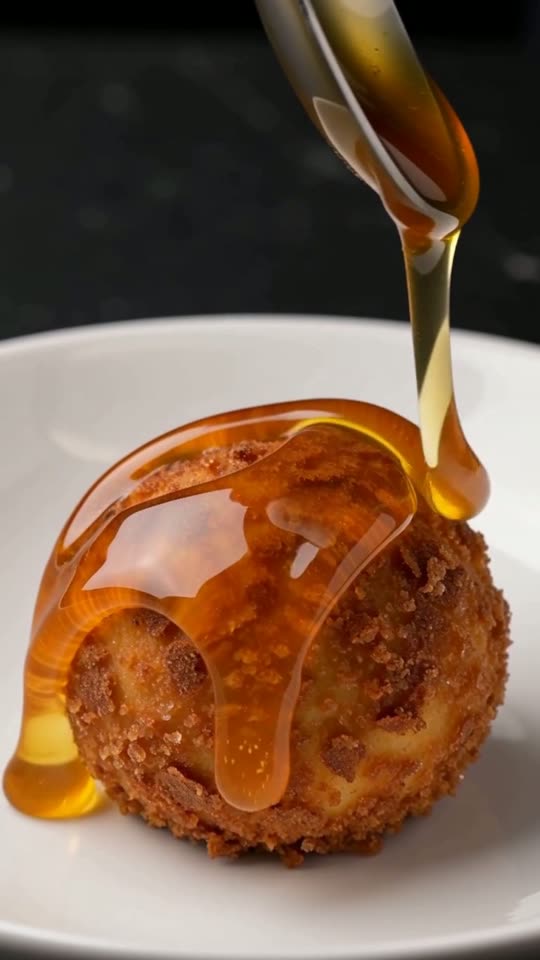
- Drain Briefly & Serve Immediately with Warm Honey: Lift the fried ice cream ball onto a paper towel for 3 seconds to blot surface oil, set directly into a chilled dessert bowl, drizzle with warm wildflower honey, and serve immediately.
Frequently asked questions
Can I pan-fry the ice cream in a shallow skillet instead of deep-frying?
No. Shallow oil requires turning the ball across several sides over 45 to 60 seconds, which gives heat far too much time to penetrate the crust and melt the ice cream into the pan. Use a smaller, deeper saucepan so 9 cm (3.5 inches) of oil submerges the entire sphere at once for a single 12-second flash fry.
Why do you use egg whites instead of whole beaten eggs for the binder?
Egg whites whisked with a splash of milk create a thin, tacky protein film that sets almost instantaneously at 190°C without browning prematurely or adding a heavy, eggy flavor against the delicate vanilla bean ice cream and cinnamon sugar.
Can I make the double-coated ice cream balls days in advance?
Yes—in fact, fried ice cream is one of the easiest make-ahead dinner party desserts. Once double-coated and frozen solid for 3 hours, wrap each sphere individually in plastic wrap and seal in a freezer bag for up to 1 week. Unwrap and fry straight from the freezer in 15 seconds per guest.
Is there a no-fry method that gives a similar crunchy coating?
If you prefer not to heat frying oil, toast the crushed cornflakes in a skillet with 30g melted butter, sugar, and cinnamon until golden-brown and fragrant, cool completely, and press the toasted crunch firmly around the frozen ice cream balls. You won't get the hot-crust/cold-core temperature contrast of the 12-second flash fry, but the flavor and crunch are still delicious.
Watch the short film
Browse the complete recipe collection, send a recipe request, and follow our kitchen series on YouTube, Instagram, and TikTok.
AI-created visuals. Culinary inspiration, not a complete cooking guide.