The story and science behind the dish · recipe above ↑
Creamy Tuscan Salmon Rigatoni: The Italian-American Cream Sauce, Explained
What is creamy Tuscan salmon rigatoni?
Creamy Tuscan salmon rigatoni is an Italian-American pasta dish: crisp-skinned salmon broken into large flakes and folded through rigatoni in a garlic, white wine and cream sauce with Parmigiano Reggiano, sun-dried tomatoes and wilted baby spinach. It belongs to the family of "Tuscan" cream sauces found on American restaurant menus and recipe sites.
The dish is built in one pan after the pasta is boiled. The salmon sears first, the sauce goes into the same pan, and everything comes together at the end with a splash of starchy pasta water. Wide, ridged rigatoni tubes catch the sauce and hold small pieces of tomato and spinach.
Is "Tuscan" cream sauce actually from Tuscany?
Not as far as anyone has documented. The cream, sun-dried tomato and spinach combination sold as "Tuscan" is an Italian-American restaurant style. Traditional Tuscan cuisine is rooted in cucina povera and is known for simplicity, olive oil, legumes and bread, with seasonal ingredients and straightforward flavours rather than complex sauces.
Recipe developer Billy Parisi calls the chicken version "an Italian-inspired American dish" and doubts it comes from Tuscany, a region of central Italy where, in his words, cream is rarely used. Who first put these ingredients together under the Tuscan name is not documented, so treat any single origin story as unproven.
What is documented is how much the word "Tuscan" was worth to American restaurants. In October 1999 the Christian Science Monitor reported that Olive Garden would send hundreds of chefs and staff to Italy for a week of training at its new Culinary Institute of Tuscany, a move meant "to give the mid-priced Italian food chain more cachet". In April 2005 the chain introduced Tuscan Garlic Chicken, described by FoodIngredientsFirst as chicken with oven-roasted garlic, roasted red peppers and spinach in a white wine and garlic cream sauce over fettuccine. It is one dated example of the style; who invented it is still unknown.
Where do sun-dried tomatoes come in?
Sun-dried tomatoes began as a Mediterranean way of preserving the summer harvest and became an American restaurant fashion in the 1980s. Taste Cooking describes them as a product of the Mediterranean, mainly southern Italy, where tomatoes were dried on rooftops and kept in olive oil for use all year.
According to Wikipedia's history of the ingredient, tomatoes usually spend 4 to 11 days in the sun, and the jarred kind is often preserved in sunflower or olive oil. The same page says they surged in popularity in the United States in the late 1980s and early 1990s, then lost favour from overuse by the end of that decade. Taste Cooking points to the restaurant Square One, opened in 1984, as a likely trendsetter, and quotes a 1990 Los Angeles Times piece noting that they had become "so common" on Italian menus.
In this sauce they add sweet, concentrated tomato flavour without making it watery. Slice them thinly so they spread through the cream.
How do you get crisp skin and keep the salmon in chunks?
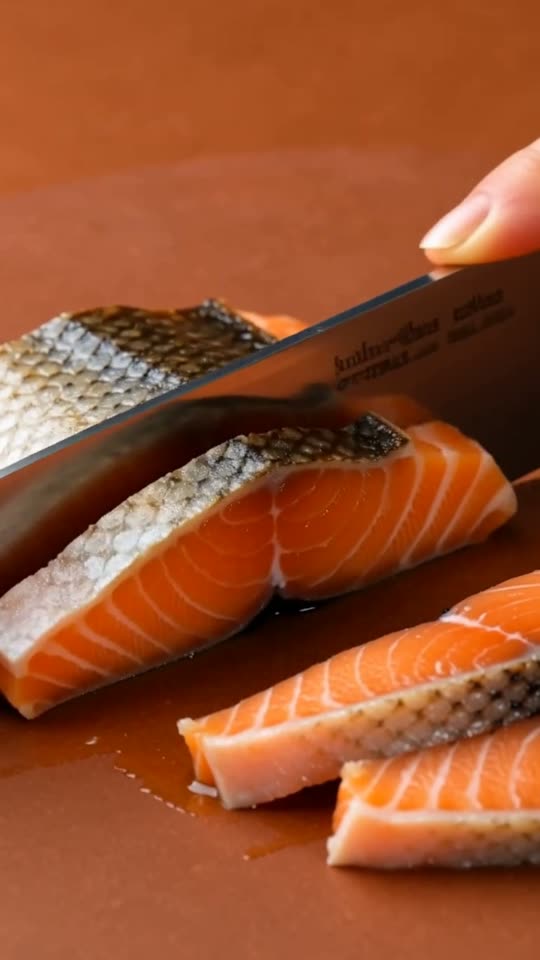
Pat the fillets dry, season them and lay them skin-side down in hot olive oil, then leave them alone for 4 to 5 minutes until the skin is crisp. Flip for a minute or two, then lift the fish out.
Break the salmon into large flakes and add them right at the end. Fold gently with a spatula so the pieces stay in chunks. FoodSafety.gov gives 145°F (63°C) for fish such as salmon, or cooking until the flesh is no longer translucent and separates easily with a fork. Flaking the fillet lets you check the centre.
Does the wine cook off in the sauce?
Some of it does, but not all. In the USDA Table of Nutrient Retention Factors (Release 6, 2007), alcohol stirred into a mixture and simmered for 15 minutes keeps about 40% of its alcohol, and longer cooking lowers that further. Reducing wine by half and then simmering the cream for a few minutes is a short cook, so expect some alcohol to remain.
| Preparation method (USDA) | Alcohol retained |
|---|---|
| Stirred into a hot liquid | 85% |
| Flamed | 75% |
| Stirred in, baked or simmered 15 minutes | 40% |
| Stirred in, baked or simmered 30 minutes | 35% |
| Stirred in, baked or simmered 1 hour | 25% |
| Stirred in, baked or simmered 2 hours | 10% |
| Stirred in, baked or simmered 2.5 hours | 5% |
If you are cooking for children or anyone avoiding alcohol, leave the wine out and deglaze the pan with stock instead.
How do you make creamy Tuscan salmon rigatoni?
Start with the pasta, then build everything else in a single pan. The recipe above serves four with 350 g rigatoni and 500 g skin-on salmon.
- Boil the rigatoni in well-salted water until al dente, and save a cup of the pasta water before draining.
- Pat the salmon dry, season it and sear it skin-side down in hot olive oil for 4 to 5 minutes until crisp, flip for 1 to 2 minutes, then set it aside and break it into large flakes.
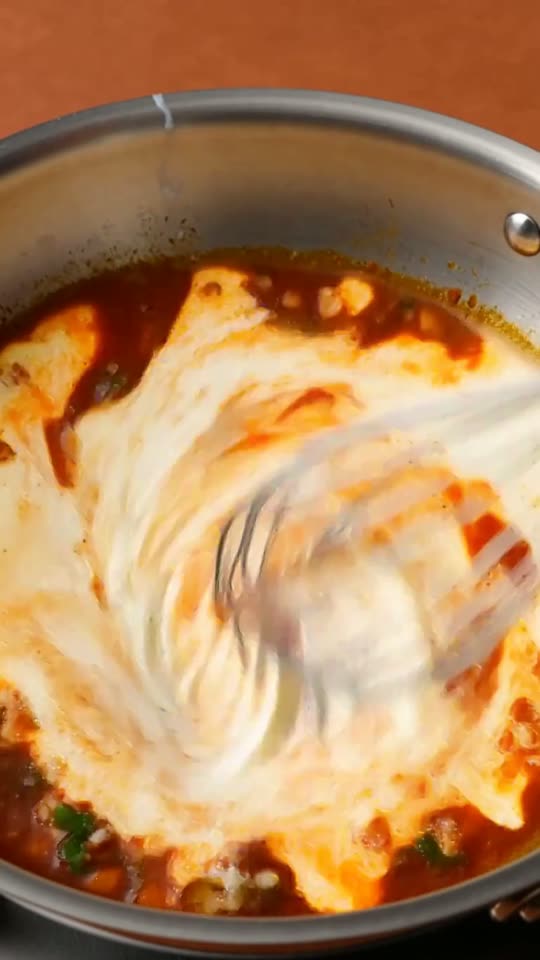
- In the same pan, melt the butter and soften the minced garlic for a minute, pour in the white wine and reduce it by half, then add the cream and simmer for 3 to 4 minutes.
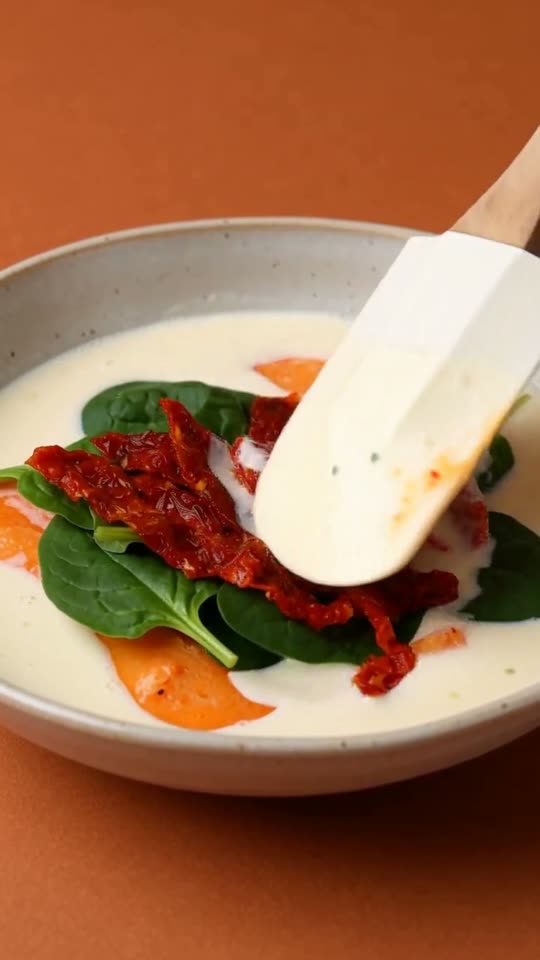
- Stir in the grated Parmigiano Reggiano, then the sliced sun-dried tomatoes and baby spinach, and cook just until the spinach wilts.
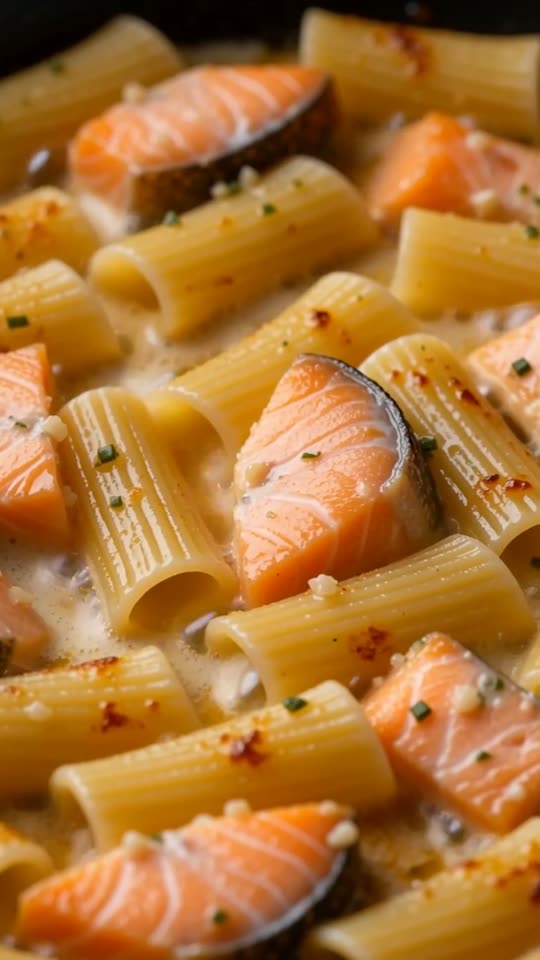
- Add the rigatoni and salmon flakes, loosen the sauce with a splash of pasta water, and fold gently so the salmon stays in chunks.
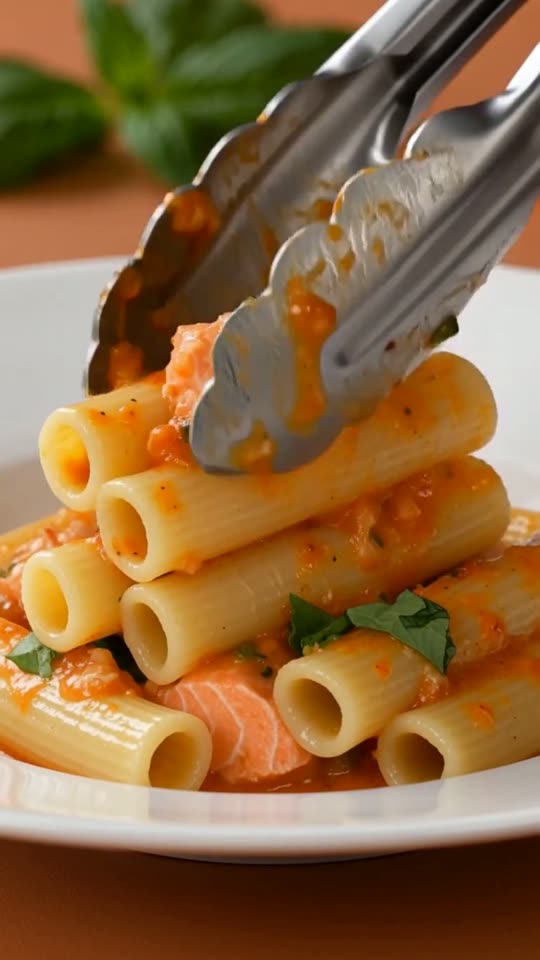
- Spoon into warm bowls and finish with torn basil and black pepper.
Why Parmigiano Reggiano in the sauce?
Parmigiano Reggiano adds salt and savoury depth, and it helps thicken the cream as it melts in. According to the Parmigiano Reggiano consortium, the cheese is made of milk, salt and rennet only, with no additives or preservatives, and matures for at least 12 months.
The consortium lists its production area as the provinces of Parma, Reggio Emilia and Modena, Bologna to the left of the Reno River, and Mantua on the right bank of the Po. Lower the heat before adding it and stir until smooth. The cheese and the sun-dried tomatoes are both salty, so taste before adding more salt.
Frequently asked questions
Can I make this without wine?
Yes. Deglaze the pan with chicken or vegetable stock instead, and add a squeeze of lemon at the end if you miss the wine's acidity.
Can I use penne instead of rigatoni?
Yes. Penne works well, though rigatoni's wider tubes hold more sauce and bigger pieces of salmon. Any short, ridged pasta suits a cream sauce like this one.
Why is my salmon pink-orange?
The colour comes from a pigment called astaxanthin. Wild salmon get it from the krill and other crustaceans they eat, and farmed salmon get it from pigment added to their feed, according to the fisheries consulting firm FISHBIO.
How do I know the salmon is done?
Check that the flesh is no longer translucent and separates easily with a fork, or use a thermometer: FoodSafety.gov gives 145°F (63°C) for fish.
Watch it, cook it, tell us what's next
The film at the top of this page follows this recipe from the raw ingredients to the finished bowl in a short vertical video, set to an original AI-generated song: sunny Italian folk-pop with tremolo mandolin, nylon-string guitar, accordion, upright bass and tambourine. Watch it on YouTube, Instagram or TikTok, and tell us which dish we should cook next.
AI-created visuals. Culinary inspiration, not a complete cooking guide.