The story and science behind the dish · recipe above ↑
Crispy Pan-Fried Dumplings with Lace Skirt: The Art of the Binghua
What are crispy pan-fried dumplings with a lace skirt?
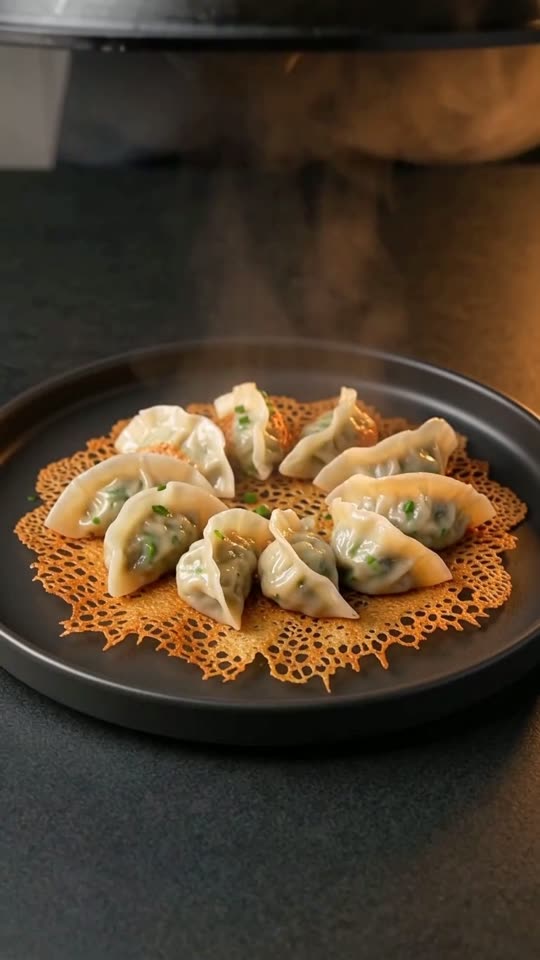
Crispy pan-fried dumplings with a lace skirt are a celebrated Chinese culinary creation, known for their unique textural contrast and striking presentation. These dumplings feature a savory pork and chive filling encased in a tender wrapper, pan-fried to achieve a golden, crisp bottom, and then steamed with a starch slurry. This slurry forms a delicate, edible "ice flower" web, known as binghua jianjiao (冰花煎餃) in Chinese or guotie potstickers, that interconnects the dumplings with a shatteringly crisp texture. The result is a visually appealing dish that offers a complex interplay of soft, chewy, and exquisitely crunchy elements in every bite, making them a favorite in dim sum restaurants and home kitchens alike.
Where do pan-fried dumplings with a lace skirt come from?
The tradition of pan-fried buns and dumplings, alongside shengjian mantou (生煎饅頭), is deeply rooted in the culinary history of Suzhou and Shanghai, emerging as a popular street breakfast staple in Shanghai by the early 1920s. Shengjianbao and pan-fried guotie boast a history spanning over a century, initially appearing as part of traditional dim sum and street-stall meals, with dedicated specialty shops opening across Shanghai in the 1930s. While the binghua or ice flower skirt is a hallmark of contemporary Shanghai and northern Chinese dumpling houses, the technique of adding a starch-water slurry to the pan to create a lacy honeycomb skirt—also celebrated in Japan as hanetsuki gyoza (winged gyoza), as documented by Serious Eats—has become a beloved pan-Asian standard for potstickers.
What makes a juicy, cohesive dumpling filling?
A classic Shanghai pork and chive dumpling filling achieves a balance of rich savory depth and a bouncy, cohesive texture. Our recipe uses coarsely ground pork belly with a fat content of approximately 25–30%, which is essential for rendering moisture, richness, and a tender mouthfeel inside the steamed wrapper, a ratio emphasized in traditional pork and chive dumpling recipes. Fresh Chinese garlic chives, known as jiucai (韭菜), are the signature aromatic partner, imparting a fragrant garlicky flavor that is distinct from common European chives. Other essential components include Shaoxing rice wine, which adds fermented complexity and tenderizes the meat; light soy sauce for umami and saltiness; toasted sesame oil for its distinctive nutty aroma; and finely ground white pepper for a subtle, warming heat. Vigorously stirring the filling in a single circular direction with chopsticks is crucial for mechanically extracting salt-soluble myosin proteins, creating a glossy, sticky meat emulsion that traps juices inside the wrapper during cooking.
How is the crispy lace skirt created?
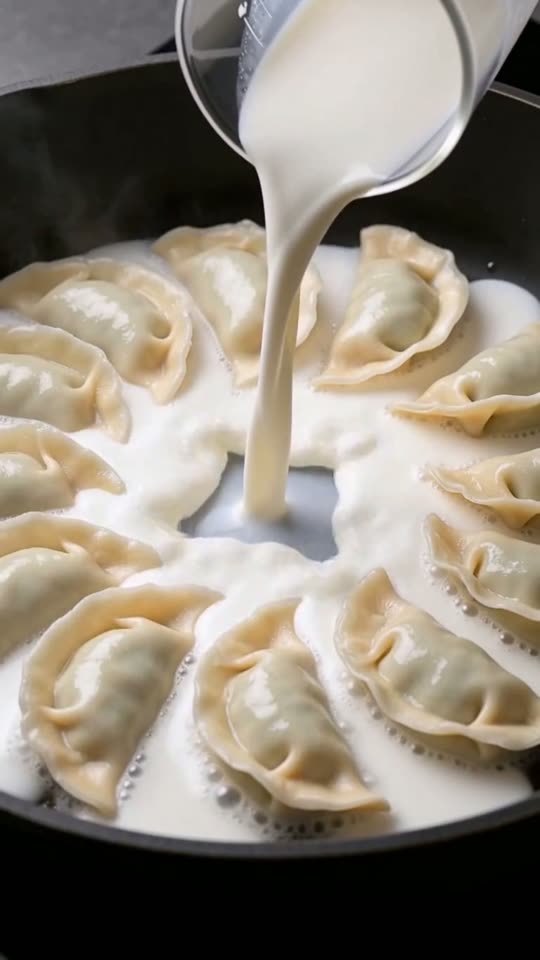
The distinctive crispy lace skirt is achieved through a precise two-stage pan-fry and steam-evaporation method. First, the dumplings are arranged radially in a hot skillet with neutral oil and seared for 1 to 2 minutes until their flat pleated bottoms turn pale golden, establishing an initial Maillard crust. Next, a whisked slurry—combining cold water, cornstarch, a touch of all-purpose flour, and a few drops of sesame oil—is poured directly into the center of the pan, flooding around the bases of the dumplings. Immediately covering the skillet with a domed glass lid traps steam, cooking the wrappers translucent and the pork filling through to a juicy finish. As the water from the slurry completely evaporates, the suspended starch granules undergo rapid starch gelatinization and crisp into a delicate, golden-brown honeycomb lace web as escaping steam bubbles leave behind lacy perforations. For serving, a round plate is placed over the skillet and the pan is smoothly inverted, presenting the intact, shatteringly crisp lace skirt crowning the dumplings.
What kind of wrappers should I use for pan-fried dumplings?
Choosing the right dumpling wrapper is essential for achieving the desired balance of tender chew and structural integrity in pan-fried dumplings. For binghua jianjiao, a medium-thick round wheat wrapper is preferred over paper-thin wonton skins, as it provides enough structure to hold the juicy pork filling without tearing during inversion and contributes a satisfying chewiness. Look for round wrappers labeled for potstickers or northern-style jiaozi, which are formulated with cold water and wheat flour to withstand both high-heat searing and covered steaming without turning soggy. Fresh wrappers from an Asian grocery store offer strong elasticity for crimping 4 to 5 pleats along the arched spine while pressing a flat rectangular base.
Essential flavor agents: Shaoxing wine and Chinkiang vinegar
Shaoxing wine is an amber-colored, aromatic fermented rice wine from Zhejiang province that adds a warm, nutty note to dumpling fillings while neutralizing any richness in the pork belly. At the table, the rich, savory pork and crisp starch web call for an acidic counterpoint: Zhenjiang (Chinkiang) black vinegar, an aged glutinous rice vinegar prized for its malty, smoky tang, paired with roasted chili crisp.
Understanding the role of each pantry condiment helps balance both the filling and the dipping bowl:
| Ingredient | Characteristics | Culinary Role |
|---|---|---|
| Light Soy Sauce | Salty, umami-rich, thin consistency, bright amber color | Seasons the pork emulsion and forms the base of dipping sauces |
| Shaoxing Rice Wine | Amber, aromatic, nutty fermented rice wine | Deodorizes pork, adds savory depth, and tenderizes the filling |
| Toasted Sesame Oil | Deep nutty aroma, golden color, concentrated flavor | Coats the meat emulsion and adds crispness to the starch slurry |
| Chinkiang Black Vinegar | Dark, aged, malty, gently sweet and tangy | Cuts through the rich pork fat and crisp fried lace at the table |
| White Pepper | Earthy, floral heat with zero dark specks | Provides clean background warmth throughout the pork and chive mix |
| Cornstarch + Flour Slurry | Dual-starch suspension in cold water | Combines cornstarch snap with wheat flour structure for an intact lace web |
How to make crispy pan-fried dumplings with a lace skirt
Follow these steps to create crispy pan-fried dumplings with an intact golden lace skirt:
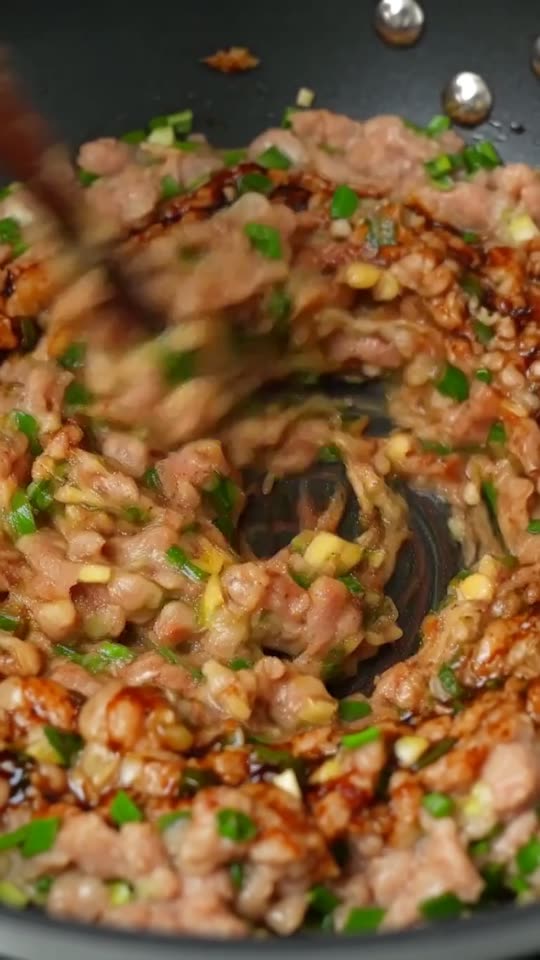
- Prepare the Filling Emulsion: In a wide ceramic bowl, combine 300g coarsely ground pork belly, 1 cup finely chopped Chinese garlic chives, 1 tbsp freshly grated ginger, 1.5 tbsp light soy sauce, 1 tbsp Shaoxing rice wine, 1 tbsp toasted sesame oil, 1/2 tsp white pepper, and 1/2 tsp sea salt. Stir vigorously in a single circular direction for 3 to 5 minutes until a cohesive, glossy, sticky meat emulsion forms.
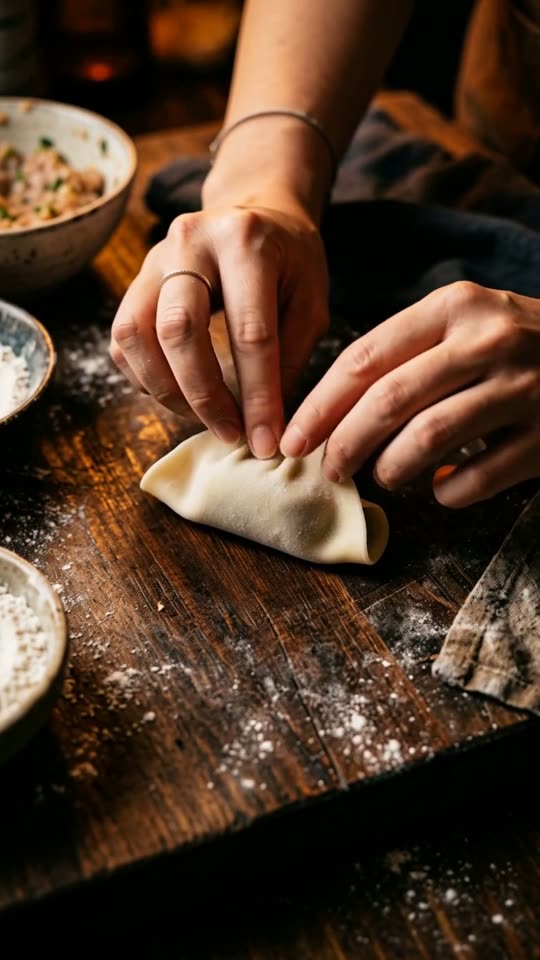
- Pleat the Dumplings: Place a rounded spoonful of filling in the center of each round dumpling wrapper. Moisten the wrapper rim lightly with water, fold into a crescent half-moon, and crimp 4 to 5 distinct pleats along the arched spine, pressing down gently so each dumpling sits on a flat base.
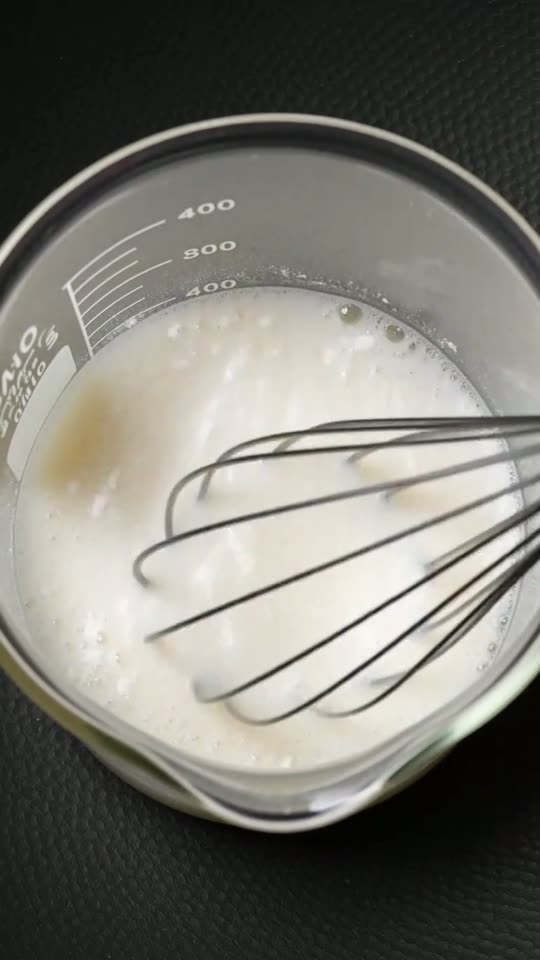
- Whisk the Lace Slurry: In a small bowl or measuring jug, whisk 120ml cold water, 1 tbsp cornstarch, 1 tsp all-purpose flour, and 1 tsp toasted sesame oil until completely smooth and free of lumps.
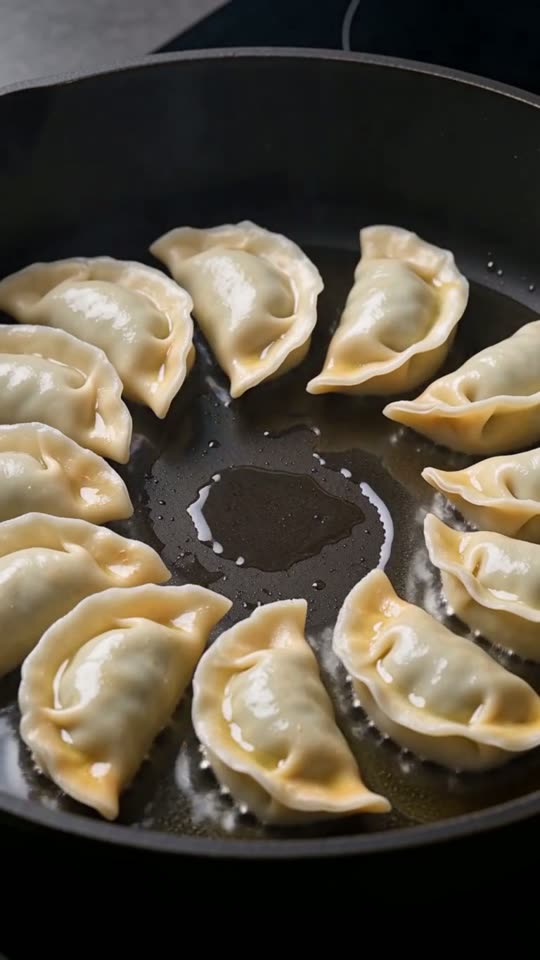
- Sear in a Radial Wheel: Heat 1.5 tbsp neutral oil in a flat-bottomed non-stick or seasoned cast-iron skillet over medium heat. Arrange 12 crescent dumplings in a tight radial wheel with their flat bases resting firmly on the pan. Sear for 1 to 2 minutes until the bottoms turn pale golden.
- Flood with Slurry and Steam: Give the starch slurry a quick re-whisk and pour it directly into the center of the skillet so it floods around the dumpling bases. Immediately cover with a glass lid and steam over medium-high heat for 6 to 8 minutes until the wrappers turn translucent.
- Crisp the Honeycomb Web: Once the water has nearly evaporated, uncover the skillet and reduce heat to medium-low for 1 to 2 minutes, rotating the pan gently so the starch browns evenly into a dry, golden-brown honeycomb lace skirt.
- Invert and Serve: Remove from heat, place a round serving plate upside-down over the skillet, and smoothly invert the pan to reveal the crisp lace skirt crowning the dumplings. Serve immediately with Chinkiang black vinegar and chili crisp.
Frequently asked questions
Why combine both cornstarch and all-purpose flour in the slurry?
Pure cornstarch creates a very brittle, glassy web that can shatter when inverted, while pure all-purpose flour can turn chewy. Combining 1 tablespoon of cornstarch with 1 teaspoon of all-purpose flour and a few drops of sesame oil yields a lace skirt that is both shatteringly crisp and strong enough to hold together as a single wheel.
How do I prevent the dumplings and lace skirt from sticking to the pan?
Use a well-maintained non-stick skillet or well-seasoned cast iron, preheat the oil before arranging the dumplings, and wait until the water has completely evaporated and the lace edges pull slightly away from the pan before inverting onto the plate.
What is the traditional dipping sauce for Shanghai pan-fried dumplings?
A classic accompaniment is aged Chinkiang black vinegar served with fine julienned fresh ginger and a spoonful of roasted chili crisp, which balances the rich pork belly and crispy starch lattice.
Can I cook the lace skirt using frozen homemade dumplings?
Yes. Do not thaw frozen dumplings before cooking; sear their flat bases directly from frozen, add the starch slurry, and extend the covered steaming time by 2 to 3 minutes so the pork filling cooks through before the water evaporates.
Watch the Film and Discover More
Ready to see the golden honeycomb lace skirt come to life? Watch our vertical culinary film on YouTube, Instagram, or TikTok!
AI-created visuals. Culinary inspiration, not a complete cooking guide.