 Sear Sourdough: Press 2 cm country sourdough slices into foaming garlic-herb olive oil in a 12-inch seasoned cast-iron skillet until deeply blistered and crisp—cook under the press over medium-low heat for 2.5 to 3 minutes per side, flipping once with a wide spatula, until the crust is deep mahogany-golden and the center melts completely (62–65°C / 145–150°F).
The story and science behind the dish · recipe above ↑
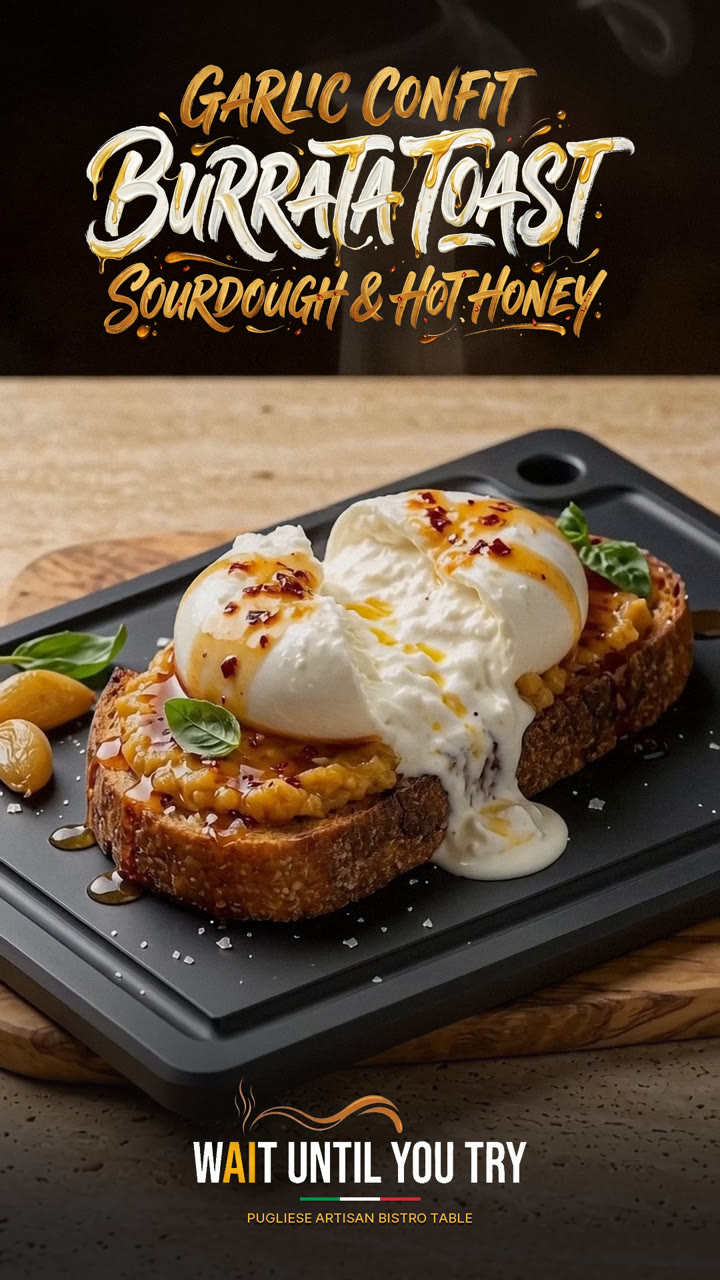
Garlic Confit Burrata Toast with Hot Honey: Slow-Poached Cloves, Pugliese Cream, and Crisp Country Sourdough
What makes garlic confit burrata toast with hot honey work so well?
Garlic confit burrata toast with hot honey puts four contrasting textures into a single bite: shattering pan-seared sourdough, warm olive-oil-poached garlic mashed into a sweet paste, cool milky burrata spilling soft curds, and warm honey infused with red chili flakes. Modern Italian-inspired bistros popularized this pairing by taking traditional Pugliese fresh cheese service and anchoring it on garlic-basted country bread with a sweet-heat drizzle, a combination documented across contemporary home kitchens such as Well Seasoned Studio and The Family Food Kitchen.
Every layer solves a problem created by the layer next to it. Burrata is rich in butterfat and sweet dairy cream, so on its own it can feel flat after two bites. Crushed red chili flakes warmed in wildflower honey bring gentle heat and floral sweetness that wake up the milk fat, while flaky sea salt and cracked black pepper sharpen the savory roasted garlic underneath.
Why does low-heat olive oil confit turn sharp garlic sweet and spreadable?
Raw garlic gets its stinging bite from a chemical defense triggered only when cell walls break. Intact cloves keep the amino acid alliin and the enzyme alliinase in separate compartments. Slice or crush a raw clove, and alliinase converts alliin into allicin within seconds, giving raw bruschetta its fierce, lingering heat.
Submerging whole peeled cloves in extra-virgin olive oil and cooking them gently through confit changes that chemistry before the cells ever rupture. At a bare tremor around 90°C to 105°C (195°F to 220°F) in a heavy tri-ply stainless saucepan, heat deactivates alliinase gradually so harsh allicin never spikes. Over 45 to 60 minutes, natural fructans and starches inside the cloves break down into mild, nutty sugars, while rosemary needles steep their piney essential oils straight into the olive oil. By the time the cloves turn pale amber, you can press the flat face of a wide Santoku knife across them and smear them into the open crumb of toasted bread like softened butter.
And that leftover rosemary-garlic oil is half the reward. Brushing a spoonful of it across thick 2 cm slices of country sourdough before searing them in a hot stainless skillet drives the Maillard reaction evenly across every ridge of the crumb, producing a glassy golden crunch instead of dry, pale toast.
What is actually inside a ball of fresh Pugliese burrata?
Burrata originated around Andria on the Murgia plateau of Puglia in the early twentieth century. Cheesemakers working with stretched-curd mozzarella (pasta filata) needed a practical way to use fresh curds and rich cream left from morning production. Their answer was a thin, elastic mozzarella pouch filled with stracciatella (hand-shredded strands of mozzarella) bathed in fresh cream, tied shut in a top knot. Since 2016, Burrata di Andria has carried protected geographical indication (PGI) status in Europe.
Because the outer skin is spun curd and the interior is loose cream, temperature controls the entire eating experience. Straight out of a 4°C fridge, the cream inside stiffens and clings together. Given 20 to 30 minutes on the counter while the garlic finishes poaching, the center loosens so that parting the pouch lets ivory stracciatella run into the toasted sourdough pockets on contact.
Why pair chili-flake hot honey with rich fresh cheese instead of vinegar alone?
Aged Modena balsamic vinegar cuts dairy fat with acetic acid, whereas chili-infused honey balances burrata through temperature and capsaicin warmth. Capsaicin molecules are fat-soluble rather than water-soluble. When warm chili honey hits cool stracciatella cream, the dairy lipids dissolve and carry that gentle pepper heat smoothly across the tongue, softening any harsh burn while keeping a warm finish at the back of the palate.
Warming 2 tablespoons (40g) of honey with 1/2 teaspoon of red chili flakes in a small clad saucepan for just one minute thins the honey enough to extract color and spice without scorching delicate floral sugars. Taken off the heat to steep while you sear the bread, it thickens back into a glossy ribbon that clings to the cold curds instead of soaking straight through the crust.
How does this build compare to classic Italian toasted bread dishes?
Regional Italian kitchens treat toasted country bread in distinct ways depending on the fat, garlic prep, and topping:
| Dish | Bread Cut & Sear | Garlic Method | Topping & Finish | Texture & Flavor Contrast |
|---|---|---|---|---|
| Garlic Confit Burrata Toast with Hot Honey | 2 cm country sourdough seared in garlic oil | 20 cloves slow-poached 45 to 60 min with rosemary, mashed flat | 200g fresh burrata torn open, warm chili honey, flaky salt | Shattering crust, buttery sweet garlic, cool cream, warm sweet heat |
| Fettunta (Tuscan New-Oil Toast) | Thick unsalted country loaf charred over coals | Raw peeled clove rubbed hard across hot rough crust | Peppery new-harvest extra-virgin olive oil and sea salt | Crisp smoky crumb with sharp raw garlic and grassy bitter oil |
| Bruschetta al Pomodoro | Grilled rustic country slice | Light rub of raw garlic on warm toast | Diced ripe tomatoes, torn basil, olive oil, flaky salt | Crunch meeting bright tomato acidity and fresh herbs |
| Crostini con Stracciatella e Acciughe | Smaller toasted sourdough rounds | Garlic-infused oil brushed lightly before toasting | Spoonful of loose stracciatella topped with salted anchovy fillet | Briny umami salt cutting directly through sweet fresh cream |
How do you make garlic confit burrata toast with hot honey at home?
Ingredients (Serves 2)
- 2 thick slices (about 2 cm) country sourdough
- 1 ball (about 200g) fresh burrata
- 20 cloves (about 2 heads) garlic, peeled
- 180ml extra-virgin olive oil (for the confit)
- 2 sprigs fresh rosemary
- 2 tbsp (40g) honey
- 1/2 tsp red chili flakes
- To taste flaky sea salt and freshly cracked black pepper
Step-by-Step Method
- Confit the garlic: Put the 20 peeled garlic cloves and 2 rosemary sprigs into a small multi-ply stainless saucepan and pour in the 180ml extra-virgin olive oil so the cloves sit submerged. Cook over the lowest stovetop heat (or in a 150°C / 300°F oven) for 45 to 60 minutes, keeping the oil at a lazy pinpoint shimmer rather than a fry, until the cloves turn golden and mash easily without resistance.
- Infuse the hot honey: Set the fresh burrata out of the refrigerator so the center loses its chill. Warm the 2 tablespoons (40g) honey with 1/2 teaspoon red chili flakes over low heat for 1 minute until fragrant, then pull the pan off the burner to steep.
- Sear the sourdough: Brush both thick slices of country sourdough with a generous spoonful of the warm rosemary-garlic confit oil. Sear them in a hot 12-inch stainless or cast-iron pan, pressing lightly with a flat metal spatula so the full face makes contact, until crisp and deep golden brown on both sides.
- Smear the cloves: Set the hot toasts on a carving board, lay 5 to 6 soft confit garlic cloves onto each slice, and press them flat across the rough crumb with the wide side of a Santoku knife or fork until every pocket holds glossy roasted garlic paste.
- Tear the burrata: Pat the 200g burrata ball dry with paper towel so excess whey does not sog the bread, seat it on the warm garlic toast, and gently part the top pouch so the stracciatella cream spills across both slices (or tear half onto each toast).
- Drizzle and serve: Spoon a ribbon of warm chili hot honey and a few drops of golden garlic confit oil over the open curds, scatter flaky sea salt and freshly cracked black pepper on top, and eat right away while the bread is still hot beneath the cool cream.
Frequently asked questions
How do I keep garlic confit from turning bitter on the stovetop?
Bitterness comes from oil climbing past 130°C (265°F) and browning the outer garlic sugars too fast. Use your smallest burner on its lowest flame with a heavy-bottomed clad saucepan, or slide an ovenproof pan into a 150°C (300°F) oven where ambient heat surrounds the oil evenly. You want tiny occasional bubbles clinging to the rosemary needles, never an active sizzle.
How should I store leftover garlic confit and infused olive oil?
Let the cloves and rosemary oil cool to room temperature, transfer everything into a clean glass jar making sure the cloves stay submerged under oil, and refrigerate immediately. Because low-acid garlic in oil can support Clostridium botulinum if left out at room temperature, always store garlic confit in the fridge (up to 2 weeks) or freeze it for up to 3 months.
What can I substitute if I cannot find fresh burrata?
Look for a tub of fresh stracciatella at an Italian market (which is the exact creamy filling inside burrata), or tear a ball of fresh buffalo mozzarella (mozzarella di bufala) over the warm garlic toast and spoon a tablespoon of heavy cream and olive oil over the curds before adding the hot honey.
Why pat the burrata dry before placing it on the toast?
Burrata ships packed in watery whey brine. Dropping a wet ball straight onto seared sourdough wicks moisture into the crust and softens your crunch within a minute. Blotting the outer mozzarella pouch dry on a clean towel keeps only thick stracciatella cream touching the garlic-oiled bread.
Watch the film and cook along
Watch the full short film at the top of this page, explore more recipes, send a dish request, or follow along on YouTube, Instagram, and TikTok.
AI-created visuals. Culinary inspiration, not a complete cooking guide.