The story and science behind the dish · recipe above ↑
Creamy Baked Tuscan Salmon and Spinach Pasta: Coastal Origins, Emulsion Science, and Step-by-Step Home Method
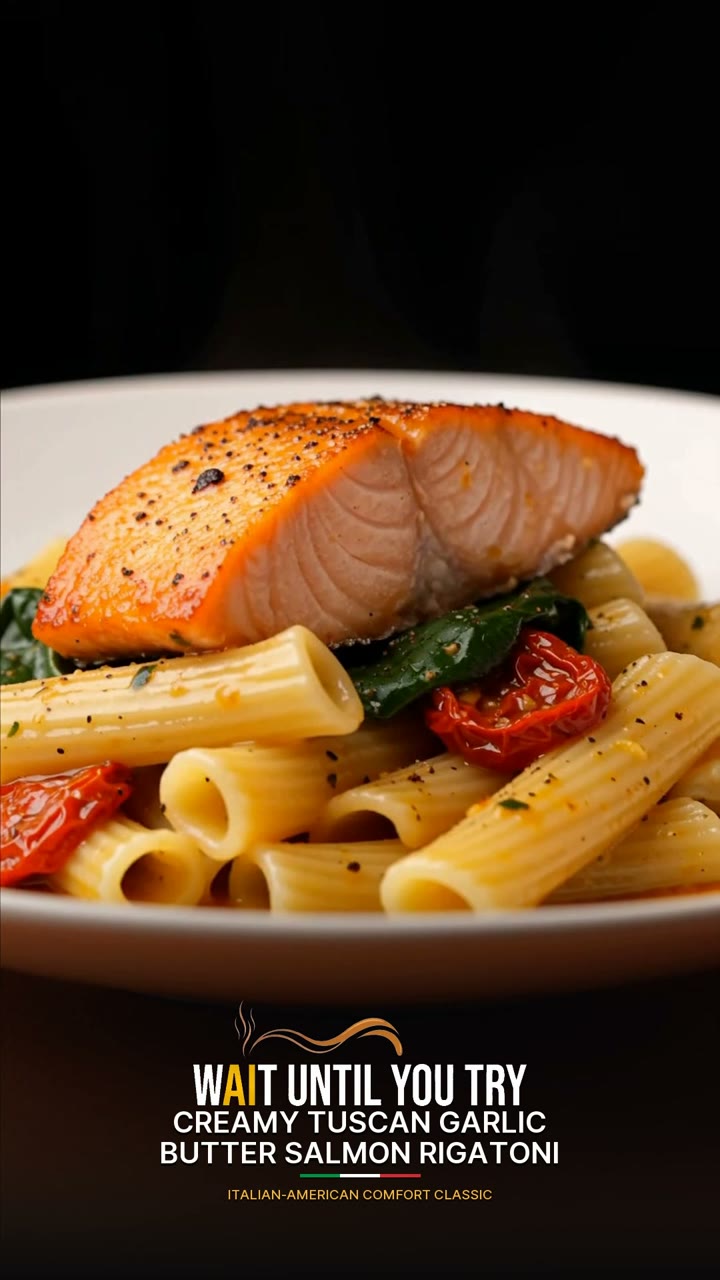
Creamy Baked Tuscan Salmon and Spinach Pasta brings together two classic Mediterranean kitchen techniques in one comforting bowl: an oven-roasted tomato, garlic, and sheep's-milk feta emulsion tossed with bronze-cut rigatoni and tender baby spinach, crowned with a crisp pan-seared Atlantic salmon fillet. Grounded in Tuscan Cuisine Culinary History and Serious Eats Culinary Guide, this preparation keeps the salmon skin shattering crisp while the pasta underneath stays coated in a glossy, velvety sauce without needing heavy cream.
Where does Creamy Baked Tuscan Salmon and Spinach Pasta come from?
Along the Tyrrhenian coast of Tuscany—from Livorno down to Viareggio and Monte Argentario—coastal trattorias have long paired rich, fatty fish with acidic blistered tomatoes, sweet roasted garlic, leafy greens, and salty sheep's-milk cheeses, as documented in Tuscan Cuisine Culinary History and Feta Culinary History. While modern oven-baked feta pasta gained global fame as a weeknight staple, Italian home cooks elevate the base by treating the roasted cheese and tomato juices as a proper pan emulsion and searing the fish separately so its delicate flake is never overcooked in the oven.
Two kitchen decisions separate a restaurant-level bowl from a dry casserole:
- Roasting the sauce base while searing the salmon separately: Tomatoes and feta need 25 minutes at `200°C` (`400°F`) to blister and caramelize, whereas a salmon fillet needs only 5 to 6 minutes in a hot skillet to reach a buttery `52°C` (`125°F`) core.
- Emulsifying with starchy bronze-cut pasta water: Whisking hot, starch-rich cooking water from Rigatoni Culinary History into the mashed feta and tomato juices binds the olive oil and dairy proteins into a clinging sauce.
What role does each ingredient play in the build?
Every component in the dish serves a distinct structural or aromatic function:
| Build Stage | Ingredient | Quantity | Culinary Function & Texture Role |
|---|---|---|---|
| Oven sauce base | Greek barrel-aged sheep's milk feta | 200g | Melts into a tangy, creamy dairy matrix that emulsifies without heavy cream |
| Oven sauce base | Ripe cherry tomatoes on the vine | 300g | Blister and burst at 200°C, releasing sweet-acidic pectin-rich juices |
| Aromatics & fat | Garlic cloves & Tuscan extra-virgin olive oil | 5 cloves (20g) + 60ml | Infuse lipid-soluble roasted allium aroma and build the emulsion droplet phase |
| Starch structure | Bronze-cut rigatoni pasta | 350g | Rough, porous exterior holds sauce; wide tubes trap wilted greens and garlic |
| Greens & freshness | Fresh baby spinach leaves | 150g | Wilts gently in residual heat (70°C), adding vegetal brightness and emerald color |
| Protein crown | Skin-on Atlantic salmon fillets | 600g (4 fillets) | Provides crisp Maillard-seared skin and rich, flaky omega-3 tenderness on top |
| Finishing umami | Aged Parmigiano-Reggiano & flaky sea salt | 45g + 1 tsp | Adds crystalline glutamate depth and sharp aromatic lift at service |
How does food science explain the creamy feta emulsion and crisp salmon skin?
From the perspective of Maillard Reaction Culinary History and Serious Eats Culinary Guide, three measurable thermal variables govern the texture of this dish:
- Pectin and casein emulsification (`85°C / 185°F`): Unlike aged hard cheeses that clump into strings when overheated, brined sheep's-milk feta softens into a spreadable curd. When mashed with burst cherry tomatoes (rich in natural pectin) and whisked with hot starchy pasta water (`18–22%` leached amylose), the starch molecules surround microscopic droplets of olive oil and milk fat, preventing greasy separation.
- Dry-surface Maillard searing (`195°C / 385°F`): Surface moisture is the enemy of crisp fish skin. Patting the salmon skin dry with paper towels and pressing it flat in a preheated skillet for the first 30 seconds drives off residual water immediately so amino acids and sugars brown into a glass-crisp crust while 75% of the cooking happens skin-side down.
- Carryover protein protection (`52°C / 125°F`): Salmon myosin coagulates and squeezes out white albumin if pushed past `60°C` (`140°F`). Pulling the fillets at `52°C` (`125°F`) keeps the interior translucent coral-pink and succulent so each flake parts cleanly under a fork.
Why should you sear the salmon in a skillet instead of baking it with the feta?
A common shortcut is placing raw salmon fillets directly into the baking dish beside the feta for the entire 25-minute roast at `200°C` (`400°F`). By the time the cherry tomatoes burst, the salmon has reached `70°C+` (`160°F+`), turning chalky and shedding white albumin into the sauce.
By roasting the feta and tomatoes in the ceramic dish while pan-searing the salmon on the stovetop during the final 6 minutes of the bake, both components finish at the exact same moment at their ideal temperatures.
How do you make Creamy Baked Tuscan Salmon and Spinach Pasta step by step at home?
Ingredients (Serves 4)
- 600g (4 fillets) fresh skin-on Atlantic salmon fillets, pat-dried
- 350g bronze-cut rigatoni pasta
- 200g block of Greek barrel-aged sheep's milk feta
- 300g ripe cherry tomatoes on the vine
- 150g fresh baby spinach leaves, washed and spun dry
- 5 cloves (20g) garlic cloves, lightly crushed
- 60ml (4 tbsp) Tuscan extra-virgin olive oil
- 45g aged Parmigiano-Reggiano, freshly grated, plus 1 tsp flaky sea salt
Method
- Step 1 — Stage the Ceramic Baking Dish: Preheat the oven to `200°C` (`400°F`). Set the 200g block of Greek feta in the center of a heavy ceramic baking dish, surround it with 300g cherry tomatoes and 5 crushed garlic cloves, and drizzle with 45ml (3 tbsp) extra-virgin olive oil and a pinch of flaky sea salt.
- Step 2 — Roast Until Blistered & Molten: Bake on the center rack at `200°C` (`400°F`) for 24 to 26 minutes until the cherry tomatoes split and release their sweet juices and the feta block softens to a golden, custardy center at `85°C` (`185°F`).
- Step 3 — Boil the Bronze-Cut Rigatoni: Bring 3 liters of salted water (10g salt per liter) to a rolling boil at `100°C` (`212°F`). Cook the 350g bronze-cut rigatoni for 10 to 11 minutes until al dente, reserving 120ml (1/2 cup) of starchy pasta cooking water before draining.
- Step 4 — Pan-Sear the Salmon Fillets: Pat the 600g salmon fillets completely dry and season with flaky sea salt. Heat the remaining 15ml (1 tbsp) olive oil in a heavy cast-iron skillet over medium-high heat (`195°C` / `385°F`); sear skin-side down for 4 minutes until crisp and golden, then flip for 90 seconds until the center reaches `52°C` (`125°F`) for a moist, flaky medium-rare.
- Step 5 — Emulsify the Roasted Feta Sauce: Remove the baking dish from the oven and immediately mash the molten feta, roasted garlic cloves, and blistered cherry tomatoes with a fork, whisking in 60ml of the hot starchy pasta water until a velvety, glossy pink-gold emulsion forms.
- Step 6 — Fold in Rigatoni & Wilt the Baby Spinach: Tip the hot drained rigatoni and 150g fresh baby spinach directly into the warm baking dish (around `70°C` / `160°F`), tossing gently for 60 seconds so the residual heat wilts the spinach into tender emerald ribbons and the ridged pasta drinks in the sauce.
- Step 7 — Plate & Crown with Seared Salmon: Divide the creamy spinach and tomato rigatoni into warm stoneware bowls, set a crisp-skinned seared salmon fillet on top of each nest, and finish with a snowfall of 45g freshly grated Parmigiano-Reggiano.
What common mistakes ruin Tuscan salmon and baked feta pasta?
- Using pre-crumbled feta with anti-caking starch: Pre-crumbled feta contains cellulose or potato starch that prevents smooth melting and leaves the sauce grainy. Always buy a whole block of sheep's-milk feta packed in brine.
- Draining the pasta water down the sink: Without 60–90ml of hot starchy pasta water, mashed feta stays thick and pasty instead of flowing into the rigatoni ridges. Scoop out a mug of cooking water before reaching for the colander.
- Tossing the seared salmon directly into the pasta pot: Vigorous tossing breaks the fillets into tiny shreds and steams the crispy skin soggy. Rest the seared fillets on top of the plated pasta or flake them gently into large, glistening petals right before serving.
Frequently asked questions
Can you use frozen spinach instead of fresh baby spinach?
Fresh baby spinach is strongly recommended because its tender leaves wilt in 60 seconds without watering down the roasted feta emulsion. If using frozen spinach, thaw 200g completely and squeeze it dry in a clean kitchen towel before folding it into the sauce.
What pasta shapes work best if you do not have rigatoni?
Any sturdy, ridged short pasta extruded through bronze dies—such as mezzi rigatoni, tortiglioni, paccheri, or cavatappi—captures the thick roasted tomato and feta sauce well, as noted in Rigatoni Culinary History.
Can you make this dish with wild sockeye or king salmon?
Yes. King (Chinook) salmon has a high fat content similar to Atlantic salmon and stays luscious at `52°C` (`125°F`). Leaner wild sockeye or coho cooks 60 to 90 seconds faster; pull leaner fillets at `49°C` (`120°F`) so they stay moist.
How should leftovers be stored and reheated?
Store the pasta and salmon in an airtight container in the refrigerator for up to 2 days. Reheat the pasta gently in a covered skillet over low heat with 2 tablespoons of water to loosen the cheese emulsion, and warm the salmon on top during the final 2 minutes so it does not overcook.
Watch the short film
Browse the complete recipe collection, send a recipe request, and follow our kitchen series on YouTube, Instagram, and TikTok.
AI-created visuals. Culinary inspiration, not a complete cooking guide.