


The story and science behind the dish · recipe above ↑
Middle Eastern Shakshuka with Crumbled Feta: The One-Skillet Poached Egg Classic, Explained
What is shakshuka?
Shakshuka (also spelled shakshouka) is a North African and Middle Eastern skillet dish of eggs gently poached in a thick, spiced ragout of crushed tomatoes, sweet red bell peppers, onions, garlic, cumin, and sweet paprika. The name comes from Maghrebi Arabic (šakšūka), meaning "a mixture" or "all mixed up."
In modern Levantine and Mediterranean home kitchens, the simmering tomato-pepper skillet is frequently finished just before serving with coarse crumbles of salty, tangy feta cheese, chopped fresh flat-leaf parsley or cilantro, and a thread of extra-virgin olive oil, then brought straight to the table with warm pita or crusty bread for dipping into the runny yolks.
Where did shakshuka originate?
Shakshuka's roots lie in the Maghreb—specifically Tunisia, Algeria, Libya, and Morocco—following the 16th-century Columbian Exchange that introduced New World tomatoes, bell peppers, and chili peppers into Ottoman North Africa. Prior to the arrival of tomatoes, cooked vegetable-and-egg stews in the region were built around onions, leafy greens, and seasonal gourds.
During the mid-20th century, Tunisian and Libyan Jewish immigrants brought their family shakshuka recipes to Israel and across the wider Mediterranean, where the dish became a staple of both morning cafés and weeknight home suppers. Across North Africa and the Levant, it is closely related to Tunisian ojja (often cooked with harissa and merguez sausage) and Turkish menemen (where the eggs are softly scrambled into the tomatoes and peppers rather than poached whole).
| Regional Egg-and-Tomato Skillet | Origin | Egg Technique | Signature Seasoning & Finish |
|---|---|---|---|
| Shakshuka with Feta | Maghreb (Tunisia) & Levant | Whole eggs poached in shallow sauce wells | Ground cumin, smoked paprika, garlic, crumbled sheep's-milk feta, parsley |
| Tunisian Ojja | Tunisia | Whole or softly swirled eggs in fiery sauce | Rose harissa, caraway, ground coriander, often with merguez sausage |
| Turkish Menemen | Turkey | Eggs lightly beaten or stirred into the simmering tomatoes | Green Anatolian peppers, oregano, Urfa biber or Aleppo pepper |
Why do you simmer the tomato-pepper sauce before cracking the eggs?
The most common failure in homemade shakshuka is cracking the eggs into a thin, watery tomato sauce. Because whole canned or fresh tomatoes contain high water content, cracking eggs in too early forces you to boil the skillet for 10 to 12 minutes while waiting for the liquid to evaporate—which overcooks the egg yolks into hard, chalky spheres long before the sauce thickens.
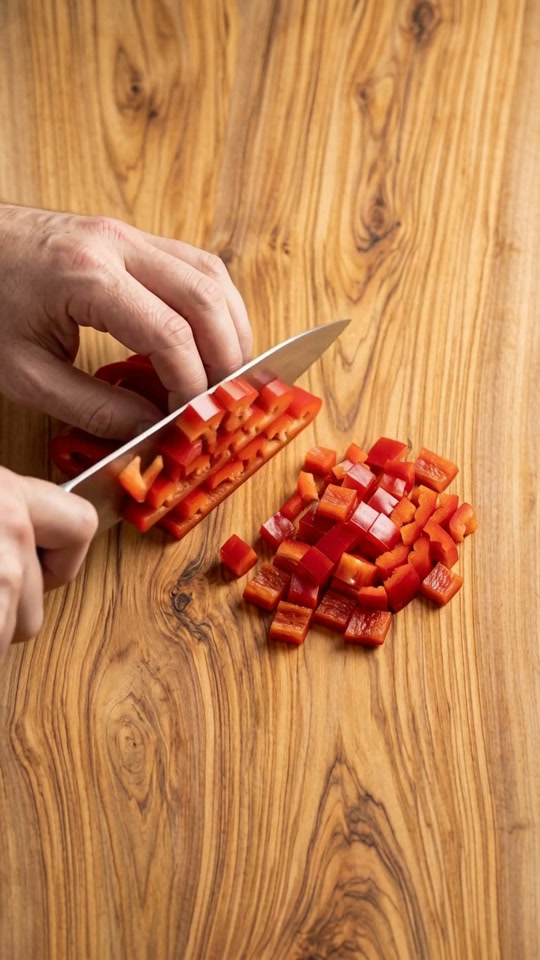
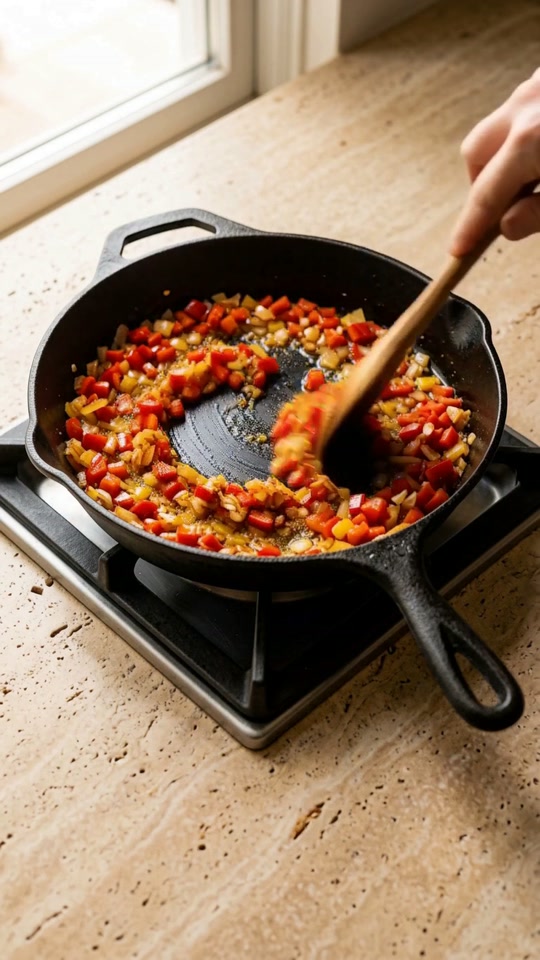
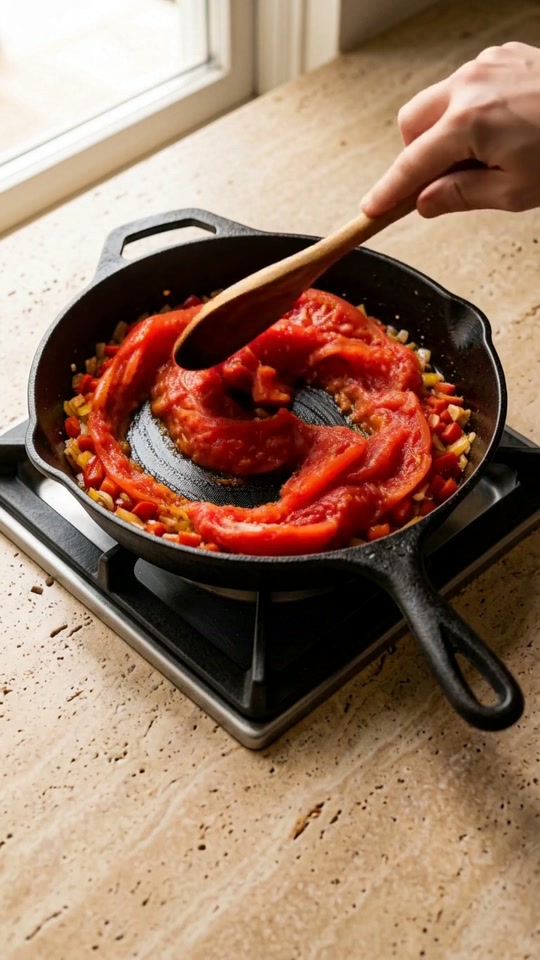
The secret is building a concentrated matbucha-style base first: sauté diced red bell pepper and yellow onion in olive oil for 7 to 8 minutes until soft and sweet, bloom the garlic, ground cumin, and paprika directly in the warm oil for 45 seconds to release their fat-soluble aromatics, and then simmer the crushed plum tomatoes uncovered for 8 to 10 minutes until the sauce is thick enough to hold an indentation when you press the back of a spoon into it.
According to food-science reference data on egg protein coagulation, egg whites set into an opaque gel between 60°C and 65°C (140°F–149°F), whereas egg yolks coagulate between 65°C and 70°C (149°F–158°F). Nestling the raw eggs into shallow wells in a thick, gently bubbling sauce insulates the yolks while the surrounding tomato ragout and trapped steam set the whites in just 4 to 5 minutes.
How do you make shakshuka with crumbled feta step by step?
Here is the complete one-skillet method for 4 poached eggs:
- Sweat the peppers and onions: Heat 2 tablespoons (30 ml) extra-virgin olive oil in a wide 26 cm (10-inch) skillet over medium heat. Add 1 finely diced medium yellow onion and 1 diced red bell pepper with 1/2 teaspoon fine sea salt, cooking for 7 to 8 minutes until soft and lightly golden at the edges.
- Bloom the garlic and spices: Stir in 3 grated garlic cloves, 1.5 teaspoons ground toasted cumin, 1.5 teaspoons sweet smoked paprika, and 1/4 teaspoon chili flakes (or 1 teaspoon harissa paste). Stir constantly for 45 seconds until fragrant.
- Reduce the tomato ragout: Pour in 1 can (400 g / 14 oz) crushed plum tomatoes along with 2 tablespoons water. Simmer uncovered over medium-low heat for 8 to 10 minutes, stirring occasionally, until thickened into a rich, spoon-coating sauce. Season to taste with salt and black pepper.
- Make four wells and crack the eggs: Using the back of a wooden spoon, press 4 shallow circular wells into the simmering sauce. Crack 4 cold large eggs into a small ramekin one at a time and slide each egg gently into a well.
- Poach until whites set and yolks stay runny: Reduce heat to low, cover the skillet loosely with a lid, and simmer for 4 to 5 minutes until the egg whites are opaque and silky while the yolks remain plump and runny when gently nudged.
- Finish with feta and herbs: Remove from the heat, scatter 75 g (1/2 cup) coarsely crumbled sheep's-milk feta cheese and 2 tablespoons chopped fresh flat-leaf parsley across the ruby sauce around the yolks, drizzle with olive oil, and serve immediately with warm bread.
Frequently asked questions
Can I use a cast-iron skillet for acidic tomato shakshuka?
A well-seasoned cast-iron skillet, enameled cast-iron pan, or stainless-steel sauté pan works well for a quick 20-minute shakshuka. If your bare cast-iron pan is newly seasoned, avoid letting the tomato sauce sit in the pan for hours after eating; transfer leftovers to a glass container once cooled.
How do I make sure the tops of the egg whites cook without hardening the yolks?
Baste the whites gently with a spoonful of hot tomato sauce right after cracking the eggs into the wells, or place a lid over the skillet for 3 to 4 minutes on low heat. Check the pan at the 3.5-minute mark—as soon as the ring of white around the yolk turns opaque ivory, pull the skillet off the burner because residual heat in the sauce continues cooking the eggs on the table.
Can I make the tomato-pepper shakshuka sauce ahead of time?
Yes. You can cook the spiced tomato and bell pepper base up to 3 days in advance and refrigerate it in an airtight container. For a 6-minute weekday meal, reheat the sauce in a skillet with a splash of water until bubbling, press the wells, and poach the eggs fresh.
What can I use instead of feta cheese?
Fresh goat cheese (chèvre), dollops of thick labneh or Greek yogurt, or small cubes of pan-seared halloumi all provide a similar creamy, salty contrast against the warm cumin-spiced tomato sauce.
Watch it, cook it, tell us what's next
The film at the top of this page shows every step in under 30 seconds, set to an original recipe song. Watch it on YouTube, Instagram or TikTok, and tell us which dish we should cook next.
AI-created visuals. Culinary inspiration, not a complete cooking guide.