The story and science behind the dish · recipe above ↑
Traditional Mexican Fruit Bionico: The Guadalajara Street Classic and Three-Milk Crema Science, Explained
What is a traditional Mexican fruit bionico?
A traditional Mexican fruit bionico (biónico) is a layered seasonal fruit cocktail originating in Guadalajara, Jalisco, built from crisp diced cantaloupe, Maradol papaya, red apple, banana rounds, and fresh strawberries, generously draped in a chilled three-milk sweet crema and crowned with toasted oats, shredded coconut, and pecans. Sold from neighborhood fruterías and morning street carts across western Mexico, it bridges the line between an energizing breakfast bowl and an indulgent afternoon dessert.
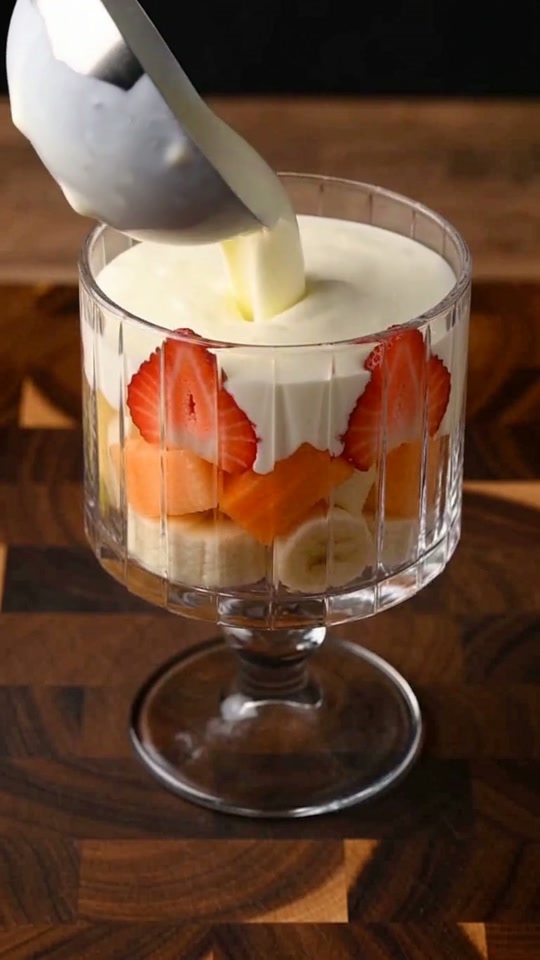
Unlike a simple tossed fruit salad, a Guadalajara biónico relies on strict structural layering and thermal contrast. The fruit is cut into uniform bite-sized cubes and stacked dry inside a chilled coupe or bowl, while the viscous dairy emulsion—whisked from cultured Mexican crema), sweetened condensed milk, evaporated milk, and pure vanilla—is ladled over the peak right before serving so the toasted granola topping stays audibly crisp.
Why does the three-milk crema cling to wet fruit without splitting?
Pouring thin cream over freshly cut melon and berries usually results in a watery puddle at the bottom of the bowl. Guadalajara street vendors solved this problem by blending three distinct dairy products into a single cold emulsion: cultured crema ácida (about 25%–30% milkfat), sweetened condensed milk (leche condensada), and evaporated milk (leche evaporada).
Cultured Mexican crema provides lactic tang and a shear-thinning fat network that resists curdling when it touches acidic strawberries (`pH ≈ 3.4`). Sweetened condensed milk contributes concentrated sucrose and lactose alongside vacuum-concentrated casein micelles, raising the viscosity of the sauce so it ribbons slowly over the fruit cubes. Evaporated milk tempers that sweetness and adjusts the pour point so the sauce glides down through the crevices of the fruit stack without needing heavy whipping.
How do you prevent osmotic syneresis from turning the bowl watery?
The biggest mistake home cooks make with bionico is folding the diced fruit directly into the sweet cream ahead of time. Because sweetened condensed milk carries a high dissolved sugar concentration, placing high-moisture fruits like cantaloupe and strawberries (`89%–91%` water) in direct contact with the sauce creates a strong osmotic pressure gradient across the cut plant cell walls.
Within 8 to 10 minutes of premature mixing, water migrates out of the fruit cells into the cream—a process called osmotic syneresis—collapsing the fruit's crisp bite and diluting the velvety dressing into thin liquid. To keep every spoonful thick and refreshing:
- Blot high-moisture melon and papaya: After dicing cantaloupe and papaya into 1.5 cm cubes, rest them briefly on a clean towel to remove free surface juice.
- Chill both components to 4°C (39°F): Cold dairy fat crystals increase the yield stress of the crema so it clings in a thick coat around each cube.
- Ladle on top at service: Stack the dry fruit tiers in chilled glass coupes first, ladle the cold crema over the dome immediately before eating, and finish with dry skillet-toasted granola.
How does bionico compare to other Mexican fruit street preparations?
Mexican street food features a wide spectrum of fresh fruit preparations, ranging from spicy-sour chile snacks to rich dairy desserts:
| Preparation | Origin / Region | Fruit Base | Sauce / Seasoning | Topping & Texture Profile |
|---|---|---|---|---|
| Biónico | Guadalajara, Jalisco | Papaya, cantaloupe, apple, strawberry, banana | Chilled 3-milk sweet crema (`crema`, condensed & evaporated milk, vanilla) | Skillet-toasted oats, coconut flakes, pecans; creamy & crunchy |
| Fresas con Crema | Irapuato & Central Mexico | Halved or quartered fresh strawberries | Cultured crema whisked with condensed milk | Minimalist; tender berries in cold sweet cream |
| Pico de Gallo de Fruta | Nationwide street carts | Jícama, mango, cucumber, pineapple, watermelon | Fresh lime juice, flaky salt | Tajín (chile-lime salt) & chamoy; crisp, tangy, spicy |
| Escamocha | Bajío / Western Mexico | Finely diced mixed tropical & orchard fruit | Sweet orange juice, lime, and a splash of condensed milk | Drinkable fruit cocktail eaten with a spoon and straw |
Where did the Guadalajara bionico originate?
The dish was invented in the early 1990s by street fruit vendors in Guadalajara, the capital of Jalisco. Local vendors wanted to create a nutrient-dense morning bowl that combined fresh orchard and tropical fruits with dairy protein, oats, and tree nuts for workers and students looking for sustained energy.
Drawing playful inspiration from the Spanish dub of the classic 1970s television series The Six Million Dollar Man (El Hombre Nuclear, popular in Mexico for its "bionic" strength motif), vendors named the creation coctel biónico. Word spread rapidly across Jalisco's markets (mercados) and juice bars (juguerías), eventually establishing the bionico across Mexico and Mexican-American neighborhoods throughout California and the Southwest.
How to make traditional Mexican fruit bionico at home
Follow these six steps in order for crisp fruit, thick crema, and crackling granola:
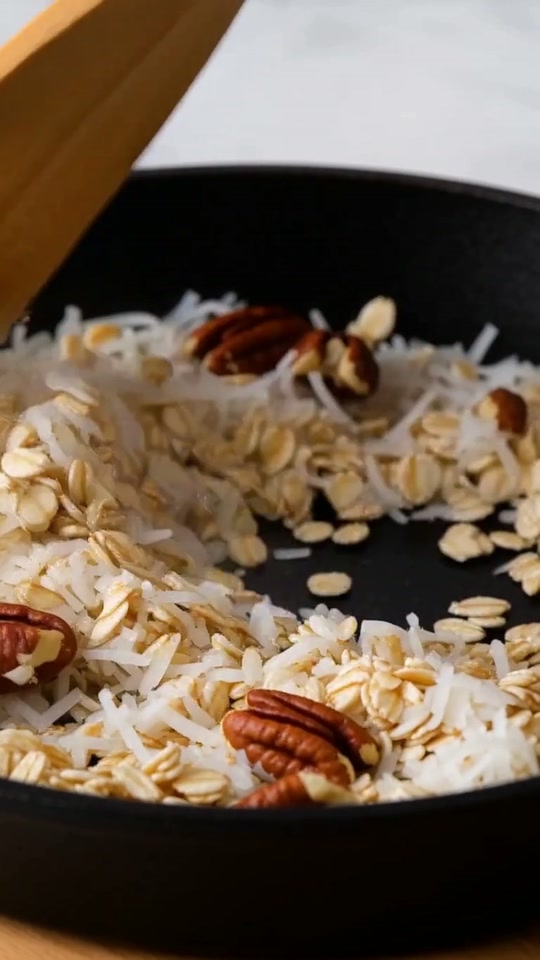
- Toast the skillet canela granola: Warm a dry skillet over medium-low heat to `155°C–165°C (310°F–330°F)`. Toast `50 g` old-fashioned rolled oats and `40 g` chopped raw pecans for 2 minutes until nutty, then add `30 g` unsweetened shredded coconut and `1 g` ground Mexican cinnamon (canela) for 60 to 90 seconds until golden and fragrant. Transfer immediately to a cool plate so carryover heat does not scorch the coconut, and let cool to `20°C (68°F)`.
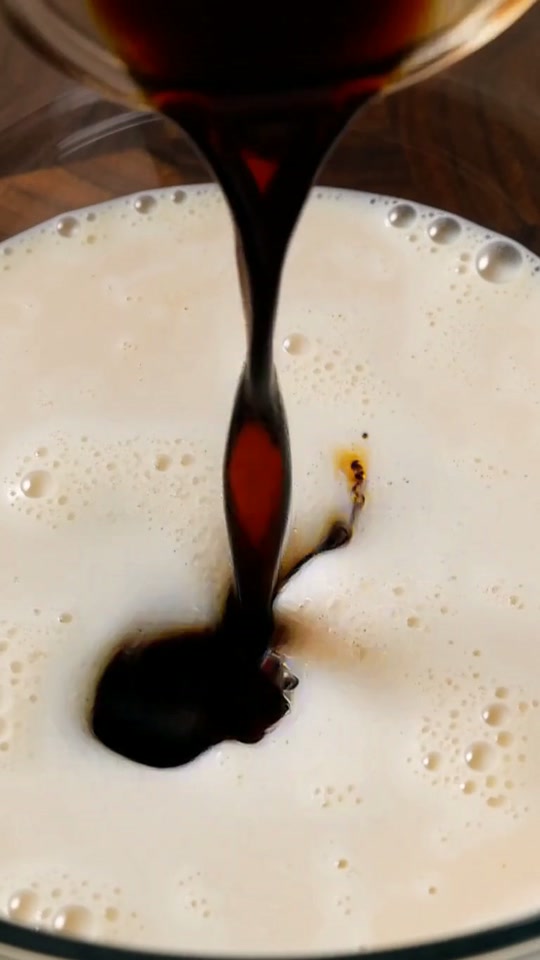
- Whisk and chill the three-milk crema: In a bowl, gently whisk `240 g` cold Mexican crema, `150 g` sweetened condensed milk, `60 ml` evaporated milk, and `5 ml` pure Mexican vanilla extract for 45 seconds until smooth and glossy. Chill at `4°C (39°F)` for 15 minutes so the emulsion thickens.
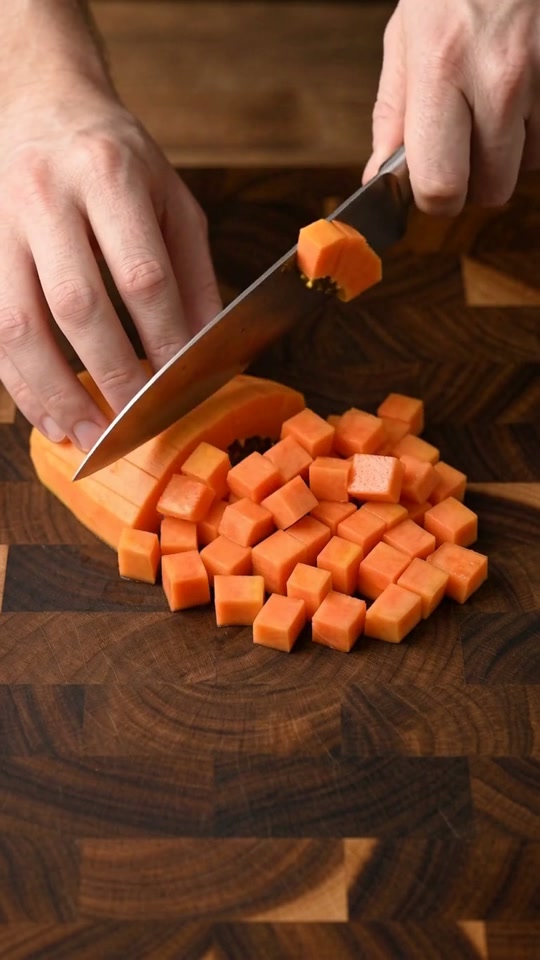
- Dice the firm melon and orchard fruit: Peel and seed the papaya and cantaloupe. Cut `180 g` ripe Maradol papaya, `180 g` cantaloupe, and `130 g` cored red apple into uniform `1.5 cm` cubes. Pat the melon and papaya lightly dry on a clean kitchen towel.
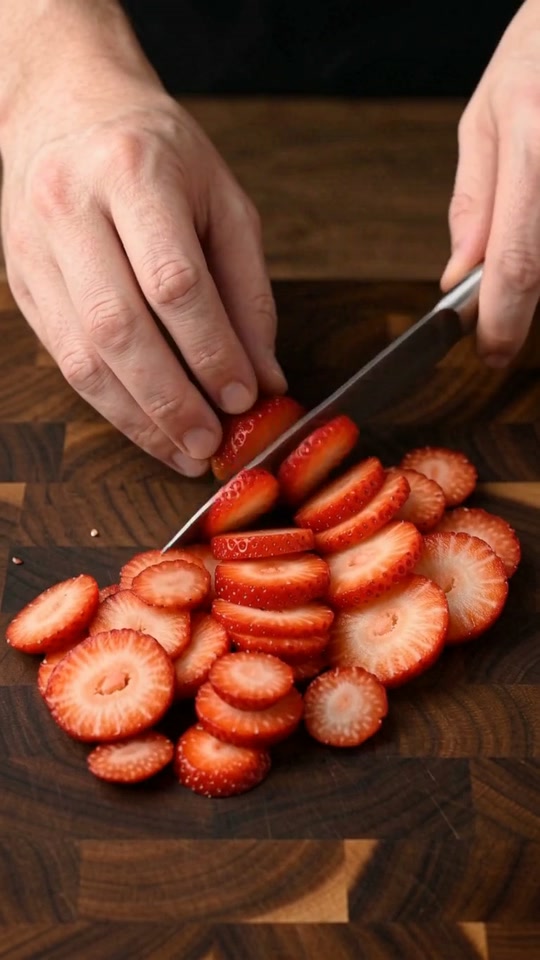
- Prep the berries and banana last: Hull and halve `200 g` fresh ripe strawberries. Right before assembling the bowls, peel and slice `120 g` firm ripe banana into thick `1 cm` coins so the cut surfaces stay bright ivory.
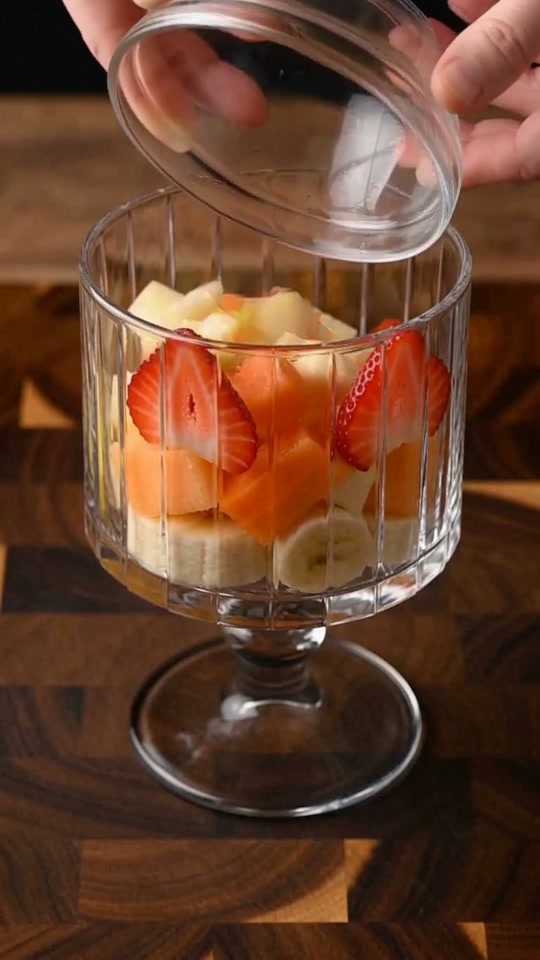
- Layer in chilled coupes: Stack alternating layers of cantaloupe, papaya, crisp apple, banana rounds, and strawberries inside two wide-mouth glass coupes chilled to `4°C (39°F)`.
- Ladle crema and crown with crunch: Spoon the cold three-milk crema generously over the mounded fruit peak, scatter the cooled toasted oat-coconut-pecan granola across the top, and serve immediately.
Frequently asked questions
What can I use if I cannot find Mexican crema?
Crème fraîche is the closest direct substitute because its butterfat content and gentle cultured acidity match traditional Mexican crema ácida. If using American sour cream, thin `200 g` of sour cream with `40 ml` of heavy whipping cream before whisking in the condensed and evaporated milks.
Why should I toast the oats and pecans before adding the shredded coconut?
Rolled oats and dense pecan pieces require 3 to 4 minutes at `160°C (320°F)` to toast through, whereas thin shredded coconut flakes contain low moisture and high surface area, browning in just 60 to 90 seconds. Adding the coconut during the final minute ensures everything finishes golden at the same time.
Can I prep the components ahead of time?
Yes—store the whisked three-milk crema in a sealed jar in the refrigerator (`4°C / 39°F`) for up to 3 days, and keep the cooled toasted granola in an airtight container at room temperature. Dice the melon, papaya, and strawberries up to 4 hours ahead (kept chilled and separate), slice the banana at the last minute, and assemble right before serving.
Watch it, cook it, tell us what's next
The film at the top of this page shows every step of this recipe in under 60 seconds, set to an original soundtrack. Watch it on YouTube, Instagram or TikTok, and tell us which classic dish we should make next.
AI-created visuals. Culinary inspiration, not a complete cooking guide.