The story and science behind the dish · recipe above ↑
Neon Dragonfruit Pitaya Mango Parfait Coupe: Brown-Sugar Boba Q-Texture, Betacyanin Pigments & Density Layering
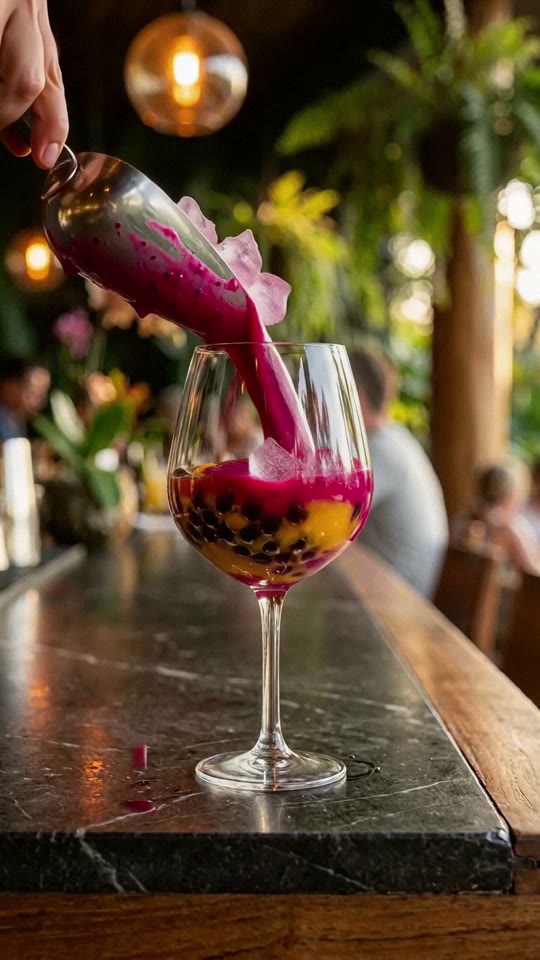
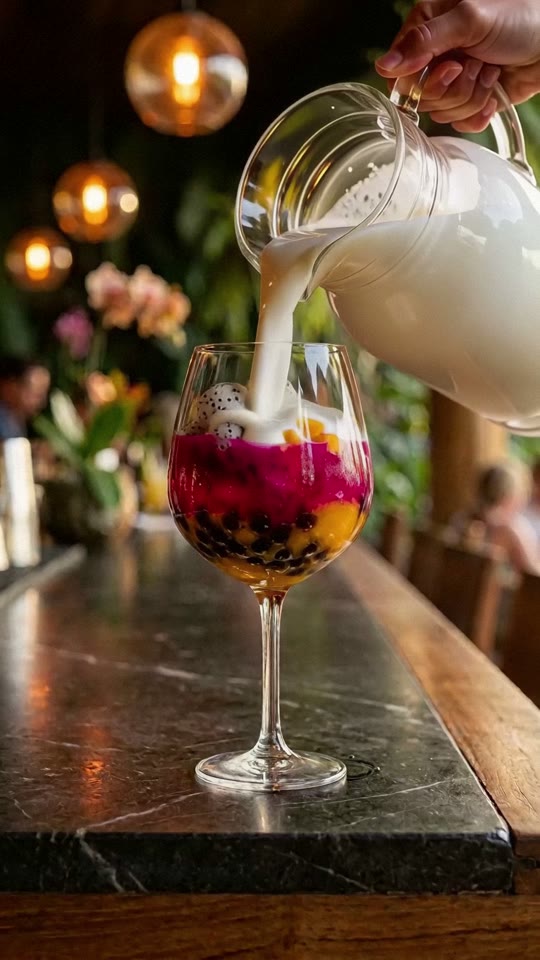
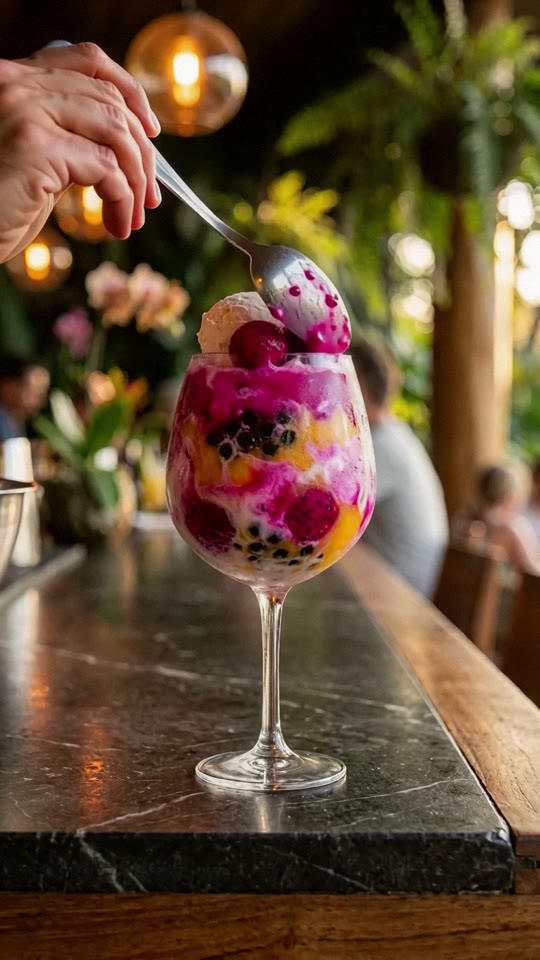
Across modern night markets and dessert cafés from Taipei and Bangkok to Singapore, tropical fruit parfaits combine the chewy starch craft of bubble tea with vibrant Southeast Asian fruit purées and rich coconut cream. The Neon Dragonfruit Pitaya Mango Parfait Coupe stacks five distinct textures and temperatures inside a single stemmed glass: warm, caramelized brown-sugar tapioca pearls at the base, a jewel-toned magenta purée of red-fleshed pitaya (dragonfruit), a frosty golden slush of Alphonso mango, a lightly salted coconut cream float, and a summit of coconut gelato ringed with freshly scooped dragonfruit spheres.
Because our thirty-second film focuses on the visual assembly of the coupe, it does not show the stove-top braising required to turn dry cassava starch spheres into glossy, chewy brown-sugar boba, nor how to keep the magenta and golden fruit layers from bleeding into each other. Below is the complete seven-step home kitchen method.
What gives red dragonfruit its electric magenta color and how does it pair with Alphonso mango?
While white-fleshed dragonfruit (Selenicereus undatus) has a mild, kiwi-like crunch and pale interior, red-fleshed dragonfruit (Selenicereus costaricensis, also known as pitaya roja) derives its neon magenta hue from water-soluble nitrogenous pigments called betalains (specifically betacyanins, the same antioxidant pigment family found in red beets and prickly pear cactus fruit).
In Southeast Asian dessert bars, red pitaya is prized for its refreshing, earthy-berry sweetness and striking natural color, but its delicate acidity benefits from two bold partners:
- Aromatic Alphonso Mango: Known across India and tropical Asia as the "King of Mangoes," Alphonso mango brings high natural sucrose and rich lactone aromatics (peach-apricot notes) that give the middle slush tier intense tropical body.
- Salted Coconut Cream: Whisking a pinch of flaky sea salt and sweetened condensed milk into chilled full-fat coconut cream echoes the Thai dessert tradition (nam kathi), where savory saltiness sharpens the perception of sweet mango and subtle dragonfruit.
How do you cook brown-sugar tapioca pearls to authentic Q-texture at home?
In Taiwanese culinary culture, the letter Q describes the ideal bouncy, elastic, mochi-like chew of perfectly cooked starches. If you drop raw tapioca pearls into cold water, they dissolve into starch paste; if you boil them too briefly or chill them in the refrigerator, the cassava starch retrogrades and turns hard and chalky in the center. Follow the 15-15-3 rule for foolproof home boba:
- 15 Minutes Rolling Boil: Bring at least 10 parts water to 1 part dry tapioca pearls to a full rolling boil before adding the pearls. Stir gently for the first 30 seconds so they float freely, then boil uncovered over medium heat for 15 minutes.
- 15 Minutes Covered Heat-Off Rest: Turn off the burner, cover the pot with a tight lid, and let the pearls steep in the hot water for 15 minutes. Passive conductive heat gelatinizes the dense cassava core all the way to the center without overcooking the outer skin.
- 3 Minutes Brown-Sugar Braise: Drain the water, return the tender pearls to the warm pot with dark muscovado or Okinawa brown sugar and a splash of water, and simmer for 3 minutes. The bubbling molasses syrup coats the outer starch gel, keeping the pearls shiny and preventing them from sticking together as they cool to warm room temperature.
How does density stratification keep the five layers distinct in the glass?
Building clean horizontal bands in a wide coupe requires ordering the components by specific gravity and temperature:
| Layer Order (Bottom to Top) | Component & Quantity (2 Coupes) | Temperature & Texture | Why It Stays in Place |
|---|---|---|---|
| 1. Foundation | 100 g braised brown-sugar tapioca boba pearls | Warm room temp (30–35°C), chewy & syrupy | Highest density; settles firmly in the bottom well of the glass |
| 2. Lower Tier | 180 g red dragonfruit flesh blended with 1 tsp lime + 1 tbsp syrup | Chilled (4°C), smooth magenta purée (zero added water) | Natural seed mucilage and sugar create a viscous bed over the boba |
| 3. Middle Tier | 250 g frozen mango chunks + 80 ml mango nectar + 60 g ice | Frozen (-4°C), thick frosty golden slush | Ice-crystal structure and lower density float cleanly atop the pitaya purée |
| 4. Upper Float | 120 ml full-fat coconut cream + 15 ml condensed milk + 1/8 tsp sea salt | Chilled (4°C), silky pourable emulsion | Coconut lipid droplets float lightly over the dense frozen mango slush |
| 5. Summit Crown | 2 scoops coconut gelato + 12 scooped red dragonfruit spheres + mint | Frozen (-12°C) scoop & chilled fruit balls | Supported by the firm frozen mango slush directly beneath the center |
How do you make the Neon Dragonfruit Pitaya Mango Parfait Coupe step by step?
- Boil & Braise the Brown Sugar Tapioca Pearls (Boba): Bring 1 litre of water to a rolling boil in a saucepan, stir in 80g quick-cooking or traditional black tapioca pearls so they float freely, and boil over medium heat for 15 minutes. Turn off the heat, cover tightly, and let sit for 15 minutes until the pearls are chewy all the way through (Q-texture). Drain, return to the warm pot with 50g dark muscovado or Okinawa brown sugar and 30ml water, and simmer for 3 minutes until the syrup thickens into a glossy glaze; let cool to warm room temperature.
- Whisk the Lightly Salted Coconut Cream Float: In a small bowl, whisk 120ml chilled full-fat coconut cream with 15ml sweetened condensed milk and 1/8 tsp flaky sea salt until smooth and pourable; chill in a small spouted pitcher.
- Scoop Dragonfruit Pearls & Blend the Magenta Pitaya Purée: Halve 1 ripe red-fleshed dragonfruit (Hylocereus costaricensis). Using a small 1.5 cm melon baller, scoop 12 round magenta fruit spheres and chill on a plate. Scoop the remaining red dragonfruit flesh (about 180g) into a blender with 1 tsp lime juice and 1 tbsp agave or cane syrup, blend smooth with zero added water, and transfer to a pitcher.
- Blend the Thick Frozen Alphonso Mango Slush: Rinse the blender jar and add 250g frozen ripe mango chunks, 80ml chilled Alphonso mango nectar, and 60g crushed ice. Blend on high for 35 seconds into a thick, frosty golden slush.
- Spoon Warm Brown Sugar Boba & Pitaya Purée into the Base: Spoon 2 generous tablespoons of the warm brown-sugar tapioca pearls into the bottom of two chilled stemmed crystal coupes, then pour the magenta pitaya purée over the pearls to fill the lower quarter of the glass.
- Layer the Frozen Mango Slush & Salted Coconut Cream: Gently spoon or pour the thick frozen mango slush over the back of a wide spoon onto the pitaya layer so the two colors stay cleanly separated, then float 3 tablespoons of the chilled salted coconut cream over the mango.
- Crown with Coconut Gelato & Dragonfruit Pearls: Set a firm scoop of artisanal coconut gelato in the center of each coupe, arrange the reserved magenta dragonfruit spheres in a ring around the gelato, garnish with a fresh mint sprig, and serve immediately with a spoon and wide boba straw.
Frequently asked questions
Why shouldn't you refrigerate cooked tapioca boba pearls?
Refrigerator temperatures (4°C / 39°F) trigger rapid starch retrogradation in cassava pearls, turning them hard and opaque within an hour. Keep braised brown-sugar boba in their warm syrup at room temperature and use within 3 to 4 hours of cooking.
How can I tell if a dragonfruit is red-fleshed or white-fleshed at the grocery store?
Look for labels specifying "Red Dragonfruit" or Pitaya Roja. Externally, red-fleshed varieties usually have shorter, closer-set magenta scales that stay reddish to the tips, whereas white-fleshed dragonfruits tends to be more elongated with bright green wing-tips on the scales.
Why did my mango layer sink into the dragonfruit purée?
If you add water to the dragonfruit when blending, the pitaya purée becomes thinner than the mango slush. Blend the red dragonfruit flesh with only a teaspoon of lime juice and a tablespoon of syrup (zero water), and spoon the frozen mango slush gently over the back of a wide spoon so downward momentum is broken.
What can I use if I only have white-fleshed dragonfruit?
If you can only find white-fleshed dragonfruit, blend 40 grams of frozen raspberries or a half-teaspoon of natural red pitaya powder into the dragonfruit purée to restore the vibrant magenta color and berry-like tang.
Watch the short film
Browse the complete recipe collection, send a recipe request, and follow our kitchen series on YouTube, Instagram, and TikTok.
AI-created visuals. Culinary inspiration, not a complete cooking guide.