The story and science behind the dish · recipe above ↑
Smoky Mexican Albondigas: The Heritage and Science of Meatballs in Chipotle Sauce, Explained
What are authentic Mexican Albondigas?
Authentic Mexican Albondigas (albóndigas en salsa de chipotle) are tender meatballs rolled from a blend of ground beef chuck, spiced fresh Mexican pork chorizo, and soaked raw long-grain white rice, seared golden and simmered gently inside a fire-charred Roma tomato and smoky chipotle adobo sauce. Prepared across home kitchens (cocinas económicas) throughout central Mexico, they represent a cornerstone of family comfort cooking, served in warm earthenware bowls with crumbled aged Cotija cheese and fresh cilantro.
Unlike dense oven-baked meatballs, Mexican Albondigas owe their pillowy interior to raw soaked rice folded directly into the beef-and-chorizo farce. As the meatballs braise inside a velvety sauce blended from dry-charred Roma tomatoes and chipotle chiles in adobo, the rice grains hydrate and expand from the inside out, absorbing savory meat juices while perfuming the surrounding salsa with rendered chorizo spices.
Why does soaked raw white rice make meatballs cloud-tender?
When ground beef is mixed, rolled, and heated above `65°C (149°F)`, its myofibrillar proteins (actin and myosin) denature and shrink tightly, squeezing out moisture until an all-meat sphere turns firm and bouncy. Mexican home cooks counter this protein contraction by folding `50 g` of rinsed, warm-water-soaked raw long-grain white rice directly into `400 g` of ground beef (`80/20`) and `100 g` of fresh pork chorizo.
During the 25-to-30-minute covered simmer at `90°C–94°C (195°F–200°F)`, water and aromatic tomato broth migrate inward toward the center of each `4 cm` meatball. Above the starch gelatinization threshold (`68°C–74°C / 154°F–165°F`), each rice grain swells to nearly three times its raw volume. That internal expansion props the muscle fibers apart into a porous, moisture-trapping lattice while the rendered paprika-and-garlic fat from the fresh chorizo lubricates the protein matrix.
How does charring Roma tomatoes with chipotle in adobo build depth?
A memorable salsa de chipotle starts on a dry cast-iron comal heated to `230°C (450°F)`. Blistering whole Roma tomatoes and unpeeled garlic cloves without oil caramelizes natural fructose and glutamic acid right beneath the tomato skin while creating bitter-sweet char flecks that ground the bright acidity of the fruit.
Chipotle peppers are fully ripened red jalapeños slow-smoked over pecan or oak wood fires for days before being stewed in an adobo marinade of vinegar, garlic, tomato, and warm spices. Blending the blistered Roma tomatoes—skins and all—with two chipotles in adobo and chicken stock creates a brick-red emulsion whose natural acidity cuts cleanly through the rich beef and pork chorizo fat.
What role does aged Cotija cheese play as a finishing garnish?
Aged Cotija cheese provides a sharp, briny counterpoint to the smoky, slightly sweet tomato-chipotle braise. Named after the town of Cotija de la Paz in Michoacán, this firm cow's-milk cheese is cured for months until dry and crumbly, earning its reputation as the Parmigiano of Mexico.
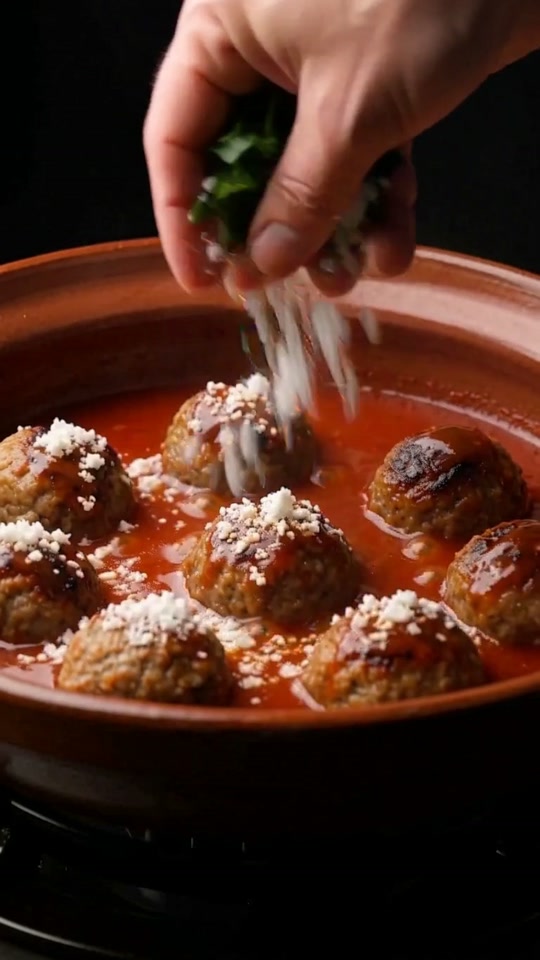
Because aged Cotija has low moisture and a cross-linked casein structure, scattering `40 g` of coarse crumbles over hot albóndigas softens the cheese slightly without melting it into strings, delivering distinct pops of dairy saltiness alongside fresh torn cilantro.
How do Mexican albondigas compare to other global meatball traditions?
Meatballs appear across nearly every major culinary tradition, shaped by local starches, fat ratios, and cooking media:
| Style | Meat Composition | Internal Binder / Starch | Cooking Medium | Flavor Profile |
|---|---|---|---|---|
| Mexican Albóndigas | `80/20` ground beef + fresh pork chorizo | Soaked raw long-grain white rice & egg | Seared at `190°C`, braised in charred tomato-chipotle salsa | Smoky chipotle adobo, roasted tomato, garlic, cilantro, Cotija |
| Italian Polpette | Beef, pork, and veal blend | Milk-soaked bread panade & Parmigiano | Pan-browned then simmered in Sunday ragù | Sweet basil, garlic, slow-cooked plum tomato |
| Spanish Albóndigas | Pork and beef mince | Breadcrumbs, garlic, flat-leaf parsley | Fried in olive oil, braised in saffron-almond wine sauce | Nutty, dry white wine, saffron, roasted garlic |
| Swedish Köttbullar | Beef and pork shoulder | Cream-soaked breadcrumbs & grated onion | Pan-seared in butter, glazed with pan gravy | Allspice, white pepper, tart lingonberry contrast |
Where did Mexican albondigas originate?
The word albóndiga derives from the Arabic al-bunduq ("hazelnut" or small round sphere). During the Moorish period in Al-Andalus between the 8th and 15th centuries, Arab cooks introduced spiced lamb and beef meatballs bound with egg and aromatics to the Iberian Peninsula.
When Spanish cooks brought livestock and stewing techniques to New Spain in the 16th century, Indigenous Mesoamerican cooks transformed the dish within Mexican cuisine—replacing Mediterranean wine and almonds with native fire-charred tomatoes (jitomates), fresh cilantro, and smoke-dried chiles chipotles, and using raw white rice inside the meatballs to create a complete one-pot meal.
How to make smoky Mexican albondigas at home
Follow these six steps in order for juicy rice-plumped meatballs and a velvety charred tomato-chipotle sauce:
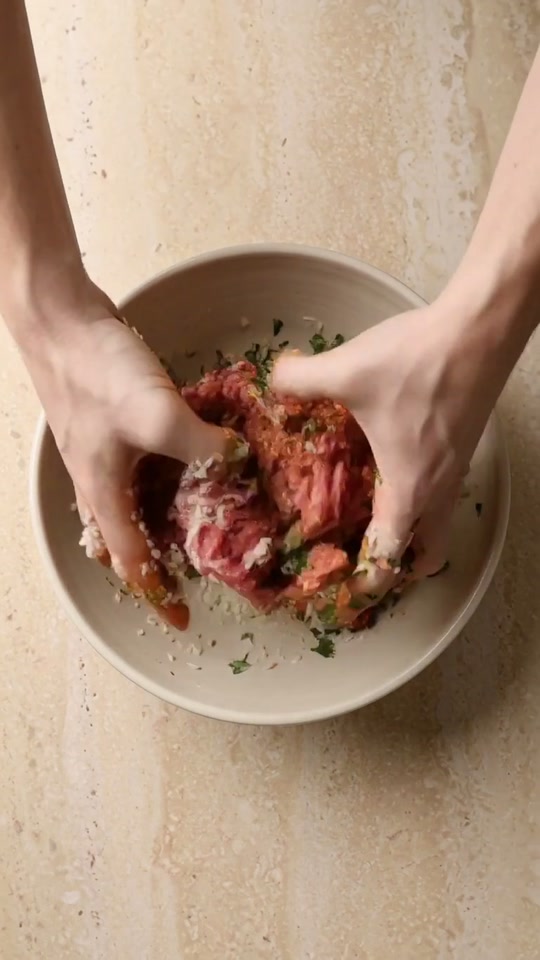
- Soak the rice and fold the beef-chorizo farce: Rinse `50 g` long-grain white rice, soak it in warm water for 15 minutes to hydrate the outer starch, and drain dry. In a chilled bowl, gently fold `400 g` ground beef (`80/20`), `100 g` fresh Mexican pork chorizo (casing removed), the drained rice, `40 g` finely minced white onion, `2` minced garlic cloves, `15 g` chopped fresh cilantro, `1` beaten egg, `4 g` fine sea salt, and `2 g` black pepper for 45 seconds just until combined.
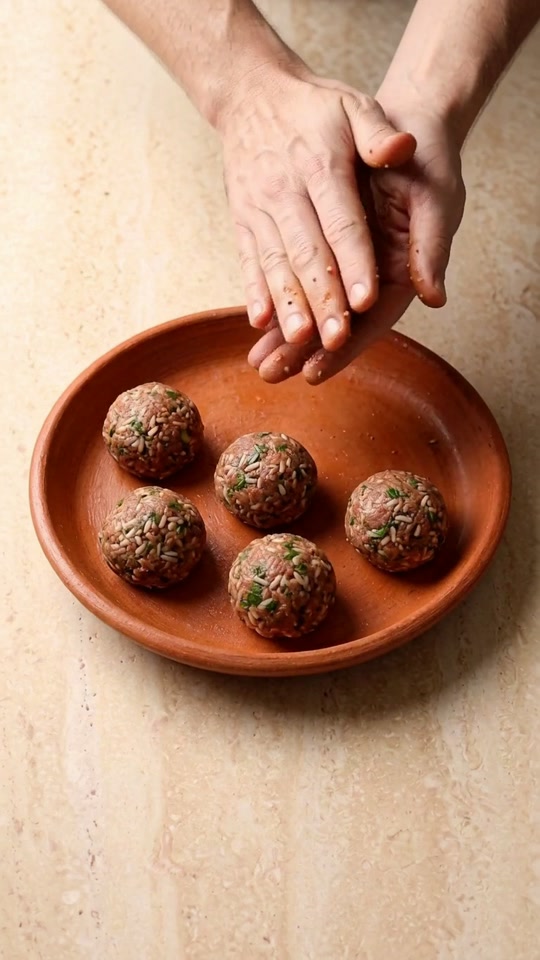
- Roll 16 uniform meatballs: With damp hands, roll the farce into 16 smooth golf-ball-sized spheres (`~38 g`, `4 cm` diameter each) and chill at `4°C (39°F)` for 10 minutes.
- Blister the Roma tomatoes and garlic: Heat a dry cast-iron skillet or comal to `230°C (450°F)`. Char `6` whole Roma tomatoes (`600 g`) and `3` unpeeled garlic cloves for 8 to 10 minutes, turning until the tomato skins blacken in spots and the flesh softens (removing the garlic after 4 minutes once golden).
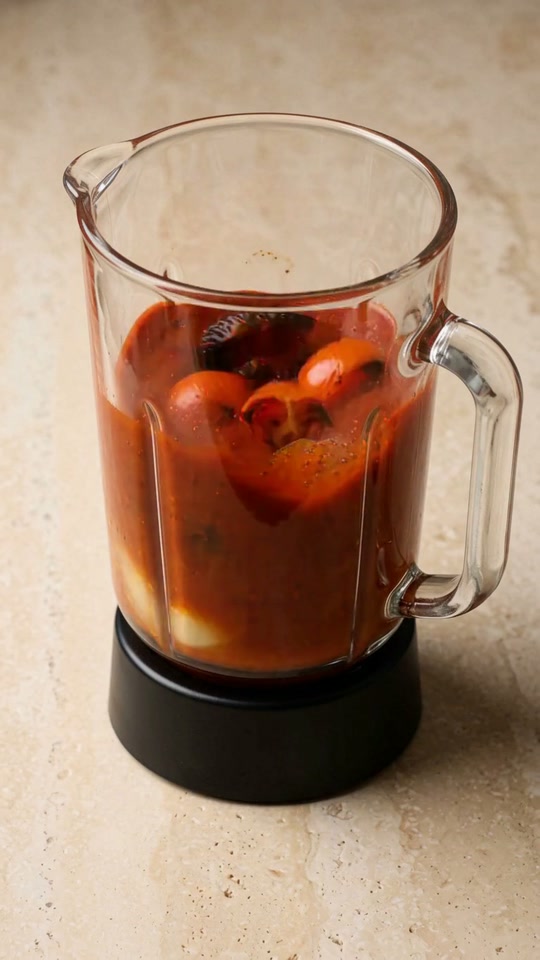
- Blend the smoky chipotle salsa: Peel the charred garlic and blend on high for 45 seconds with the blistered Roma tomatoes (including charred skins), `40 g` remaining white onion, `2` chipotle peppers in adobo, `15 ml` (`1 tbsp`) adobo sauce, `250 ml` chicken stock, and `2 g` sea salt until silky smooth.
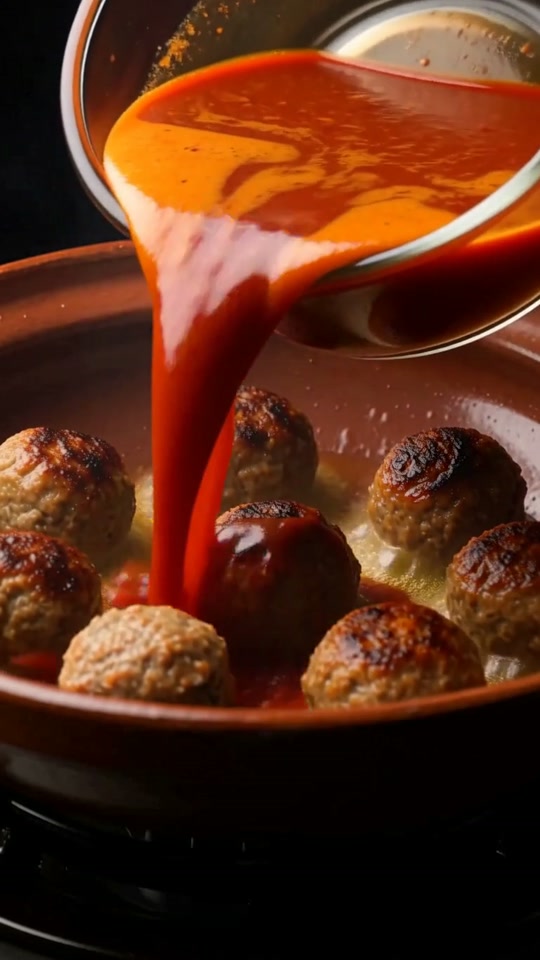
- Sear and braise covered for 25–30 minutes: Heat `30 ml` (`2 tbsp`) olive oil in a wide clay cazuela or Dutch oven at `190°C (375°F)` and brown the meatballs for 4 to 5 minutes until golden on all sides. Pour the chipotle-tomato salsa over the meatballs, reduce heat to a gentle simmer (`90°C–94°C / 195°F–200°F`), cover tightly, and simmer for 25 to 30 minutes until the rice grains inside the meatballs are completely tender and the center reaches `74°C (165°F)`.
- Rest and garnish: Rest uncovered off the heat for 5 minutes so the sauce thickens, then ladle into warm bowls and top with `40 g` crumbled aged Cotija cheese and fresh cilantro leaves.
Frequently asked questions
Does raw rice really cook all the way through inside the meatballs?
Yes—soaking the rinsed long-grain white rice in warm water for 15 minutes before mixing gives the starch a head start, and keeping the pot tightly covered at a steady `92°C (198°F)` simmer for 25 to 30 minutes steams the rice grains until tender right inside the meatball.
Why combine fresh Mexican chorizo with ground beef instead of using plain pork?
Fresh Mexican pork chorizo comes pre-seasoned with ancho and guajillo chiles, garlic, vinegar, and oregano, along with generous pork fat. Mixing `100 g` of chorizo into `400 g` of `80/20` beef seasons the interior of every meatball from within and keeps the texture moist.
How can I adjust the heat level of the chipotle sauce?
Two whole chipotles in adobo plus `1 tbsp` of adobo sauce produce a balanced, medium-warmth smoky sauce. For a milder family-style pot, start with one chipotle pepper (seeds removed) and `1 tsp` adobo sauce; for extra heat, blend in a third chipotle.
Watch it, cook it, tell us what's next
The film at the top of this page shows every step of this recipe in under 60 seconds, set to an original soundtrack. Watch it on YouTube, Instagram or TikTok, and tell us which classic dish we should make next.
AI-created visuals. Culinary inspiration, not a complete cooking guide.