The story and science behind the dish · recipe above ↑
Pesto Fried Eggs on Sourdough: The 10-Minute Ligurian-Inspired Toast, Explained
What are pesto fried eggs?
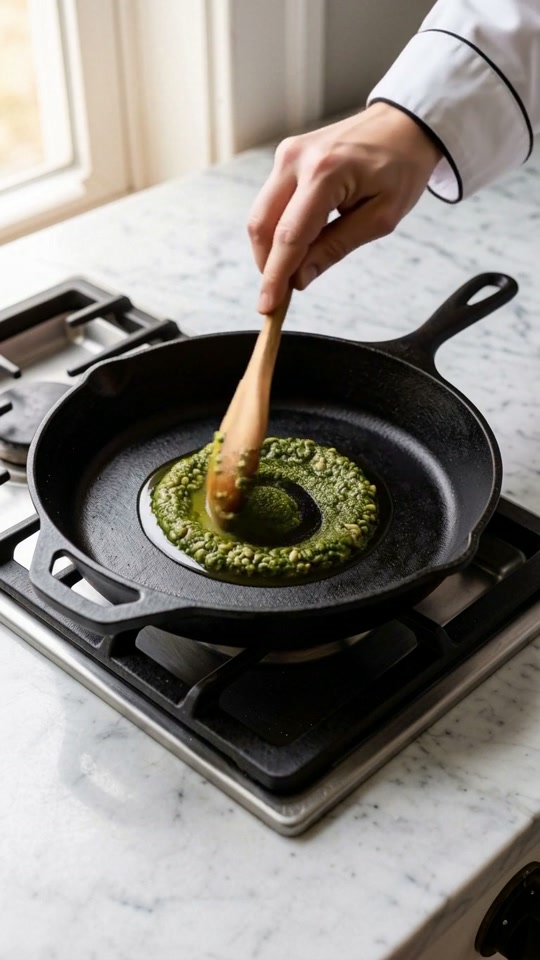
Pesto fried eggs are sunny-side-up or basted eggs cooked directly in a layer of basil pesto rather than plain butter or neutral cooking oil. As the pan warms, the extra-virgin olive oil suspended in Pesto alla Genovese separates slightly from the crushed basil, pine nuts, garlic, and grated cheese, becoming the cooking fat that fries the egg whites while basting them in herb-infused oil.
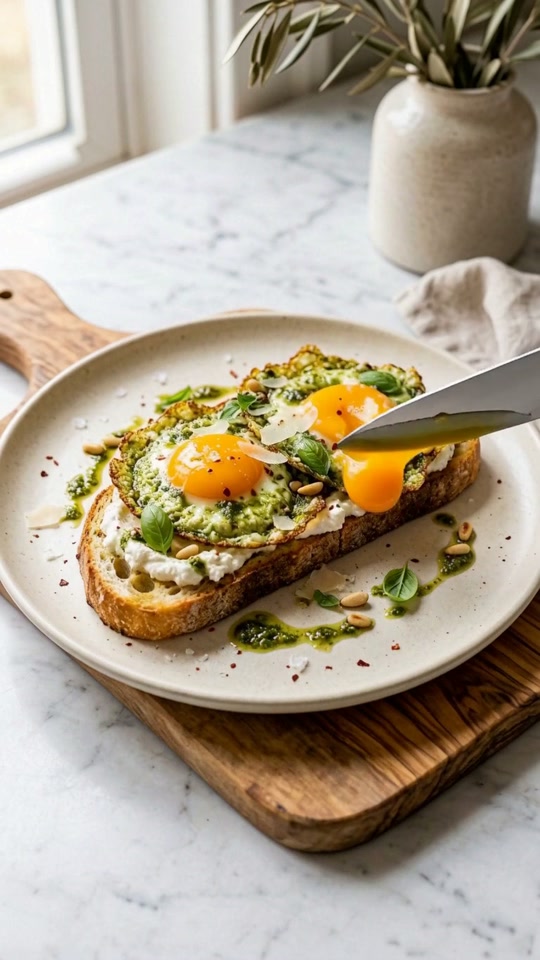
When served over thick toasted sourdough bread spread with whipped ricotta, the dish balances three distinct textures: a crisp, open-crumb crust on the bottom, a cool, milky cheese cushion in the middle, and lacy, herb-crisped egg whites with warm, runny yolks on top.
Why does frying eggs in basil pesto work without burning the herbs?
Fresh basil turns dark and bitter when exposed to dry, smoking heat, and aged hard cheeses like Parmigiano-Reggiano and Pecorino scorch quickly above 180°C (356°F). The trick that makes pesto fried eggs work in a home kitchen is heat control and timing: you spread the pesto into a moderately warm skillet at 150°C–160°C (300°F–320°F) and crack the cold eggs in within 15 seconds.
According to food-science reference data on egg protein coagulation, egg white proteins begin to set around 60°C–65°C (140°F–149°F) while yolks thicken between 65°C and 70°C (149°F–158°F). Cracking the eggs directly on top of the pesto immediately cools the center of the pan and shields the delicate basil and cheese solids beneath the liquid albumen, while the olive oil around the perimeter fries the outer rim of the whites into a golden-green lace.
| Cooking Fat | Skillet Surface Temp | Egg White Edge Texture | Flavor Profile |
|---|---|---|---|
| Basil Pesto | 150°C–160°C (300°F–320°F) | Crisp, lacy, flecked with toasted cheese and pine nuts | Sweet basil, toasted garlic, savory Parmigiano |
| Unsalted Butter | 155°C–165°C (310°F–330°F) | Softly browned, tender | Sweet milk solids, mild nuttiness |
| Extra-Virgin Olive Oil | 175°C–190°C (350°F–375°F) | Deeply blistered, frilly | Peppery, fruity olive notes |
Should you use homemade pesto or jarred pesto?
Fresh homemade pesto or refrigerated tub pesto from the supermarket deli case produces noticeably better results than shelf-stable jarred pesto. Traditional Genovese pesto relies on sweet young basil leaves, Ligurian extra-virgin olive oil, pine nuts, garlic, Parmigiano-Reggiano, and Pecorino Fiore Sardo.
Shelf-stable jars are heat-pasteurized, which dulls the bright chlorophyll color of the basil, and many commercial brands substitute cashews, sunflower oil, or potato flakes for pine nuts and olive oil. Those starchy fillers tend to stick to the skillet rather than releasing clean, fragrant oil around the eggs. If your pesto is very thick or dry, stir in one extra teaspoon of extra-virgin olive oil before adding it to the pan so the eggs have enough fat to sizzle cleanly.
Why pair pesto eggs with whipped ricotta and sourdough?
In Liguria and across northern Italy, fresh whey cheeses and crusty country loaves are everyday companions to herb sauces. Ricotta is technically a whey cheese (ricotta means "recooked"), coagulated by heating the sweet whey left behind after cheesemaking so the fine albumin and globulin proteins float to the surface in tender curds.
Whipping whole-milk ricotta for 60 seconds with a pinch of sea salt and lemon zest incorporates air and smooths out its natural graininess. Spread thick across hot toasted sourdough, that cool, creamy layer acts as a barrier that keeps the bread crisp even after the pesto oil and runny egg yolks cascade over the top.
How do you make pesto fried eggs on sourdough step by step?
The complete home-kitchen method takes about 10 minutes from start to plate:
- Whip the ricotta: Spoon 120 g (1/2 cup) whole-milk ricotta into a small bowl with a pinch of flaky sea salt, freshly cracked black pepper, and optional grated lemon zest. Whisk vigorously for 45 to 60 seconds until light, smooth, and spreadable.
- Toast the sourdough: Brush a 2 cm (3/4-inch) slice of country sourdough with 1 teaspoon of extra-virgin olive oil. Toast it in a dry skillet over medium heat for 2 minutes per side until the surface is golden-brown and crisp while the center stays chewy, then rub lightly with a halved garlic clove.
- Warm the pesto: Reduce the skillet heat to medium-low so the pan surface sits near 150°C–160°C (300°F–320°F). Spoon 3 tablespoons (45 g) of basil pesto into the center and spread it with the back of a spoon into a 15 cm (6-inch) circle. Let it sizzle gently for 10 to 15 seconds until emerald oil pools at the edges.
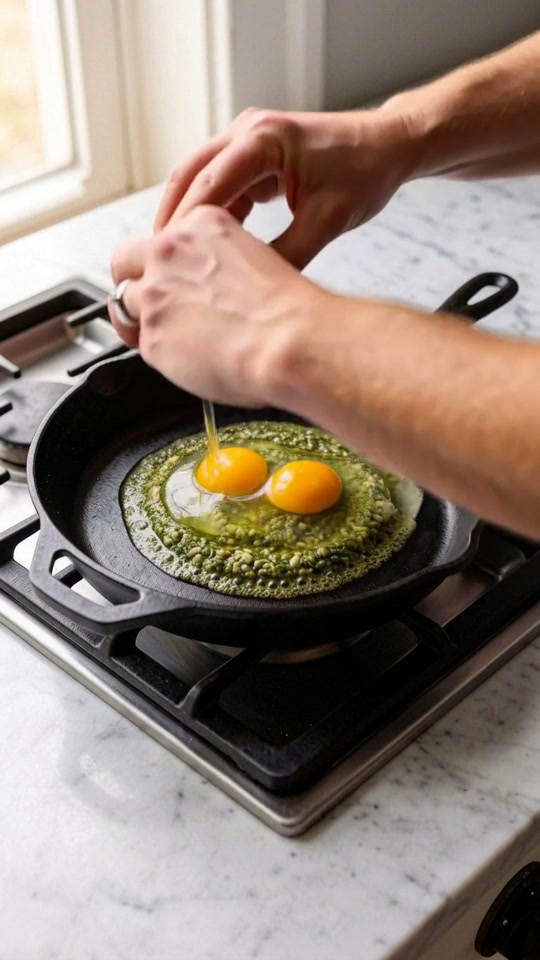
- Crack and fry the eggs: Crack 2 large cold eggs into small ramekins first, then slide them side by side directly onto the warm pesto bed. Season the whites lightly with a tiny pinch of salt.
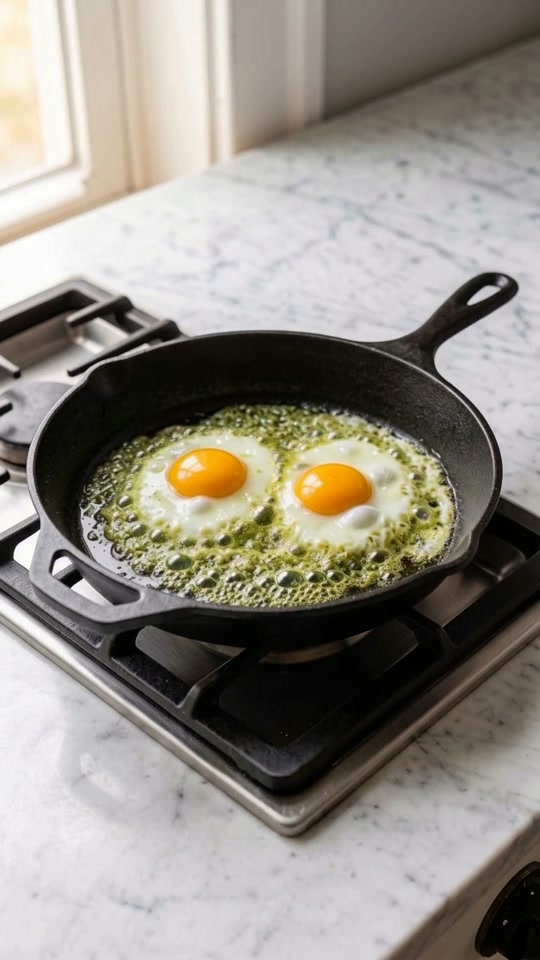
- Set the whites and keep the yolks runny: Cook uncovered over medium-low heat for 3 to 4 minutes as the pesto oil bubbles around the whites and turns their outer edges golden-green and lacy. If the top of the whites around the yolks is still translucent, cover the pan with a lid for the final 45 seconds.
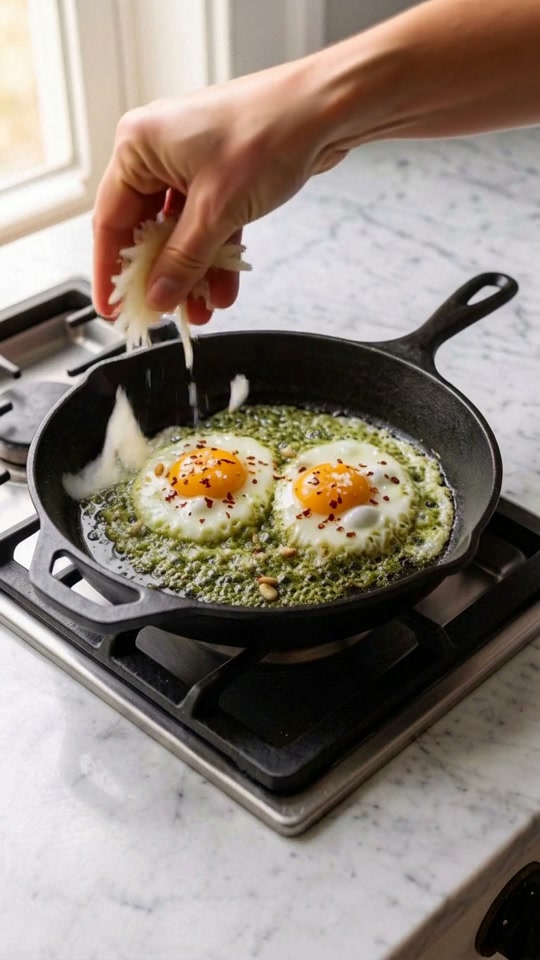
- Assemble and garnish: Spread the toasted sourdough generously with the whipped ricotta, slide the two pesto-fried eggs and all the warm emerald pan oil on top, and finish with 1 tablespoon toasted pine nuts, 15 g shaved Parmigiano-Reggiano, flaky sea salt, and crushed red pepper flakes.
How did pesto eggs become a modern breakfast staple?
While Genovese basil pesto has been documented in Ligurian cookbooks since Giovanni Battista Ratto's 1863 La Cuciniera Genovese, frying eggs directly in a spoonful of pesto became a global breakfast phenomenon in spring 2021 when dietitian Amy Wilichowski shared the technique on short-form video. Within weeks, home cooks around the world discovered that using pesto as the cooking fat solved two weekday breakfast problems at once: seasoning the eggs and dressing the toast in a single pan.
Frequently asked questions
What kind of skillet is best for frying eggs in pesto?
A well-seasoned cast-iron skillet, carbon-steel pan, or nonstick skillet works well. Avoid unseasoned stainless steel for this recipe unless you add extra olive oil, because the grated Parmigiano-Reggiano in the pesto will fuse to bare steel as it browns.
How do I keep the garlic and cheese in the pesto from burning?
Keep your burner at medium-low (150°C–160°C / 300°F–320°F) and never let the pesto sit alone in a hot pan for more than 15 seconds before cracking in the eggs. The moisture from the egg whites moderates the pan temperature while the olive oil fries the edges.
Can I make this with cottage cheese or avocado instead of ricotta?
Yes. Whipped full-fat cottage cheese blended in a small food processor gives a very similar creamy base with extra protein, and mashed ripe avocado with lemon juice and flaky salt is a popular dairy-light alternative under the warm pesto eggs.
Can I flip the eggs for over-easy pesto eggs?
You can flip them gently for 15 to 20 seconds at the end, or simply place a lid over the skillet for 45 seconds so the trapped steam sets the thin film of white over the yolks without risking a broken yolk or scorched basil on the flip.
Watch it, cook it, tell us what's next
The film at the top of this page shows every step in under 30 seconds, set to an original recipe song. Watch it on YouTube, Instagram or TikTok, and tell us which dish we should cook next.
AI-created visuals. Culinary inspiration, not a complete cooking guide.